
Hotspots Increase in West and Central Kalimantan, Visibility Drops to 1-1.5 km
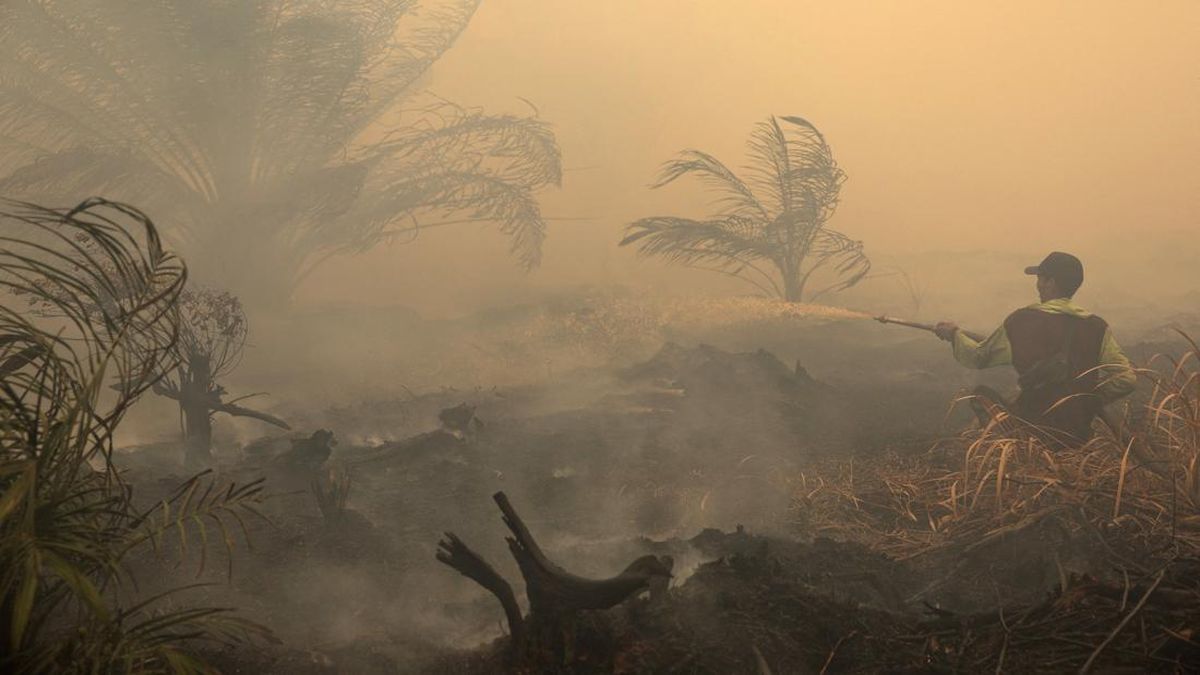
The National Disaster Management Agency (BNPB) stated that hotspots for forest and land fires (karhutla) in the regions of West Kalimantan and Central Kalimantan increased again on Sunday (30/8).
Berton SP Panjaitan, Acting Head of the BNPB Disaster Data, Information, and Communication Centre, said that hotspots in West Kalimantan were recorded at 3,824 points today, an increase of 453 points. “In West Kalimantan, we see that hotspots have increased by 453 points today, while the number of active fire points has decreased to 16,” Berton said during a press conference on Sunday.
In Central Kalimantan, hotspots were recorded at 5,391 points today, an increase of 876 points, although active fire points decreased by 23 to 56 points. Meanwhile, in South Kalimantan, hotspots were recorded at 1,077 points, a decrease of 279 points, with active fire points also dropping by 279 to 52 points.
“Visibility in those three provinces is relatively low, between 1 to 1.5 kilometres,” said Berton.
Furthermore, in Riau Province, hotspots decreased by one point to 264, while active fire points increased by five to 12, with visibility at approximately 5 km. In South Sumatra, hotspots significantly decreased to 804, whereas active fire points increased by eight to 18, with visibility at 2.4 km. In Jambi, hotspots increased to 135, while active fire points remained at four, with visibility at around 3.5 km.
Berton stated that the handling of forest and land fires in several provinces continues through two main efforts: ground operations and aerial operations. For ground operations, 48,667 personnel have been deployed across six provinces to carry out monitoring, firefighting, cooling, and wetting activities. For aerial operations, 53 aircraft have been deployed, consisting of 19 aircraft for patrols and weather modification operations, and 34 others for water bombing.