
Hosting AIHII’s 17th National Convention, President University Stresses the Importance of Unity Between Politicians and Academics
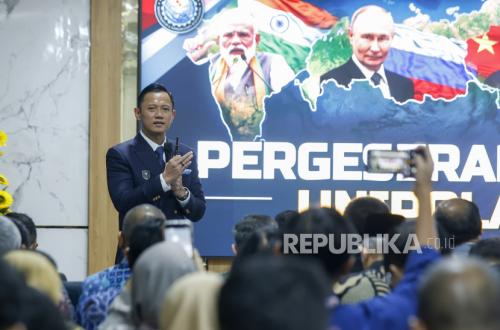
The 17th National Convention of the Association of Indonesian International Relations Studies (Vennas AIHII XVII) was officially opened at the Charles Himawan Auditorium on the fifth floor of Building A at President University’s main campus in Jababeka City, West Java. The university’s International Relations Study Programme hosted the annual AIHII event, which brings together International Relations programmes from universities across Indonesia. Under the theme “Beyond Fragmentation: The Constellation of Power, Innovation, and the Future of Global Governance”, the convention aims to strengthen the exchange of ideas and collaboration in responding to global developments.
In his address, President University Rector Handa Abidin thanked the association for entrusting the university with hosting the event. He also said he hoped ties between academia and diplomatic practice would grow closer. “We hope academics will be more involved and the views of professors and doctoral graduates will be heard more. In this way, Indonesian diplomacy in various fields can have a greater impact and help realise a successful and prosperous Indonesia,” he said.
The forum was attended by around 200 participants from 70 universities, including academics and International Relations students from across Indonesia, from Sumatra, Java, Kalimantan and Sulawesi to Papua. AIHII chair Agus Haryanto presented figures showing that the number of active International Relations students between 2021 and 2024 ranged from 37,000 to 40,000. This reflects the considerable pool of talent in the field, which can contribute perspectives and policy advice as global dynamics continue to change.
Politicians and academics must work together
Despite growing global interconnectedness, relations between countries remain marked by tensions and conflict. Differences in interests and views can even lead to armed conflict. This makes International Relations studies increasingly important for understanding global dynamics and building cooperation across differences.
Xu Baofeng, dean of the College of Sinology and Chinese Studies and the Belt and Road Research Institute at Beijing Language and Culture University (BLCU), highlighted the importance of understanding between civilisations. Without shared values and an understanding of other civilisations, he said, competition for power could lead to confrontation. Addressing global fragmentation therefore requires dialogue to bridge ideological differences.
Global challenges also call for closer links between academic thinking and political decision-making. Coordinating Minister for Infrastructure and Regional Development Agus Harimurti Yudhoyono said politicians must not become detached from academics, and vice versa.
“Politicians who are detached from academics may make the wrong decisions, while academics who are detached from politicians may become lost in abstractions. An idea must be tested and put into practice,” he said.
Yudhoyono also said AIHII had strategic value through its inter-university networks and international forums, which can connect academic ideas with policymaking.
Muhammad Takdir, head of the Foreign Policy Strategy Agency at Indonesia’s Ministry of Foreign Affairs, also voiced support for this collaboration in a video recording. He said he hoped AIHII could become a dialogue partner and an innovation laboratory for Indonesian diplomacy.
“We hope AIHII can become an innovation laboratory for the implementation of Indonesian diplomacy,” he said. He also stressed the importance of constructive academic thinking in helping to map policy direction and broaden public participation beyond policymakers.
Echoing that view, Adi Dzulfuat, director for Pacific and Oceania at the Ministry of Foreign Affairs, said Indonesian diplomacy needed support from a range of stakeholders.
“Indonesian diplomacy cannot operate on its own. It needs the support of the public, academics and non-government actors, including associations such as AIHII,” he said.
He added that lectures, discussions, seminars and research produced by International Relations programmes could inform those working in diplomacy, including the Ministry of Foreign Affairs. Such synergy is important to ensure academic research can serve as a reference in formulating foreign policy.
Strengthening academia’s contribution to society
As well as bringing academics and policymakers closer together, the 2026 AIHII convention is an opportunity to strengthen the capacity of lecturers and International Relations institutions. Agus Haryanto highlighted AIHII’s role as a platform for developing academics and institutions. “I think AIHII can be a platform for us. We can all develop ourselves, both as lecturers and as institutions,” he said.
He also said he hoped the forum would encourage the publication of journals or proceedings accessible to the wider public, enabling International Relations research to broaden public understanding and support practical needs.
President University’s commitment to supporting national development was also reflected in collaboration between education and industry. During the event, learning aids were symbolically presented as a grant by the Jiu Xue Wang team, and memorandums of understanding (MoUs) were signed between President University and PT Midea, PT XCMG, PT Haier, PT Green Cold and PT AICE.
Through the event, President University’s International Relations Study Programme continues to promote collaboration among universities, government and other stakeholders, with the aim of turning knowledge and ideas into practical steps for Indonesia’s progress.
Source: jawawa.id (https://jawawa.id/newsitem/hosting-aihiis-17th-national-convention-president-university-stresses-the-importance-of-unity-between-1792594431)
Originally published by Republika (https://news.republika.co.id/berita/tn9ef0291/jadi-host-vennas-aihii-xvii-president-university-tekankan-pentingnya-soliditas-politisiakademisi), translated from Indonesian