
Hospital Transformation: Maintaining Existence Amidst the New Era of Regulation
Indonesian hospitals are currently facing significant challenges driven by regulatory changes, most notably the implementation of the Standard Inpatient Class (KRIS). This policy is transitioning the existing Class 1, 2, and 3 system into a single standardised facility standard. The Ministry of Health emphasises that KRIS aims to achieve equality, justice, and the even distribution of healthcare facility quality across the country.
According to Presidential Regulation Number 59 of 2024, twelve specific criteria for facilities have been established. These include building components with low porosity to prevent moisture and dirt accumulation, a minimum of six air changes per hour, standardised artificial lighting, and air-conditioned rooms with stable temperatures between 20 to 26 degrees Celsius. Furthermore, the distance between bed edges must be at least 1.5 metres and not directly touching walls. Each ward is limited to a maximum of four beds, each equipped with at least two power outlets and a nurse call bell. Other requirements include bedside lockers, non-porous and easy-to-clean curtains, and ensuite bathrooms that meet wheelchair accessibility standards.
The government targets KRIS implementation for 83.7% of hospitals across Indonesia. Government-owned hospitals are required to provide at least 60% KRIS-standard beds, while private hospitals must provide at least 40%. Intensive care units (ICU), isolation wards, and specialised units such as maternity or perinatology are exempt from these specific standards.
Addressing these regulatory challenges, Bangun Trapsila Purwaka, Chairman of the Indonesian Hospital Association (PERSI) for the East Java Region, explained that the hospital sector is undergoing a period of rapid change. “The government is transforming the national health system, ranging from regulatory updates and strengthening referral systems to changing service standards and accelerating digitalisation. These changes inevitably require hospitals to adjust their organisational governance, service systems, financial management, and human resource strengthening,” said Bangut.
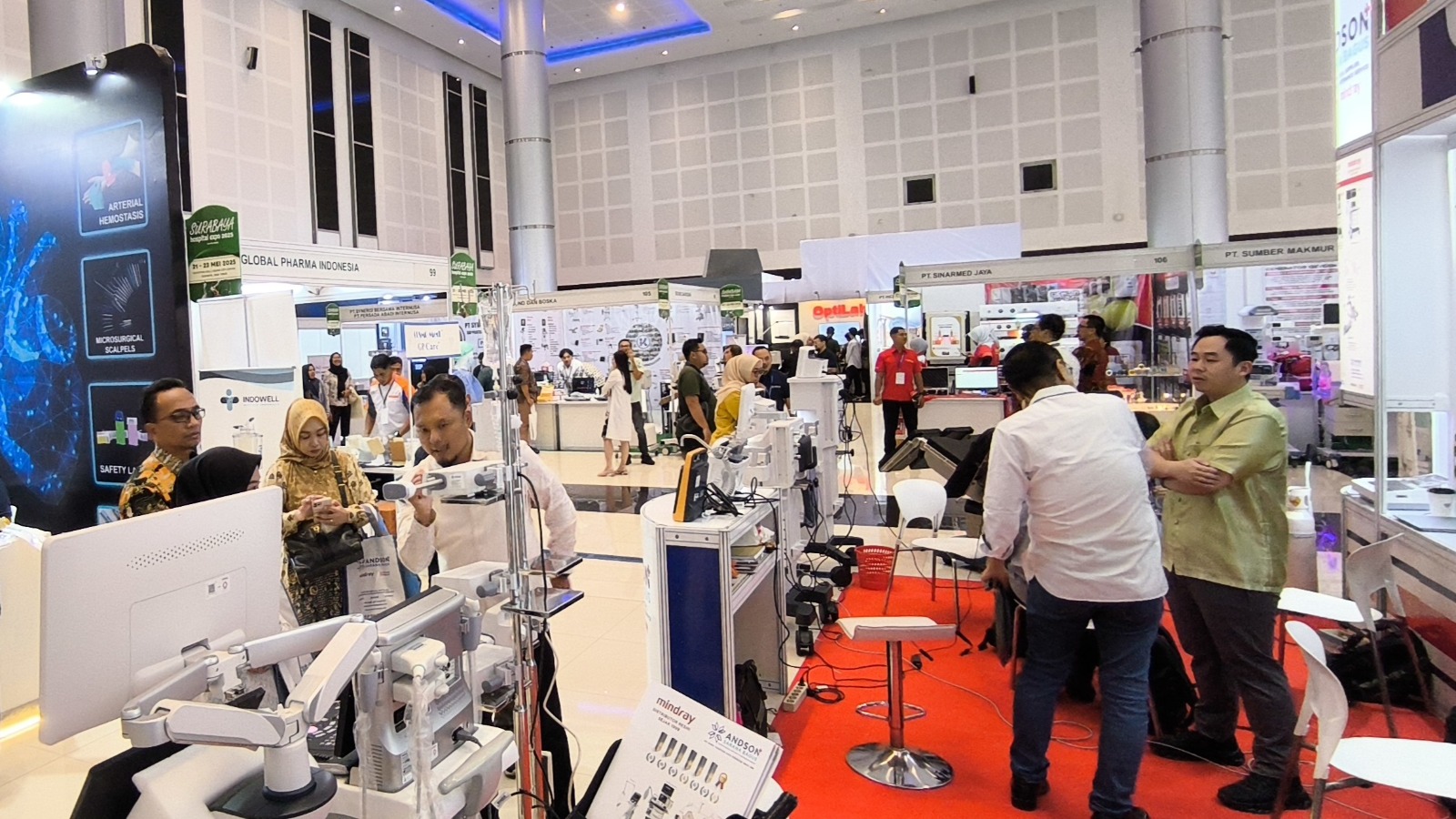
Bangun added that PERSI East Java encourages hospitals not merely to adapt, but to undergo a thorough transformation involving improved service quality, operational efficiency, and the adoption of health technology. To discuss these challenges, a series of seminars, workshops, and the Surabaya Hospital Expo will be held from 19–21 May 2026 at the Exhibition Hall, Grand City Convex, Surabaya.
Additionally, a Healthcare Services Exhibition will take place from 19–24 May 2026 at the Grand City Mall Main Atrium, featuring prominent institutions such as RSUP Surabaya, RS Mawaddah Medika, and RSUD dr. Soetomo, among others. The Hospital Expo serves as a vital bridge between hospitals and the medical device industry, focusing on technologies such as Hospital Information Systems (HIS), electronic medical records, and modern diagnostic equipment to support patient safety and service efficiency.