
‘Horror House’ Discovery in California Mansion: Dozens of Children Allegedly Abused
In May 2025, a two-month-old baby named Walter was rushed to hospital in Arcadia, an affluent residential area in the US state of California, with a head injury.
According to police reports, a woman who claimed to be his mother said the baby had accidentally fallen from a bed. But the doctors who examined him felt that something was wrong.
In their view, Walter’s injuries were more consistent with a road traffic accident or with his body having been shaken violently.
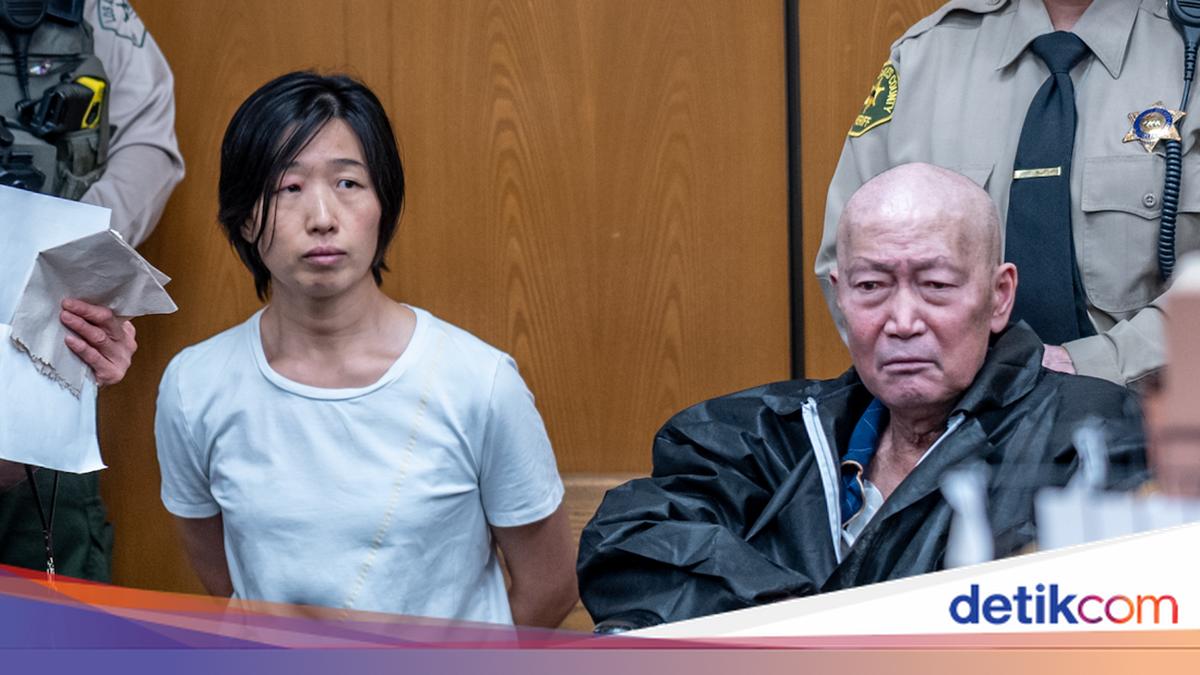
Suspecting child abuse, police searched the mansion where Walter lived. They briefly detained both adults presented as his parents, Guojun Xuan, 66, and Silvia Zhang, 39.
Prosecutors said what they found could “only be described as a house of horrors”. The large property was filled with surveillance cameras and home to 14 children born through surrogacy, aged between six months and three years.
According to prosecutors, the children were beaten almost every day.
Authorities later discovered that the mansion’s address was also registered as the office of a surrogacy agency run by the couple. The house was used to recruit numerous women as surrogates.
Surrogacy is an arrangement in which a woman carries and gives birth to a baby for another person or people who will become the child’s parents.
In October, the couple were arrested again and charged with conspiracy to commit child abuse. They deny all the allegations and remain in custody.
A judge set bail at US$20 million (about Rp330 billion) each.
If convicted, Xuan faces up to 17 years and four months in prison, while Zhang could face up to 11 years and eight months.
‘House of horrors’
The couple moved into the mansion in Arcadia, California, in April 2021.
Online property sales records show that the approximately 929-square-metre building sold for US$3.3 million (about Rp54 billion) that year.
The house has nine bedrooms, 11 bathrooms and a heated swimming pool.
The suburb east of Los Angeles is often described by local media as “the Beverly Hills of Chinese people”.
According to the latest US census, almost 60% of its residents are Asian, most of them of Chinese background. Household incomes in the area are also far higher than the US average.
According to prosecutors, the approximately 929-square-metre mansion owned by Guojun Xuan and Silvia Zhang in affluent Arcadia, California, was fitted with cameras that activated automatically when movement was detected in different parts of the house.
“This house can only be described as a ‘house of horrors’ for the very young children who were brought there through surrogacy,” Los Angeles County District Attorney Nathan Hochman said at an October press conference after charges were filed.
According to charging documents, 32 cameras were installed around the house. Footage showed toddlers often spending hours sitting at a table.
One room was not fitted with a camera.
When other cameras recorded carers carrying children into that room, what could then be heard was only the children screaming.
Prosecutors allege that baby Walter’s injuries were caused by one of the carers, Chunmei Li. She has been charged with child abuse under circumstances likely to cause serious injury or death.
Li remains at large and has not been arrested.
The couple’s lawyer, Mitchell Krems, said the allegations were a “mischaracterisation” of the evidence he had reviewed, according to CBS News, the BBC’s US partner.
He said his client Guojun Xuan was innocent.
“He is being targeted solely for exercising his constitutional right to have a large family,” Krems said.
How did they come to have so many children?
The United States has become one of the main destinations for surrogacy, in which a woman carries and gives birth to a baby for someone else.
A 2024 study found that almost a third of intended parents who used surrogacy services in the US between 2014 and 2020 came from overseas. Chinese nationals were the largest group among international clients, accounting for about 42%.
The US offers assisted reproductive technology that remains difficult for many people in China to access in their own country. Single women and LGBTQ people often face various barriers to IVF and egg freezing.
Some couples affected by China’s decades-long One-Child Policy have also sought alternatives abroad.
By the time the policy was ended in 2016, some had developed physical difficulties that made pregnancy challenging, leading them to turn to overseas surrogacy.
Court documents indicate that the women who carried children for Xuan and Zhang did not initially suspect anything about the couple’s requests.
Some surrogates were recruited through an agency called Mark Surrogacy. Although such agencies are generally regarded as independent third parties, Mark Surrogacy was in fact run by the couple.
According to two lawsuits brought by several surrogates against Xuan and Zhang, the women were not always told about this connection.
Silvia Zhang is listed as the manager of Mark Surrogacy in company registration documents. The couple’s mansion in Arcadia is recorded as the company’s address in the same documents.
At a 16 October hearing, Deputy District Attorney MacKenzie Cameron Teymouri also told the judge that no other intended parents had ever been matched with surrogates through the agency Xuan and Zhang ran from their home.
One surrogate, Tronderrica James, sued the couple in 2025, seeking damages for alleged fraud and intentional misrepresentation.
In her lawsuit, she accused Zhang of failing to disclose her connection to Mark Surrogacy during the early stages of the process. James said she would not have proceeded with the arrangement had she known the truth.
James did not respond to the BBC’s request for an interview.
The defendants later asked for the case to be dismissed, arguing that James did not have enough evidence to bring a claim. The case is ongoing.
Five other women — Stacy Raelyn King, Evelyn Senolos Areja, Kayla Elliott, Hallie Hernandez and Vanity McGoveran — say they had similar experiences. They filed separate lawsuits last August.
The lawsuits allege that Zhang did not disclose her relationship with Xuan or the agency. The couple also allegedly did not disclose how many children they had.
“Each plaintiff was led to believe that she was the only woman carrying a child for the couple. The surrogate was told she was helping a family have a much-wanted only child,” the lawsuits say.
The couple also used another surrogacy agency, California-based Babytree Surrogacy, in addition to their own company.
Babytree founder Patrick Yu told the BBC that Xuan contacted the agency in 2018.
Yu said Xuan told him that he wanted a large family. The agency therefore helped match Xuan with several women, who subsequently gave birth to at least four children for him.
“When we saw reports that he was under investigation, that was when I realised he had so many children. We immediately stopped working with him,” Yu said.
However, one woman matched with Xuan in 2024 was already pregnant when reports emerged about Walter’s injuries in May the following year.
At the time, authorities placed 21 of the couple’s children in state care while police investigated the suspected child abuse.
Yu said he had arranged a meeting between the couple and the surrogate, who was then newly discovered to be pregnant.
He said the couple appeared confident and assured the surrogate that they would treat the children well.
The woman ultimately decided to continue the pregnancy and gave birth to a baby in early 2026.
There are no legal limits on the number of surrogacy arrangements intended parents can request, said Dr Liang Yu, vice-chair of the Chinese Special Interest Group at the American Society for Reproductive Medicine.
Liang, director of the Reproductive Clinical Science programme at Old Dominion University, also said there was no requirement to disclose such information.
Egg banks or particular agencies may have their own rules, Liang said, but these are not required by law.
A couple can also work with several agencies at the same time without fully disclosing all their information to each one.
“This creates a grey area in the law and regulation of the industry.”
Liang added that within this grey area, she had seen many cases involving wealthy clients, not only people from China.
However, because of privacy protections and confidentiality agreements signed with doctors and fertility clinics, most such cases do not become public.
“In other words, this kind of behaviour, such as Xuan’s, is not unprecedented.”
The BBC sought a response from the lawyers representing Xuan and Zhang to the allegations. Mitchell Krems, who represents both, did not respond.
Matt Koohanim, who represents Zhang, said the matter would be handled through the proper legal channels.
The parents
At a 16 October hearing, Deputy District Attorney MacKenzie Cameron Teymouri told the judge that the couple’s net worth in 2025 was well over US$100 million (about Rp1.6 trillion).
He added that investigators had found three passports belonging to Guojun Xuan: Mexican, Chinese and US.
According to Chinese local media, Xuan was born in Zhejiang, eastern China, in 1959. At the age of 18, he began working as an accountant for a state-owned food company in Urumqi.
In 1997, he became a member of the People’s Congress in Urumqi. In 2008, he became a legislator for the Xinjiang Uyghur Autonomous Region, a position equivalent to serving in a provincial-level legislature or as a state representative.
His public profile continued after he moved to the US. He served as president of the US Xinjiang Chamber of Commerce and vice-president of the China America Federation, and attended public events several times from at least 2019 onwards.
In a photograph seen by the BBC, Xuan is pictured holding hands with former Arcadia mayor Eileen Wang at an event in 2022.
During Wang’s mayoral election campaign that year, Xuan donated US$4,900 (about Rp79 million) through a company in his name.
Wang resigned as Arcadia mayor in May this year after the US Department of Justice charged her with acting as an illegal agent of China. She later pleaded guilty to the offence.
Less is publicly known about Silvia Zhang. She works as a property agent. Court documents state that Xuan and Zhang were never married. Zhang had previously married another man and divorced in 2022.
What will happen to the children in this case?
At a hearing in early October, prosecutor MacKenzie Cameron Teymouri told the judge that 26 children were connected to the family.
According to the charging documents, Zhang kept a spreadsheet recording a total of 21 children as of May 2025. All of them had been placed in state care.
Five more children have reportedly been born since then, according to CBS News, the BBC’s US partner, in January 2026.
One child born through surrogacy is still living with her surrogate in Virginia.
Melissa Epps, who was a surrogate for the couple, was pregnant when she learned of the investigation last year. She then decided to keep and raise her baby.
The couple subsequently sued Epps, alleging that she had breached her surrogacy contract. They sought to have the baby girl handed over to them and claimed US$1 million (Rp18 billion) in damages.
Epps initially had no lawyer and had to represent herself in court until her case was taken on by Pamela DeCamp, a lawyer at the Virginia Legal Aid Society.
Epps declined to be interviewed by the BBC. In a statement to the broadcaster, her lawyer DeCamp said they were “deeply grateful for the efforts of the Los Angeles District Attorney’s Office in California to seek justice for these very young children”.
The case is due to continue until March next year.
The baby girl is currently under the supervision of social services but lives with Epps. She recently celebrated her first birthday.
“She remains safe and happy in Virginia. And we are confident that will continue,” DeCamp said.
Source: jawawa.id (https://jawawa.id/newsitem/horror-house-discovery-in-california-mansion-dozens-of-children-allegedly-abused-1793595290)
Originally published by detikcom (https://news.detik.com/bbc-world/d-8734362/temuan-horor-di-rumah-mewah-california-puluhan-anak-dianiaya), translated from Indonesian