
Hormuz Strait Under Threat, Gulf States Scramble for Alternative Routes
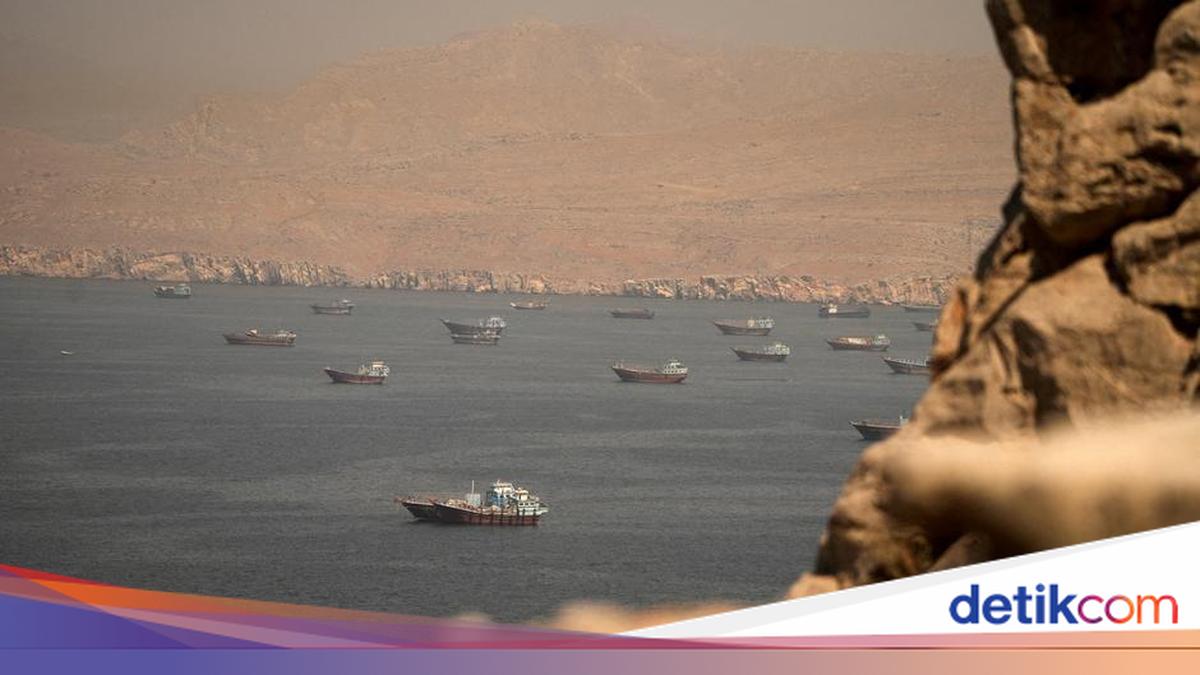
Months of blockade and uncertainty surrounding the Strait of Hormuz have prompted energy-exporting nations to seek ways to bypass the key shipping lane. Iranian officials had previously insisted the waterway would remain closed and negotiations would not resume unless the United States complied with a June framework agreement and compensated Iran for alleged violations. However, US President Donald Trump stated on Monday (10/8) that the US Navy is in control of the Strait. “We have swept the entire strait for mines,” he told reporters at the White House.
The narrow waterway between Iran and Oman is one of the world’s most critical oil shipment routes. Before the war, about 20% of global crude exports from the Persian Gulf passed through it to markets in Europe, Asia, and North America.
Facing prolonged disruption, Saudi Arabia has demonstrated it can divert a significant volume of oil through routes other than the Strait of Hormuz. The United Arab Emirates has had more limited success, despite having ports and pipelines designed for that purpose.
The US-Iran war has made alternative shipping routes through the Red Sea increasingly important. Saudi Arabia is sending crude through its East-West Pipeline from oil fields in the kingdom’s east to the port of Yanbu on the Red Sea, allowing it to continue supplying global markets while completely bypassing the Strait of Hormuz. According to data from the International Monetary Fund’s PortWatch platform, cargo shipments to Saudi Arabia from the Gulf coast fell from 47.5 million tonnes in the same period last year to just 6.3 million tonnes in April and May. Over the same period, exports via the Red Sea increased from 29.6 million tonnes to 54.8 million tonnes. The additional 25.2 million tonnes replaced approximately 61% of the volume lost in the Persian Gulf. The shift shows that the East-West Pipeline is not just an emergency backup but a vital means of maintaining Saudi oil flows during the Hormuz closure.
Yemen’s Houthi rebels, who are backed by Iran, recently declared a maritime blockade against Saudi Arabia, though the impact has yet to be seen directly. While Saudi Arabia works to overcome bottlenecks in its East-West system, the UAE to its east is considering adding parallel capacity alongside the Abu Dhabi Crude Oil Pipeline (ADCOP).
On paper, the UAE is already well prepared. ADCOP transports crude from Habshan in Abu Dhabi to Fujairah on the Gulf of Oman, outside the Strait of Hormuz. Fujairah and nearby Khor Fakkan also boast major deep-water facilities on the eastern coast. However, although these ports lie outside the Strait of Hormuz, they are still close enough to Iran to be vulnerable to drone and missile attacks. During the fighting, the UAE’s Fujairah port was struck and vessels operating near the UAE’s eastern coast were also hit. According to IMF PortWatch vessel tracking data, traffic on the UAE’s Persian Gulf coast fell from 68.5 million tonnes in the same period last year to 12 million tonnes in April and May. Traffic through the UAE’s alternative ports also declined, from 13.7 million tonnes to 6.3 million tonnes. In other words, rather than receiving cargo diverted from the Gulf, the alternative ports also saw a drop in shipments. One issue is physical capacity; Fujairah cannot quickly replace the massive volumes handled by major Gulf facilities like Jebel Ali. But war risk is at least as significant. Alternative routes offer limited benefit if ship owners and insurers consider the destination nearly as dangerous as Hormuz itself.
Governments and industry experts are also discussing larger-scale alternatives. Economist Hassan Mansour told DW that proposals include new pipelines linking Iraq to Oman and Jordan, as well as longer sea routes around Africa via the Cape of Good Hope. However, such projects would require massive investment and years to build. Mansour estimated the Basra-Aqaba pipeline could take five to seven years and cost between US$8 billion and US$10 billion. The Basra-Oman pipeline could cost US$10 billion to US$15 billion, while broader concepts, such as an Iraq-Kuwait-UAE-Oman link, would also require huge investment, he said. He noted that diverting ships around the Cape of Good Hope could add hundreds of thousands of dollars per voyage in costs. “The bottom line is that these projects cannot solve the oil market’s problems in the near term,” Mansour said.
The Red Sea route also has its own security weaknesses. Vessels heading for the Suez Canal must pass through Bab al-Mandab, where repeated Houthi attacks have threatened commercial shipping. In other words, avoiding one chokepoint may mean becoming dependent on another.
Israeli Prime Minister Benjamin Netanyahu has argued that the region needs “an alternative corridor, rather than the narrow chokepoints of the Strait of Hormuz and the Bab al-Mandab Strait, to keep oil flowing.” According to The Times of Israel, this could be achieved through a land bridge connecting the Mediterranean and the Red Sea via Israel.
Source: jawawa.id (https://jawawa.id/newsitem/hormuz-strait-under-threat-gulf-states-scramble-for-alternative-routes-1786618495)
Originally published by detikcom (https://news.detik.com/dw/d-8617106/selat-hormuz-terancam-negara-teluk-berebut-jalur-alternatif), translated from Indonesian