
Hopes for Peace as High as the Sky: Good News from the Strait of Hormuz?
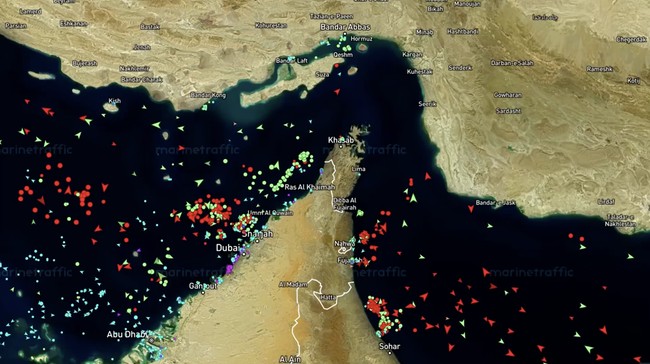
Hopes for peace are soaring, with positive developments emerging from the Strait of Hormuz. Jakarta, CNBC Indonesia - Hopes for the end of a major war in the Middle East have surged dramatically on Thursday (16 April 2026). This optimism stems from the presence of a key mediator from Pakistan in Tehran and statements from the administration of US President Donald Trump regarding the prospects of a major agreement that could reopen the crucial Strait of Hormuz for the global economy. These diplomatic steps are bolstered by an Israeli cabinet meeting on Wednesday to discuss the possibility of a ceasefire in Lebanon. A senior Israeli official confirmed that the discussions followed more than six weeks of intense war against the Iran-backed Hezbollah group. US President Donald Trump revealed that talks between the leaders of both countries are scheduled for Thursday. At the same time, a Financial Times report citing Lebanese officials indicated that a ceasefire announcement is likely to be made soon. White House spokesperson Karoline Leavitt gave positive signals during a press conference on Wednesday local time. She stated that communication mediated by Pakistan has so far been highly productive. ‘We are optimistic about the prospects of this agreement. The talks mediated by Pakistan are productive and ongoing,’ Leavitt said. Leavitt also clarified circulating diplomatic rumours. She denied reports that the United States had officially requested an extension of the two-week ceasefire previously agreed by both sides on 8 April. Regarding the continuation of direct negotiations, Leavitt stated that the exact schedule has not yet been confirmed. However, she gave strong indications that the meeting location is likely to be held again in Pakistan. Pakistan’s military itself has confirmed that their Army Chief, Asim Munir, has arrived in Tehran. A senior Iranian source revealed to Reuters that Munir’s presence, who previously mediated the last round, aims to bridge differences between the conflicting parties. Iran’s Foreign Minister, Abbas Araqchi, warmly welcomed the arrival of the Pakistani envoy via a post on social media platform X. He reaffirmed his country’s position in responding to the ongoing peace efforts. ‘Tehran is committed to promoting peace and stability in this region,’ Araqchi wrote in his post. Previously, talks over the weekend had stalled without yielding an agreement. The war began on 28 February when Trump, alongside Israel, initiated military operations, which then triggered Iranian retaliatory strikes on Gulf neighbours and reignited the Israel-Hezbollah conflict. Thousands of lives have been lost, mostly in Iran and Lebanon, while a surge in energy costs has shaken global investors. Stock markets have reacted positively to the de-escalation news, with Wall Street indices hitting record highs on Wednesday as crude oil prices stabilised. Nevertheless, Toshitaka Tazawa, an analyst at Fujitomi Securities, offered a critical note on the situation. ‘Although there is hope for de-escalation, many investors remain sceptical given that US-Iran talks have repeatedly failed even after appearing to make progress,’ Tazawa said. From an economic perspective, US pressure on Iran continues to tighten. Treasury Secretary Scott Bessent predicted that China’s purchases of Iranian oil will soon halt due to the US blockade of ships docking at Iranian ports. He emphasised that the US is prepared to impose secondary sanctions on any country still buying crude oil from Iran. Bessent revealed that the US Treasury Department has issued stern warnings to two Chinese banks. He stated that these banks must stop processing funds from Iran or face severe sanctions, noting that China has absorbed more than 80% of Iran’s oil exports. President Trump also claimed to have communicated directly with Chinese President Xi Jinping regarding support for Iran. Trump said that Xi Jinping denied providing weapons assistance to Tehran. ‘I’m doing this for them, and for the world. President Xi will give me a big hug when I get there in a few weeks,’ Trump wrote on his social media, claiming that China is very pleased with his plan to permanently open the Strait of Hormuz. This conflict has paralysed the world’s energy trade routes because Iran closed the Strait of Hormuz to ships other than their own. However, a US military report stated that in the first 48 hours of the US blockade, not a single ship successfully breached American forces’ guard, with nine ships forced to turn back to Iranian ports. Although the blockade is very tight, Iran’s Fars News Agency reported that a sanctioned US Iranian supertanker successfully crossed the strait to Imam Khomeini port. On the other hand, Iran’s joint military command issued very serious retaliatory threats. Iran warned that they would halt all trade flows in the Gulf, the Arabian Sea, and the Red Sea if the US blockade continues. This threat has the potential to cut off vital access to the Suez Canal, which is the lifeline of global trade. In the ongoing negotiation process, Iran has offered a proposal to allow ships to sail freely through the Omani side of the Strait of Hormuz without risk of attack. The condition is that an agreement must be reached to prevent a new conflict from erupting. Trump continues to use a hardline approach as leverage in these negotiations. In his interview with Fox Business Network, he issued threats of escalation if the war re