
Hopes for Inclusion of People Living with HIV and Transgender Women in Yogyakarta
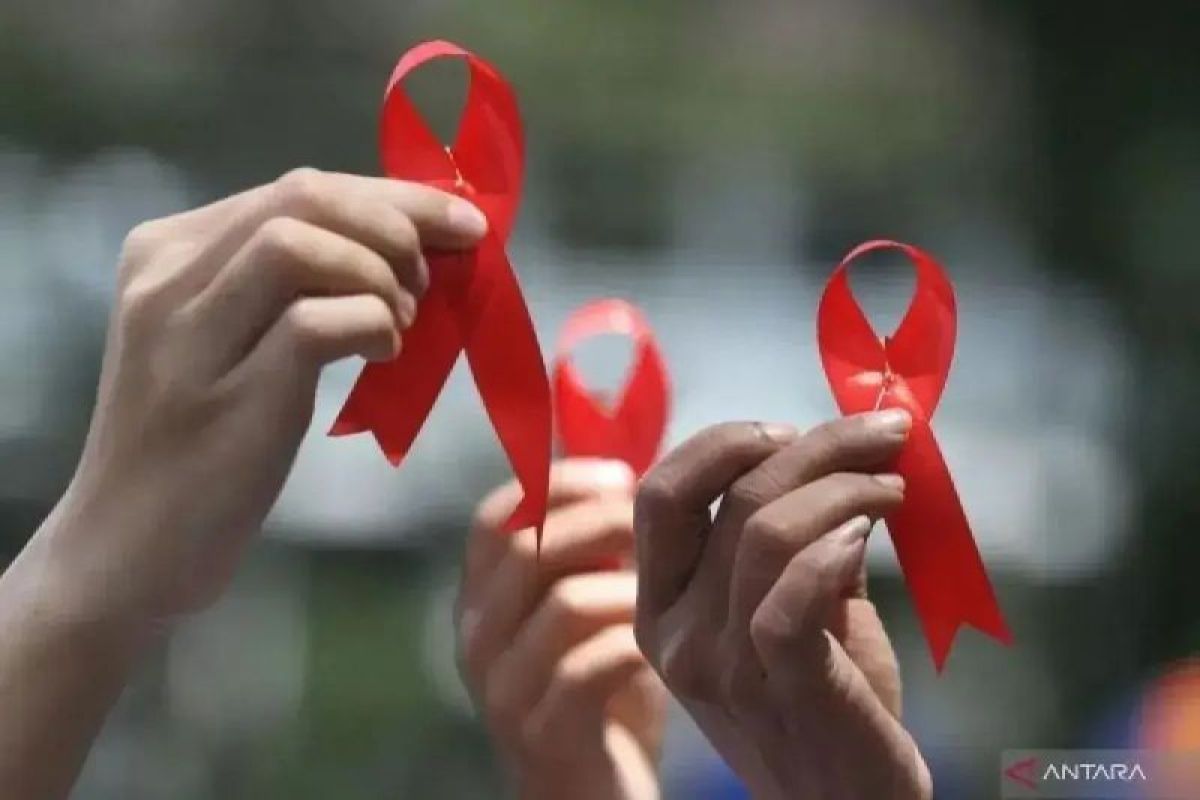
People living with HIV and the transgender community in Yogyakarta continue to strive to build dignified lives as an integral part of society.
Yogyakarta (ANTARA) - The writing “PRAM” on the right chest of the white shirt of the bespectacled man was clearly visible to anyone nearby, as an affirmation of his openness amid the clamour of stigma that has not fully dissipated for minority groups.
The 45-year-old man sat in one of the chairs deliberately placed level with the participants to moderate the event. The entire room was stunned when the figure named Pramono introduced himself as the moderator and speaker who is a person living with HIV or ODHIV.
From the start of the event, Pram emphasised that his identity and health status are open for wide publication as a form of statement that he does not mind revealing his true self in front of the public.
His memory returned to January 2014 when he first learned of his status after experiencing prolonged diarrhoea for three months, causing his body weight to drop drastically to about half of his previous condition, becoming 40 kilograms.
“Seeing my body condition at that time, the doctor immediately diagnosed that I would last a maximum of six months. At that moment, it felt like the sky was collapsing. Alhamdulillah, I can stand here until today,” said Pram, whose weight is now more than 80 kg.
Pram, who is married with two children (his wife and children are HIV negative, ed.), admitted that he no longer experiences significant health complaints thanks to his discipline in routinely taking antiretroviral (ARV) medication and maintaining a healthy lifestyle.
Overcoming Labels and Discrimination
Pram has endured several negative labels, including the bitter experience of repeatedly entering and leaving workplaces due to unilateral rejection related to his health status.
Pram recounted that he was dismissed from work four times because his status was revealed when he had to routinely collect ARV medication at the hospital, whose services were only available during working hours.
Every month, he had to take leave to collect the medication, which could not be collected by someone else, so he was forced to make up excuses ranging from relatives to his grandmother dying, even though he no longer had one, until he ran out of excuses.
“Finally, I opened up about my status to HR, and a few days later I was given a letter to resign or be terminated. I was asked to choose,” said Pram, who is now the finance manager of the Yayasan Kebaya Yogyakarta.
In addition to external challenges, Pram also struggled with his own body’s rejection, especially because he always vomited every time he had to take the medication.
“I started taking ARV routinely. If I vomited, I would take the medication again. It might be disgusting, but my determination was that the medicine had to enter because taking a new one would mean reducing the quota,” he said.
A similar story of resilience was experienced by Ali Dani (37), an ODHIV from Bangka Belitung who was once critically ill and dependent on a feeding tube for six months before finding the spirit to live in Yogyakarta.
“My family supported me without any discrimination at all, so that moral support made me feel ashamed if I had to give up on the situation when my closest people kept giving encouragement,” said Ali.
Social Contributions of Transgender Women
Source: jawawa.id (https://jawawa.id/newsitem/hopes-for-inclusion-of-people-living-with-hiv-and-transgender-women-in-yogyakarta-1776505846)
Originally published by Antara (Indonesian) (https://www.antaranews.com/berita/5532267/asa-inklusi-bagi-odhiv-dan-transpuan-di-yogyakarta), translated from Indonesian