
Hope Grows at Barombong Bridge
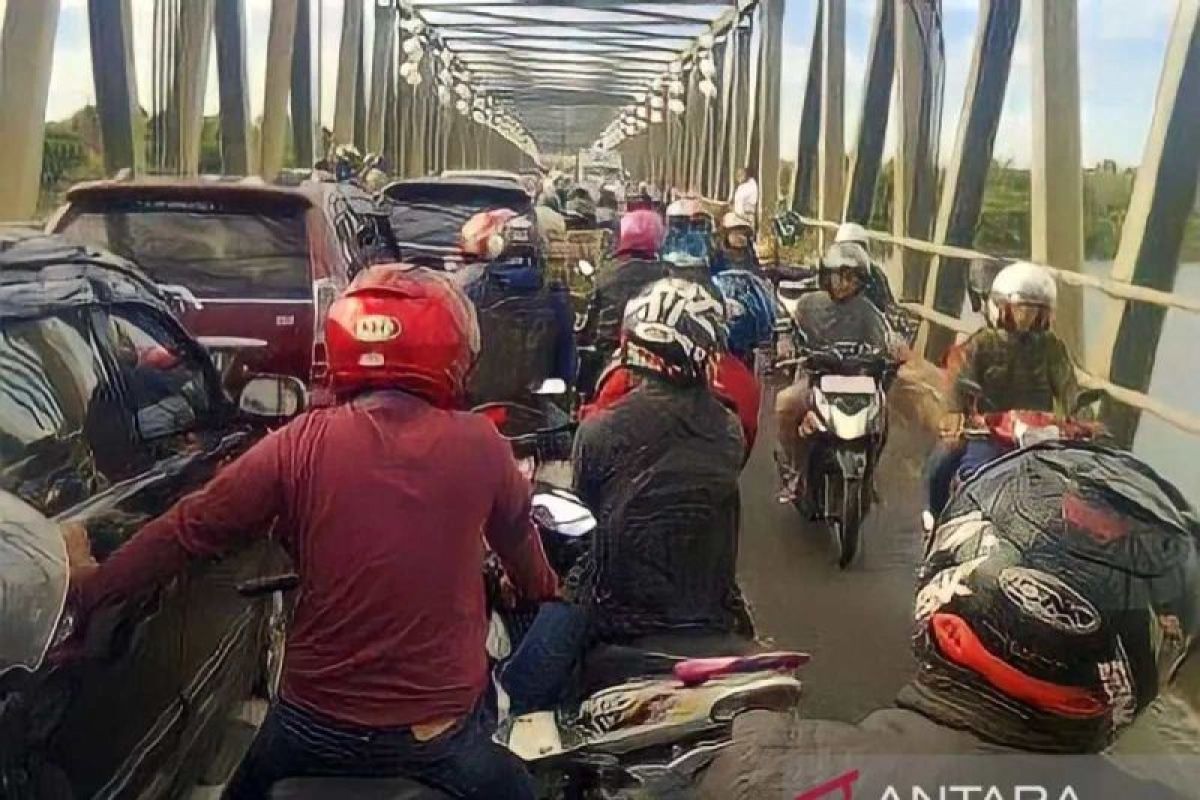
Every morning and evening, the Barombong area in southern Makassar presents the same scene: long lines of vehicles, honking horns, and weary faces as people gamble with time to reach work or return home. Residents commuting to work, dropping off children at school, and transporting goods to buffer regions face traffic congestion that has become a daily routine. As evening approaches, the same situation repeats. Traffic flowing from Gowa towards Makassar meets city-bound congestion. Barombong has become a wearying traffic bottleneck for thousands of road users daily. Amidst this, new hope is taking shape. Makassar City Government and South Sulawesi Provincial Government have agreed to accelerate the construction of the Barombong Twin Bridge, an infrastructure project expected to be a key solution for chronic traffic congestion in southern Makassar. For Makassar City Government, the Barombong Twin Bridge is more than just a physical project. It is seen as strategic infrastructure connecting Makassar residents with buffer regions such as Gowa and Takalar regencies. Makassar Mayor Munafri Arifuddin, commonly known as Appi, stated that the city government is ready to support all administrative and technical requirements to ensure the bridge’s swift realisation. “Essentially, Makassar City Government is prepared to provide any data, regulations, or administrative support requested by the provincial government,” Appi said. According to the mayor, the main issue in Barombong is not just vehicle congestion but a bottleneck where traffic flow narrows, causing drastic slowdowns during peak hours. This condition has been a long-standing complaint among residents. Many spend excessive time on the road for relatively short distances. Hence, the Barombong Twin Bridge is expected to address these concerns. Province allocates Rp100 billion. Sulsel Public Works Head Andi Ihsan explained that the provincial government has already allocated an initial budget of Rp100 billion for the 2027 fiscal year to commence physical construction of the bridge. This move underscores that infrastructure development is not merely an annual project but a long-term investment in South Sulawesi’s future. Moreover, accelerating the Barombong Bridge project illustrates how a city adapts to urban growth. The current traffic congestion is a consequence of rising economic activity, residential expansion, and population mobility in southern Makassar. When road access can no longer accommodate vehicle volumes, new infrastructure becomes an urgent necessity. This highlights the importance of adaptive, future-oriented urban planning. Many may view the bridge merely as a connecting facility. In regional development, however, bridges have far-reaching ripple effects. Improved connectivity lowers transport costs, speeds up goods distribution, boosts investment, and enhances economic opportunities. Small traders can reach markets more easily. Workers save time on the road. Students and university attendees travel more efficiently. Property and microbusiness sectors in the area also stand to grow faster. This is real development, delivering tangible benefits to daily life. Hence, expediting land acquisition is a crucial step requiring all stakeholders’ support. Makassar City Government aims to have all land cleared and ready by June 2026 to ensure construction proceeds without legal or administrative obstacles. This step also serves as public education that modern infrastructure requires not just large budgets but accountable, transparent, and measurable governance. In many Indonesian projects, land acquisition often poses the main delay. However, the coordinated approach by Makassar City and South Sulawesi Provincial Governments shows inter-agency communication can expedite public service. This spirit drives Indonesia’s development today. Regional progress stems not from individual effort but collective cooperation across government and society. In Barombong, hope is slowly taking root. Residents now envision a new future: smoother travel, open economic access, and a more connected city. The Barombong Twin Bridge project is ultimately more than physical infrastructure. It symbolises optimism that urban challenges can be overcome through determination, collaboration, and prioritising people’s welfare. Amidst Indonesia’s ongoing development, Makassar demonstrates that infrastructure is not just about roads and bridges, but building hope, strengthening regional unity, and improving residents’ quality of life. And one day, when vehicles flow smoothly across the Barombong Twin Bridge, the public may recall it was built not just to connect two areas, but to link citizens’ hopes with their city’s future.