
Hope Found in Bowls of Porridge and Yellow Rice in Bahodopi
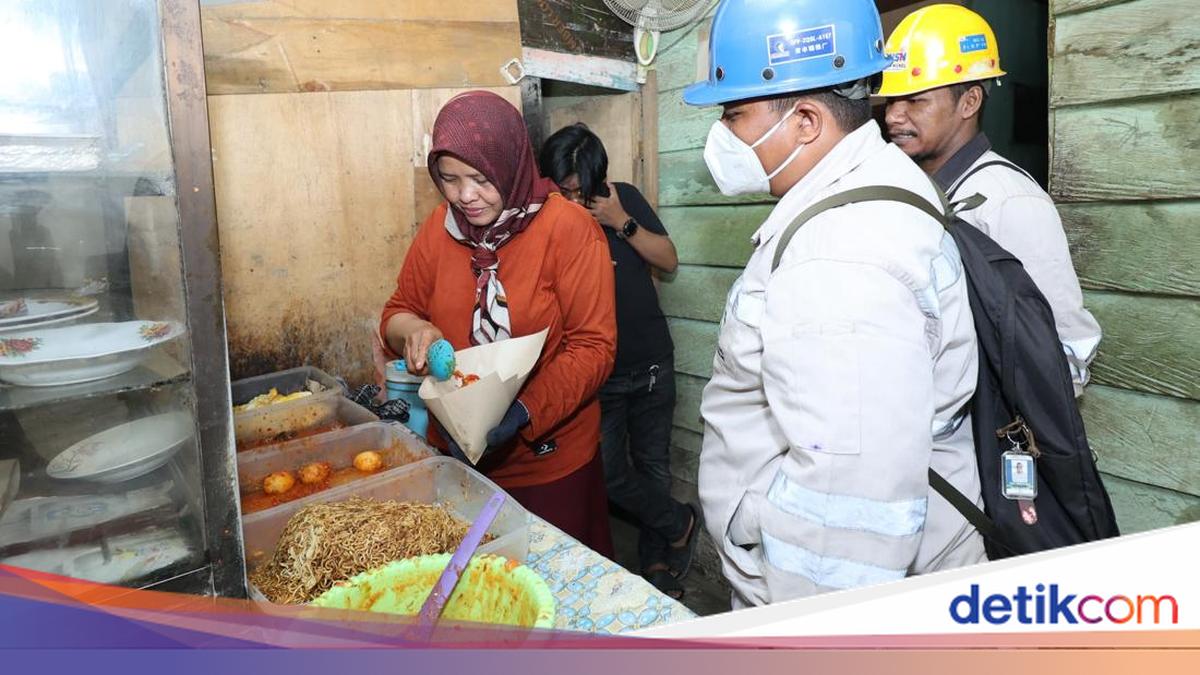
In the final third of the night, while most are still asleep, Ruslan (40), alongside his wife and mother-in-law, is already busy preparing the spices for his chicken porridge menu. His business, established in 2019 in Keurea Village, has become famous among the workers of the Indonesia Morowali Industrial Park (IMIP).
‘Bintang 14 Bandung Chicken Porridge’ has become one of the most sought-after breakfast options, particularly due to its affordable price of just Rp 15,000 per portion. “This porridge is accepted by all groups, from infants and children to adults and even patients in recovery,” Ruslan stated on Monday (5/10/2026).
Armed with a traditional recipe passed down from his father, he ventured from his hometown in Buol Regency, Central Sulawesi, to Bahodopi. Currently, with the help of 10 employees, Bintang 14 has expanded to six branches across several villages in the Bahodopi District. Serving customers from 07:00 to 12:00 WITA, Ruslan is able to generate a daily turnover of up to Rp 11 million. Ruslan has chosen to focus on what is closest to him: family recipes, service, and maintaining good relationships with customers.
Ruslan is just one of thousands of entrepreneurs in Bahodopi capitalising on industrial development. They have recognised the massive scale of labour absorption within the IMIP area. Data from the IMIP HR Department shows that the workforce grew from 35,592 in 2020 to 51,542 in 2021, 68,466 in 2022, 74,350 in 2023, and approximately 83,000 in 2024. By 2025, the number rose to 86,804, and as of September 2026, the number of employees in the IMIP area has reached 100,310, consisting of 91,904 men and 8,406 women.
With such a large worker population, the circulation of money is substantial. For instance, in 2025 alone, with a workforce of 86,804, the estimated monthly money circulation in Bahodopi is projected to reach Rp 499.1 billion, or equivalent to Rp 5.9 trillion per year. This figure is not merely a statistic; it creates daily needs that the industrial zone cannot meet alone.
“The massive growth of the area is driving the development of the business sector in Bahodopi. Research shows the five most common types of MSMEs in Bahodopi include Pertamini kiosks (981 units), beverage stands (735), non-permanent food stands (670), general kiosks (648), and food stalls (591),” said Dedy Kurniawan, Head of the Media Department at PT IMIP. “Most MSMEs fall into the micro-enterprise category with annual turnovers of up to Rp 300 million, but the growth trend shows potential for upgrading to higher business tiers.”
Not far from Bintang 14, along the Trans Sulawesi Road towards Fatufia Village, the aroma of yellow rice marks the morning for workers starting their shifts. This is where Nursia Asis (45), affectionately known as Mak Indah, awaits employees heading to work or returning from night shifts. Her yellow rice is highly popular among the ‘yellow helmet’ crowd—a term for IMIP workers, most of whom wear yellow protective headgear.
Her prices are affordable, portions are generous, and the flavour has remained consistent since she started her business in January 2014. Due to this consistency, her home-based business consumes dozens of kilograms of rice daily and generates a monthly turnover of tens of millions of rupiah. Despite the increasing number of food stalls around IMIP, some of which operate 24 hours, Mak Indah does not feel threatened, believing that sustenance is predestined.
Mak Indah even frequently shares her recipes and sales tips with other traders. She views her routine of cooking and selling as the best way to secure a future for her three children, who currently reside in Alok District, Sikka Regency, East Nusa Tenggara (NTT). Her eldest, Indah Mayangsari (23), graduated in Information Technology and is now a computer teacher in Kupang; her son Muhammad Wildan (19) is undergoing military training in Bogor; and her youngest, Muhammad Azwar Alam (12), aspires to join the Navy.
“I live a simple life. I don’t care if neighbours have cars or not,” said the single mother. “The important thing is that my children can attain higher education, unlike me, who only finished vocational school.”
Since its inception, IMIP has recognised that building an integrated nickel ecosystem—from ore processing and smelters to the energy supply chain—is incomplete without socio-economic inclusion. For the past 13 years, the IMIP area has dedicated itself to being a strategic partner for local businesses, opening doors for regional contractors, logistics providers, artisans, and hundreds of culinary and housing MSMEs that support the lives of tens of thousands of workers.