
Hope for an Investment Regime and Efficient Hajj Fund Market
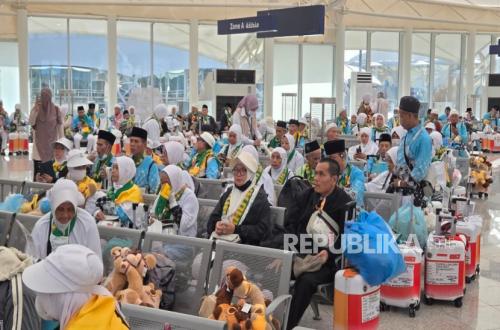
Indonesia is home to 237 million Muslims—the largest population in the world. Each year, around 2 million umrah pilgrims and a quota of 221,000 hajj pilgrims form one of the most reliable captive demand pools in existence.
Pilgrims begin making deposits in instalments across various currencies—SAR, USD, IDR, and even through gold savings—creating a natural multi-currency basket that should serve as a natural hedge against exchange rate volatility and inflation.
Yet paradoxically, we remain merely the largest consumer—a relatively weak player in the hajj and umrah services value chain.
The traditional procurement regime has long been vulnerable to leakage. The market mechanisms for accommodation, transport, and catering are prone to domination by intermediaries. Estimated leaked margins reach tens of per cent of the total service cost per pilgrim.
On a scale of more than 2.7 million pilgrims per year, if one were to imagine savings of just 20 per cent through the elimination of intermediaries, then re-engineering trillions of rupiah per year into a closed-loop ecosystem for pilgrim welfare—ensuring infrastructure quality and rising returns on hajj funds—would be an inevitability.
This is where the paradigm shift becomes essential: from procurement logic—buying services from other parties or merely serving as a market segment—towards investment logic: entering the market to target a range of investments that will serve us ourselves.
The hope is that rent-seeking costs or brokerage in the hotel sector, buses, food supply chains, and logistics can be eliminated, along with broker margins.
Long-term captive market contracts would run directly from operators to investor entities at transparent prices. The unit costs of accommodation, land transport, and catering would be dramatically more efficient under consolidated investment control.
Conservative estimates indicate that per-unit investment organised by an independent BPKH investment entity would be several times better than fragmented procurement.
The next challenge is currency hedging; with investment, natural hedging would occur organically without the need for synthetic derivative instruments.
BPKH has already demonstrated a solid foundation. Eight consecutive unqualified audit opinions (WTP), growth in assets under management from Rp112.3 trillion (2018) to Rp189.7 trillion (2026) at a CAGR of around 7 per cent, alongside average benefit values growing faster (CAGR of 9.9 per cent), with a Sharpe Ratio of 2.8, form the capital of trust.
Investment in ESG Sukuk strengthens its strategic position. Green Sukuk, Blue Sukuk, and Orange Sukuk—through programmes such as PNM Mekaar Syariah reaching millions of women micro-entrepreneurs with low NPLs—reflect BPKH’s prudential character and stewardship investment.
The Cash Wakaf Linked Sukuk, in which BPKH was the pioneer investor, won the IsDB Impactful Achievement Award 2023.
The next step is consolidation towards a Sovereign Halal Fund (SHAF). This concept is a modern manifestation of the Baitul Mal of the era of Caliph Umar bin Khattab. Four main pillars form its architecture.
First, multi-madhhab and multi-disciplinary governance that meets the standards of the DSN MUI Fatwa, AAOIFI, IFSB, and other ISO standards. Second, a blended portfolio mandate combining market returns with social impact. Third, a counter-cyclical stabiliser with a long-term AUM target, in which hajj and umrah pilgrims can act as buyers of last resort for the halal ecosystem.
The five pillars of Maqashid Syariah are realised concretely with an additional P—Prophetic, or prophetic guidance.
Policy imperatives are required. At least five laws are currently undergoing amendments that separately govern halal funds.
An Omnibus Law on Halal Funds is needed to harmonise regulation, create a single investment window, and eliminate sectoral egos without violating the sharia compliance of each respective law.
Strengthening modalities through the Dana Abadi Umat (Perpetual Fund for the Ummah) and joint institutional protection with the OJK and the Ministry of Hajj and Umrah as offtakers for better investment.
Eight unqualified audit opinions prove that we are capable of managing the ummah’s funds to the highest standard. Now is the time to prove that we are willing and able to consolidate them.
An investment regime is not merely financial optimisation. It is a transformation of governance: from passive consumer to active owner, from paying margins to intermediaries to capturing added value for the welfare and best possible service of pilgrims.
Indonesia has not come to merely take part in the game. We have come to claim our right as the largest player, so that this financial strength bears fruit as a fundamental legacy. Golden Indonesia 2045 will be built, in part, from the sacred capital of hajj funds managed with trustworthiness, justice, and permanence.
Source: jawawa.id (https://jawawa.id/newsitem/hope-for-an-investment-regime-and-efficient-hajj-fund-market-1785210755)
Originally published by Republika (https://analisis.republika.co.id/berita/tiuw6m472/harapan-menuju-rezim-investasi-dan-pasar-efisien-dana-haji), translated from Indonesian