
Honouring the Proclamation
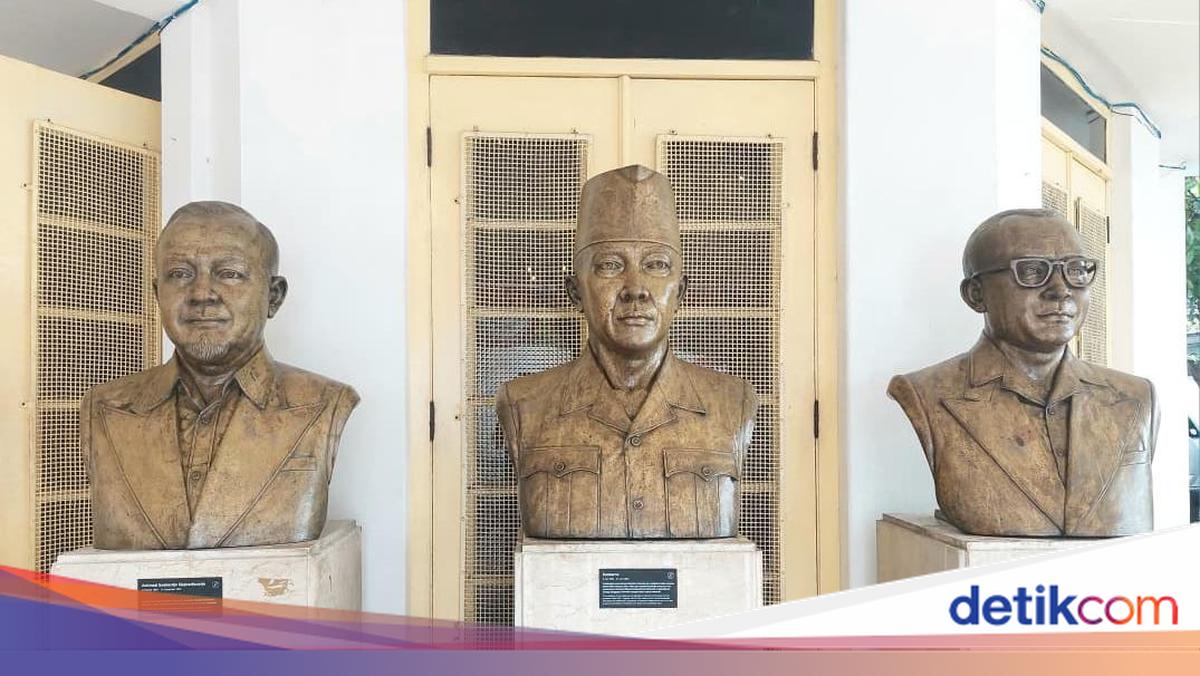
At the dawn of independence, nearly all the nation’s people shared the same economic identity: destitution. There was no economic capital to underpin independence at that time. The Proclamation was not supported by a full state treasury, established industry, or abundant foreign exchange reserves. The nation’s founders understood at the time that the Proclamation was an effort to free the nation from the shackles of colonialism. It rested on ideology, determination, and courage. Therefore, Bung Karno said that independence was not the goal, but rather a vehicle. The Proclamation was a political pledge, while the economy was a matter that had to be fought for every second.
Navigating Economic Waves
The description above at least provides a picture of Indonesia’s economic condition, which remains fragile. During the Old Order period, the government had the Planned Overall Development blueprint. This blueprint was designed to patch up the still-weak economic capacity. The planning document was complete, sharp, and ideological. If it had been implemented at that time, much economic brilliance would certainly have been felt to this day. The problem was that the political ripples and commotion at the time struck down the plan without leaving a trace on the ground.
When the period shifted to the New Order era, political stability was engineered with various instruments. With all the criticism behind it, the political commotion subsided so that economic development could be propelled. Economic growth increased, investment climbed, inflation fell drastically, infrastructure became more massive, and the people’s economy stirred. Per capita income slowly rose from around 56 US dollars in 1967 to around 1,155 US dollars in 1996, an increase of more than 20 times in three decades.
Indonesia moved up in class to become a developing country, no longer viewed as a backward nation. In various indicators, Indonesia’s position was superior to Malaysia, Thailand, let alone India and China. Behind that, there was a very vital problem that often emerged: economic justice.
Small investors were sidelined from competition, while conglomerates with access to power controlled strategic concessions. In the end, economic gains only circulated in the hands of a few elites, while most of society merely became spectators in the flow of growth. This practice further widened the space for inequality. At least, the New Order economy operated with two important characteristics.
First, the government facilitated the creation of a rent-seeking mentality that gave rise to pseudo-capitalism. Second, the government accommodated liberalisation so that foreign penetration could not be controlled. This foreign penetration could be seen through their efforts to pressure the government to carry out market liberalisation, one of which was through the privatisation programme. It was these disgraceful economic practices that ultimately rolled Indonesia into an economic crisis that spread into a political crisis (1998). Asiaweek magazine (1998) described Indonesia at that time as “the sick man of Asia”.
The crisis gave birth to the Reform era, when the economy was redesigned (1999-2004). President B.J. Habibie succeeded in strengthening the rupiah exchange rate to around Rp6,000 per US dollar. In the era of President Abdurrahman Wahid (1999-2001), economic growth turned positive, debt was reduced, inequality narrowed, and foreign relations strengthened again (Western and Eastern blocs).
Next, President Megawati Soekarnoputri issued a debt payment deferral policy, per capita income increased, the exchange rate strengthened again to Rp8,500 per US dollar, exports increased, and during this period Indosat was privatised. The era of President Susilo Bambang Yudhoyono (SBY) presented “economic stability” (2004-2014) which was carried out in a more orderly manner according to the standard textbook format.
Some of the policies initiated in the SBY era included: designing and creating the RPJPN and RPJMN (2005), fiscal discipline was carefully guarded, foreign investment was facilitated through Law Number 25 of 2007 concerning Investment, privatisation of state-owned enterprises was quite excessive (especially in 2009 and 2013), and a shift in the source of debt from foreign countries/multilateral institutions to domestic debt. As a result, economic growth increased, but inequality also continued to creep up.
The Nawacita era under President Joko Widodo (2014-2024) marked a shift in development oriented towards strengthening the role of the state, development from the periphery, and acceleration of infrastructure. During this period, inflation remained under control, social protection was expanded, the health budget was increased, village development was accelerated, and poverty, unemployment, and inequality showed a downward trend simultaneously. However, this period also left a record of a surge in state debt.
Nurturing the Flame of Progress
The series of journeys above reveals one important lesson: Indonesia’s economic development has always moved in a tug-of-war between growth and justice. Each regime left behind policy traces marked by both successes and limitations.
At this point, the principal treatise of the 81-year journey of economic development can be formulated. First, a mature concept cannot be executed effectively without the support of political stability. Second, economic development requires a long-term vision that is translated into medium-term and short-term planning consistently.
Third, the organisation and stages of development must be managed with high discipline so that the development process runs consistently and produces progress over time. Fourth, economic crises always devastate the structures that have been designed (in addition to causing political catastrophe). Domestic economic strength based on natural resources is a stake in sovereignty that must be won. Fifth, the desire to achieve progress must always be based on adherence to the national consensus, namely the state ideology and the constitution. With that foundation, the future direction can be imagined more clearly from the time development is designed until it is implemented.