
Hong Kong Media Highlights Indonesia-China Relations, Flags 'Resource Nationalism' Challenge
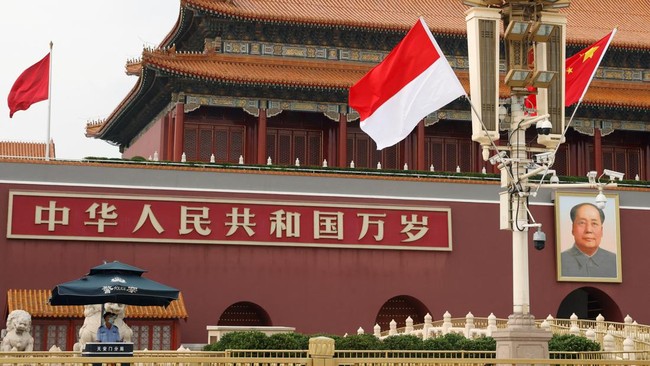
The Hong Kong-based South China Morning Post (SCMP) has highlighted the economic relationship between Indonesia and China, suggesting that Indonesia’s resource management policies are beginning to pose challenges for Chinese investors. In an article titled ‘Can China and Indonesia’s strong financial ties withstand resource nationalism?’, the publication notes that the economic partnership is entering a new phase as Indonesia seeks greater added value from its mineral wealth. The administration of President Prabowo Subianto is reportedly pushing downstream processing policies to ensure Indonesia does not merely export raw materials but also produces high-value-added goods.
According to SCMP, the close economic ties between Jakarta and Beijing are being tested by Indonesia’s increasingly stringent management of its natural resources. The newspaper describes this policy as a form of rising ‘resource nationalism’, an effort by the government to ensure the greatest benefits from natural wealth are enjoyed by the domestic economy. The Indonesian government is limiting national nickel production for 2026 to approximately 260 million to 270 million tonnes, a decrease of about 30 per cent compared to the previous year. This policy has impacted several foreign investors, with operations at Weda Bay Nickel, one of the world’s largest nickel mines involving Tsingshan, Eramet, and Antam, temporarily halting after production quotas were exhausted.
Analysts assess that Indonesia’s measures aim to stabilise nickel prices and increase state revenue, though they have made some Chinese investors more cautious. Hu Jie from the Shanghai Advanced Institute of Finance noted that China remains vital capital for Indonesia’s economic development, a reality the Indonesian government understands. China has been Indonesia’s largest trading partner for 13 consecutive years and among the top three sources of foreign direct investment over the past decade. Chinese Foreign Ministry spokesperson Lin Jian affirmed that Indonesia remains an important investment destination, with Jakarta repeatedly expressing readiness to deepen industrial and supply chain cooperation with Beijing.
However, analysts suggest the future of the economic relationship will depend on the ability of Chinese companies to adapt to Indonesia’s policies. The relationship is expected to remain close but will feature new dynamics, with Beijing bringing capital and technology while Jakarta becomes more assertive in controlling the added value of its natural resources. The Shanghai Academy of Social Sciences reportedly stated that Chinese companies must transform from mere exporters into joint development partners to achieve long-term success.