
Honda Dealers Displaced by Chinese Cars: Signs of the 'Doomsday' for Japanese Vehicles?
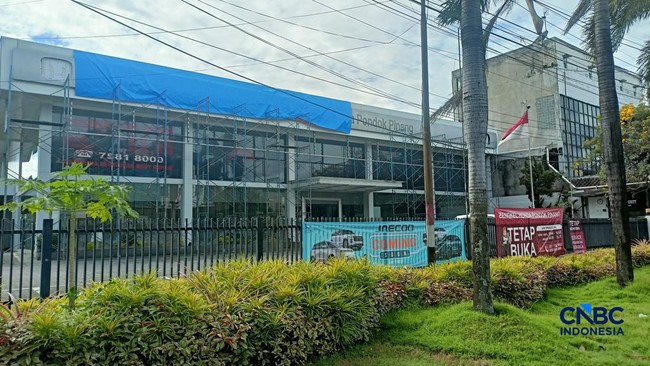
Jakarta, CNBC Indonesia - The dominance of Japanese cars, which has been unshakable for decades in Indonesia, is now facing a new challenge. In recent years, there has been a phenomenon of closures of Japanese car dealerships, particularly Honda, in several cities.
In some of the latest cases, former showrooms of Japanese brands have directly transformed into dealerships for cars from China, such as Chery and Leapmotor. In a statement to CNBC Indonesia, quoted on Thursday (9/4/2026), Honda stated that the closure of dealerships does not reflect a decline in performance, but rather part of efficiency and optimisation of the network.
This phenomenon is intriguing because it contrasts greatly with the long history of Japanese cars in Indonesia. Decades ago, brands from the Land of the Rising Sun became symbols of the revival of the national automotive industry and successfully emerged as the kings of Indonesia’s roads.
The entry of Japanese cars into Indonesia began in 1961. James Luhulima in the book Sejarah Mobil & Kisah Kehadiran Mobil di Negeri Ini (2012) records that the first wave of Japanese cars was marked by the entry of 100 units of Toyota Land Cruiser jeeps for ministerial purposes.
However, the true revival only reached its peak during the New Order era. In 1968, Indonesia under President Soeharto began to open wide the doors to foreign investment. Japan, which was enjoying an economic resurgence post-war, saw Indonesia as a potential market as well as a new production base.
This momentum was strengthened by Indonesia’s failure to continue the national car programme in its early phase, so the government preferred the route of local assembly with foreign investors.
“The government preferred to buy Japanese cars that were cheaper in price and payments could be made with credit guaranteed by both states,” revealed Indonesian car entrepreneur Hasjim Ning in his autobiography Pasang Surut Pengusaha Pejuang (1986).
From here, the Japanese car industry developed rapidly, and gradually the expensive Western cars began to face stiff competition. The entry of Japanese investment was also supported by close political and business ties between Jakarta and Tokyo, including through the role of Soedjono Hoemardani, who is said to have successfully bridged Toyota’s investment into Indonesia in the early 1970s.
The next role came from Astra International, which became the backbone of the distribution and production of Japanese cars in Indonesia. Since the initial cooperation with Toyota in 1969, Astra has developed into an extension of various Japanese brands such as Daihatsu, Isuzu, and Nissan.
A wide distribution network, strong after-sales service, and a mature financing scheme made Japanese cars the primary choice for Indonesian families for decades.
“In 1990, Gaikindo stated that Astra had successfully controlled more than half of the automotive market share in Indonesia. The products produced included Toyota, Daihatsu, Isuzu, Nissan Diesel Trucks, Lexus, Peugeot, BMW,” wrote Ricardi S. Adnan in The Shifting Patronage (2010).
It is on this basis that the phenomenon of the closure of several Japanese dealerships today raises the question of whether cars from the Land of the Rising Sun are beginning to be abandoned by the public, after once overtaking European cars upon their initial appearance in Indonesia in the 1960s?
Source: jawawa.id (https://jawawa.id/newsitem/honda-dealers-displaced-by-chinese-cars-signs-of-the-doomsday-for-japanese-vehicles-1775721058)
Originally published by CNBC Indonesia (https://www.cnbcindonesia.com/entrepreneur/20260409100641-25-725205/diler-honda-digeser-mobil-china-tanda-tanda-kiamat-mobil-jepang), translated from Indonesian