
Homegrown Educational App MAKA Officially Launched
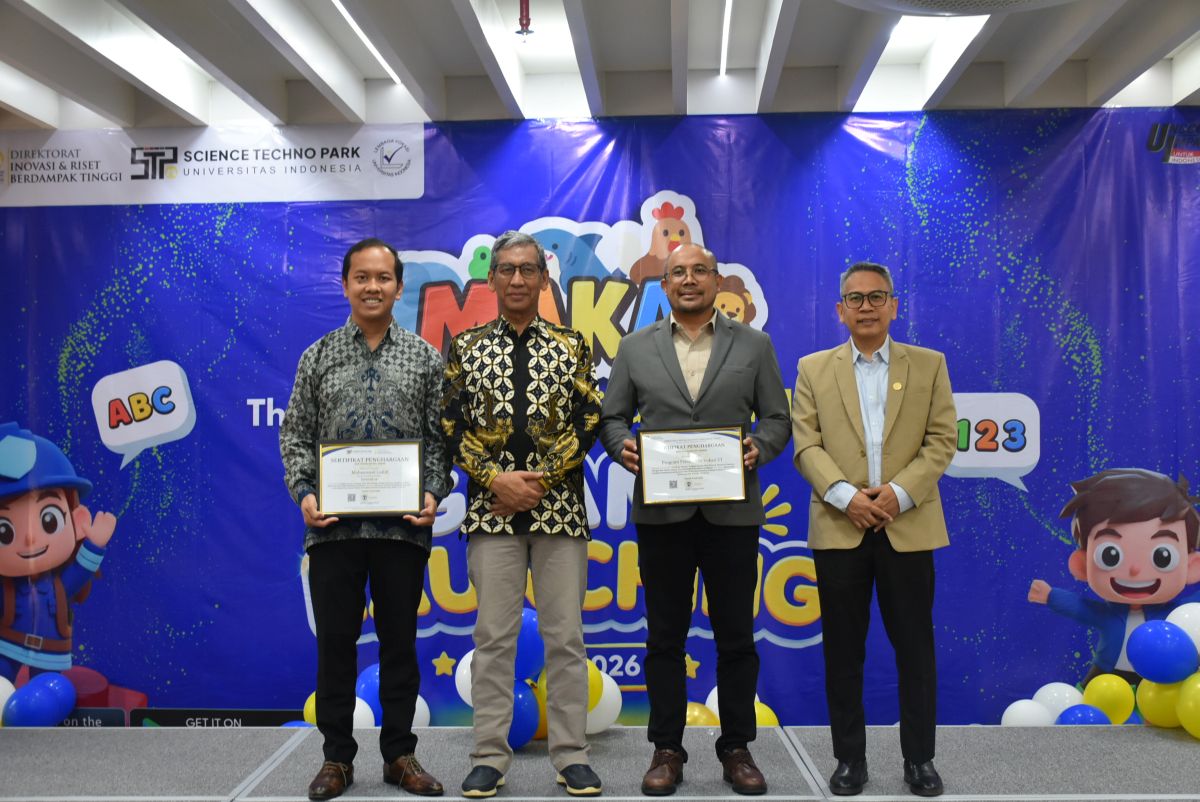
A gamification-based digital learning application called MAKA has been released by Universitas Indonesia. The application was developed by UI lecturer Muhammad Luthfi through the university’s Science Techno Park (STP) education programme. MAKA is a learning innovation that utilises a gamification approach to create a more interactive, enjoyable, and adaptive learning experience for children. This innovation originated from research and was developed to address societal needs while strengthening digital transformation in the education sector. ‘MAKA was born from our concern about children’s increasing proximity to digital technology, which is not accompanied by directed utilisation. The challenge is no longer just keeping children away from gadgets, but how to present a digital experience that is more directed, meaningful, and supports their growth and development,’ Luthfi said in a press statement received on Sunday. Luthfi emphasised that through MAKA, he wanted to present a gamification-based learning medium that is fun for children, but still has clear stimulation goals and is grounded in academic study. Regarding the development process, it was explained that the application was created through collaboration between academics and industry partners, ensuring the innovation has a strong scientific basis while remaining relevant to user needs. ‘MAKA was developed through a collaborative process between academics and industry partners by combining scientific knowledge and the needs of society in the digital era. We hope this innovation can be widely utilised as a medium to support children’s learning and developmental stimulation,’ Luthfi said. Meanwhile, Universitas Indonesia’s Vice-Rector for Research, Innovation, Student Affairs, and Alumni, Hamdi Muluk, stated that the MAKA application is a clear example of how synergy between higher education, industry, and the innovation ecosystem can produce a product ready for implementation. ‘The essence of innovation is the ability to discover new things or present new, better ways to answer society’s needs. Knowledge generated in higher education becomes meaningful when it can be translated into beneficial, applicable solutions that have a real impact on life,’ Hamdi explained. He also affirmed that Universitas Indonesia continues to strengthen its innovation ecosystem through the Science Techno Park (STP) UI, which acts as a bridge between researchers, industry, government, investors, and the community. According to him, STP UI serves as a catalyst that accelerates the process of technology transfer, research commercialisation, and downstreaming, so that research outcomes can develop into products that provide added value for both society and the business world.