
Home Wi-Fi Can 'See' People Without Cameras, Researchers Reveal
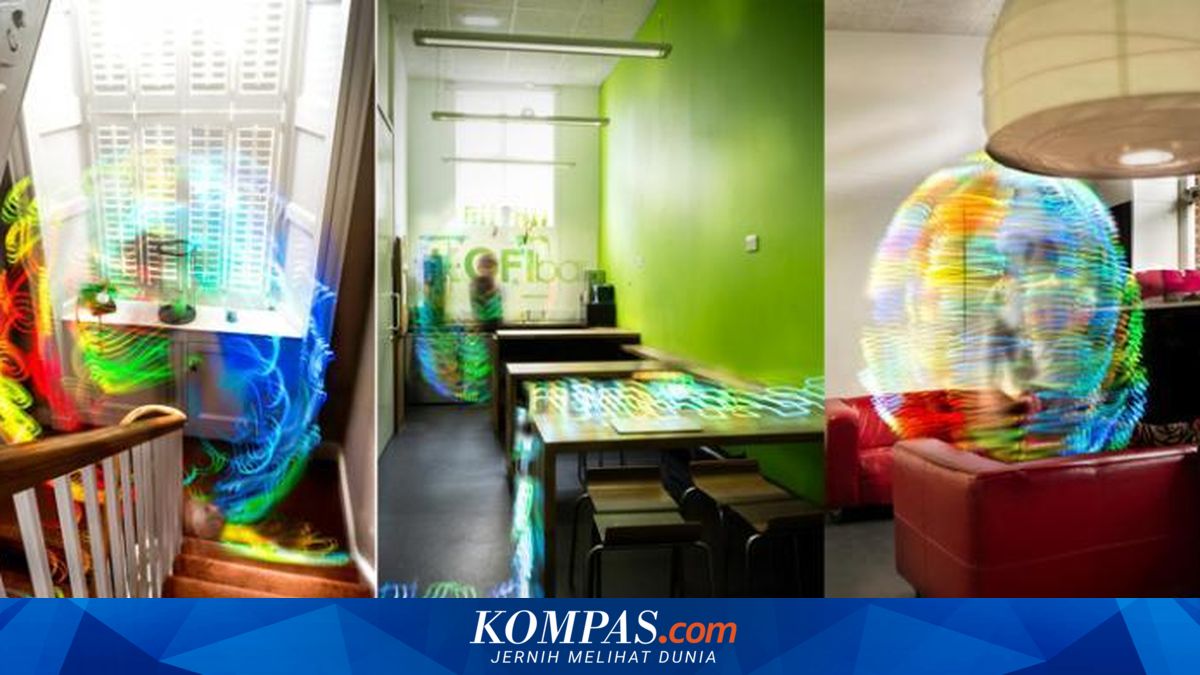
Wi-Fi routers in homes, offices, or cafes can be repurposed as surveillance tools without any modifications. This surprising discovery comes from researchers at Germany’s Karlsruhe Institute of Technology (KIT), who successfully identified individuals using Wi-Fi signals with 99.5% accuracy. Their findings were presented at the prestigious ACM Conference on Computer and Communications Security cybersecurity conference in late 2025. The surveillance technique leverages a method known as Wi-Fi sensing. Essentially, when radio signals such as Wi-Fi spread through a room, they interact with objects and people in the vicinity. These signals can reflect, scatter, or be absorbed by surrounding objects. By analysing discrepancies between expected signal behaviour and actual received signals, researchers can accurately infer the physical environment details at the location. “By observing radio wave propagation, we can create images of the environment and the people present,” said Thorsten Strufe, a KIT professor and co-author of the study. Strufe likened the system’s operation to conventional CCTV cameras, except it uses radio waves instead of light to identify targets. A key vulnerability exploited by this method stems from beamforming features first introduced in Wi-Fi 5 technology. Designed to direct signals more efficiently to connected devices, the feature requires devices to continuously send feedback data to the router. Unfortunately, this feedback data is unencrypted and can be accessed freely without specialised hardware—or even without being connected to the Wi-Fi network. The method can even identify individuals carrying no devices, provided they walk within the network’s signal range. KIT researchers then trained a machine learning model to analyse this feedback data and identify individuals based solely on their walking patterns within Wi-Fi signal range. Once trained, the identification process takes only seconds.