
Home of Sumatra's Richest Man Looted by Residents, Possessions Carried Away
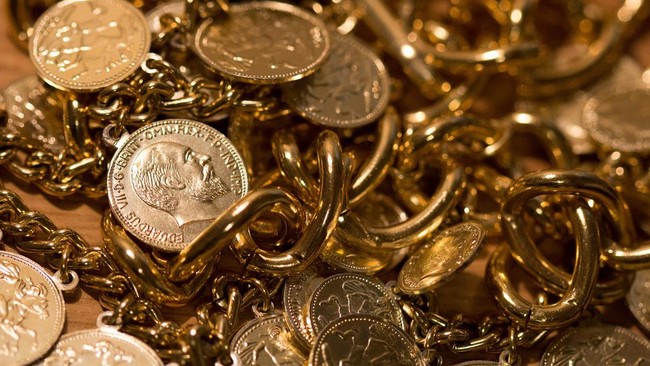
Living in abundance and luxury is a dream for almost everyone. However, what if that ends tragically, as experienced by the family of one of Indonesia’s wealthiest individuals in 1946?
Sultan Mahmud of the Langkat Sultanate belonged to one of the wealthiest sultanates in Indonesia. However, there came a time when his home was swarmed by residents, and his family’s possessions were looted during the East Sumatra Social Revolution.
Darussalam Palace, the residence of Sultan Mahmud (1927-1946), became a target for the masses. The building was left in ruins, while several members of the noble family were arrested and subjected to various forms of violence.
The luxury of Sultan Mahmud’s family was not without reason. The Langkat Sultanate possessed abundant sources of wealth, particularly after oil was discovered in Telaga Said, Pangkalan Brandan, during the era of Mahmud’s grandfather, Sultan Musa (1840-1893).
According to the book History of the Growth of the Government of the Langkat, Deli, and Serdang Sultanates (1986), Langkat’s wealth grew even further after the Dutch oil company, Royal Dutch Petroleum, arrived to conduct exploration and develop Pangkalan Brandan as one of the largest oil processing areas in Sumatra.
From these mining activities, the Langkat Sultanate obtained significant revenue. It is recorded that the Sultan of Langkat earned approximately US$3,000 per year. Additionally, Langkat’s wealth also stemmed from tobacco plantations and timber from the forests. This high level of income allowed the Sultan’s family and the nobility to enjoy an extremely luxurious lifestyle.
In the research Lifestyle of the Langkat Nobility (2023), during the era of Sultan Aziz (1897-1927), for example, Langkat built magnificent palaces and purchased tanker ships. The lifestyle of the sultanate’s family also became increasingly modern, adopting Dutch customs, ranging from clothing and culture to food.
This luxury was even more evident during the era of Sultan Mahmud. He was said to possess 13 limousine cars and two yachts.
Historian Anthony Reid, in The Blood of the People: Revolution and the End of Traditional Rule in Northern Sumatra (1979), identifies Sultan Mahmud of Langkat as the wealthiest sultan among all the sultanates and kingdoms in East Sumatra.
In 1931, his personal income from oil royalties reached 472,094 guilders, far exceeding that of the Sultans of Deli and Serdang, whose incomes were only a third of his.
However, this luxury also widened the gap between the royal family and the majority of the population, who lived in hardship. This eventually became a time bomb when Indonesia entered the revolutionary period following independence. Social inequality and anti-sultanate sentiment became a spark for conflict.
The Social Revolution of 1946 ultimately brought this era of glory to an end. The wealth that had previously served as a symbol of prosperity was instead looted. Shortly thereafter, Sultan Mahmud passed away in 1948.
The glory of the Langkat Sultanate as one of the wealthiest sultanates in the archipelago gradually came to an end.
Source: jawawa.id (https://jawawa.id/newsitem/home-of-sumatras-richest-man-looted-by-residents-possessions-carried-away-1788673985)
Originally published by CNBC Indonesia (https://www.cnbcindonesia.com/market/20260906084825-17-765414/rumah-orang-terkaya-sumatra-dijarah-warga-harta-benda-ludes-diangkut), translated from Indonesian