
Home Minister Urges Regional Heads to Adopt Technocratic Leadership
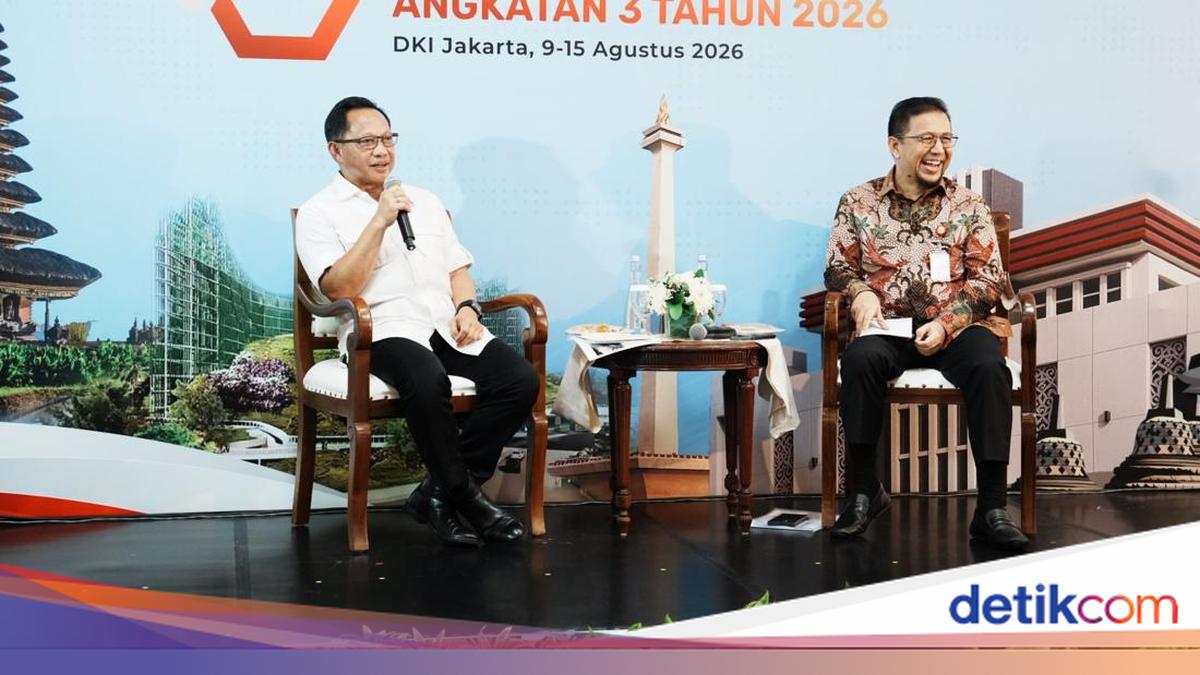
Home Affairs Minister Muhammad Tito Karnavian is encouraging regional heads to adopt technocratic leadership to increase revenue while strengthening regional economies. This approach requires regional heads to be results-oriented, willing to make decisions, and capable of exploring economic potential and creating a business climate conducive to investment.
“Technocratic leadership is leadership based more on skill, expertise, and being results-oriented rather than process-oriented,” Tito said in a written statement on Friday (14/8/2026).
He made the remarks while speaking at a sharing session themed “Opportunities and Challenges in Creating Technocratic-Based Leaders in Supporting Regional Economies” during the Briefing for Prospective OJK Heads (PCKO) Batch 3 of 2026 at Hotel Bidakara, Jakarta, on Thursday (13/8).
He explained that technocratic leadership emphasises expertise and the achievement of results. This differs from a bureaucratic approach, which places greater emphasis on process and compliance with procedures. Although bureaucracy remains necessary in government, existing procedures must not hinder the achievement of development targets.
“The key to technocratic leadership is, once again, a results-oriented approach, and bureaucracy must not obstruct the achievement of results. If there are regulations with convoluted bureaucracy, simplify them,” he stressed.
According to Tito, this approach is important because regional heads come from diverse backgrounds. Some come from the bureaucracy and have experience in government administration, while others have backgrounds in the private sector or other professions.
Therefore, technocratic capability is needed so that regional heads can manage government effectively while achieving development targets.
One capability that needs strengthening is regional financial management. The minister emphasised that a regional head’s success is measured not only by the ability to spend the budget but also by efforts to increase revenue.
Regional revenue comes, among other sources, from Transfers to Regions (TKD) and Regional Own-Source Revenue (PAD), including taxes and levies. To strengthen fiscal capacity, regional heads need to explore various economic potentials, both from natural resources and the services sector, while encouraging investment.
In this context, the growth of the private sector is one of the keys to strengthening regional economies. Business activity not only creates jobs and drives the economy but can also increase regional revenue through taxes and levies.
Therefore, regional governments need to create a business climate that is friendly to investors, including through ease of licensing and business certainty.
The minister also reminded that the management of Regional Revenue and Expenditure Budgets (APBD) should not be solely oriented towards budget absorption. Every expenditure must be directed towards producing quality development and providing tangible benefits to the public.
At the same time, regional governments need to maintain a balance between revenue and expenditure.
“So what must not happen is spending more than revenue. A deficit,” he said.
To strengthen the capacity of regional heads in managing the economy, the minister requested support from the Financial Services Authority (OJK). This support is considered important because not all regional heads have the same background or understanding of the economy and the financial services sector.
“I strongly request OJK’s support in providing input to our colleagues in the regions,” he said.
The minister hopes OJK can provide assistance and input to regional governments in developing economic potential, strengthening the private sector and financial services, and improving the quality of regional financial management.
This collaboration is expected to help regional heads make more appropriate policies to drive economic growth while increasing regional revenue.
The event was attended by OJK Board of Commissioners Chairperson Friderica Widyasari Dewi, and was followed by OJK office heads across Indonesia virtually as well as participants of the Briefing for Prospective OJK Heads Batch 3 of 2026.