
Home Minister Issues Circular on Regional Civil Servants' WFH, Locations Monitored via Geolocation
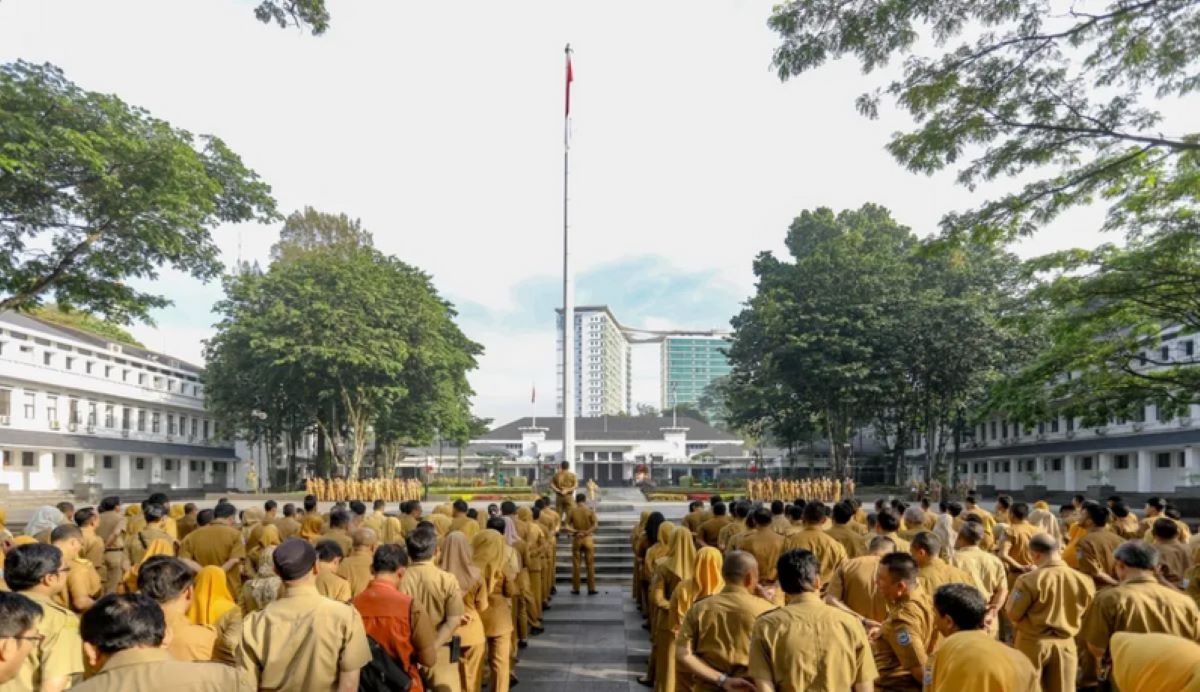
Minister of Home Affairs (Mendagri) Tito Karnavian has officially issued Circular Letter (SE) Number 800.1.5/3349/SJ on the Transformation of Civil Servants’ (ASN) Work Culture in Regional Governments, on Tuesday (31/3). This policy regulates a flexible work scheme between work from office (WFO) and work from home (WFH).
Tito emphasised that although civil servants are permitted to work remotely, supervision will be conducted strictly using digital tools to ensure productivity remains maintained.
“We ensure that civil servants truly carry out WFH. Their mobile phones are required to always be active so that their location can be known through the geolocation feature in the human resource management information system,” Tito stated during a press conference in Jakarta on Tuesday (31/3).
Limitations on Positions and Public Services
The former National Police Chief underlined that the WFH policy does not apply to all positions. Several leadership roles and crucial public service sectors are still required to work from the office (WFO).
At the provincial level, high leadership positions of Madya (Echelon I) and Pratama (Echelon II) must remain WFO. Meanwhile, at the regency/city level, positions such as District Heads (Camat) and Sub-district Heads (Lurah) are also excluded from the WFH scheme to ensure direct services to the public.
The public service sectors that must still adhere to WFO include:
Regional Budget Efficiency
The Home Minister also instructed Governors, Regents, and Mayors to immediately calculate the potential budget savings resulting from the efficiency of this new work culture. The funds from these savings must be reallocated to finance priority programmes in the regions.
“We ask Governors and regional heads to carry out calculations of budget savings from this more effective and efficient change in work culture to finance regional priority programmes,” Tito stressed.
Regarding reporting, Regents and Mayors must report the implementation of this SE to the Governor no later than the 2nd of each month. Subsequently, the Governor reports the results to the Home Minister on the 4th of each month.
“This work culture transformation policy will be comprehensively evaluated over the next two months to assess its effectiveness in the field,” he concluded.
Response to Global Dynamics
Previously, the government had set a WFH scheme for civil servants once a week, namely every Friday. Coordinating Minister for the Economy Airlangga Hartarto explained that this step was taken as an adaptation to global geopolitical dynamics.
“The implementation of work from home for civil servants in central and regional agencies is carried out for one working day per week, namely every Friday,” Airlangga said during a virtual press conference.
He added that this scheme aims to encourage more efficient and productive digital-based work behaviour. “As an adaptive and preventive measure to face global dynamics, the government has set a work culture transformation policy that promotes more efficient, productive, and digital-based work behaviour,” he clarified.
Coordinating Minister for the Economy, Airlangga Hartarto, emphasised that several business sectors will not follow the work from home (WFH) policy, such as the health and energy sectors.
Coordinating Minister for the Economy, Airlangga Hartarto, explained the scheme for implementing work from home (WFH) for civil servants on Fridays for one day per week.
This step is socialised as an effort to anticipate the impact of the global crisis so that productivity remains maintained even when working remotely.
In welcoming the once-a-week WFH concept, the readiness of digital infrastructure becomes key to ensuring productivity is maintained.
The policy is a follow-up to directives from the central government regarding efforts to efficiently use fuel amid the impact of global conflicts.
Regional governments or local governments are urged to carry out efficiencies and breakthroughs for regional revenue to prevent layoffs of non-permanent civil servants (PPPK).
Minister of Home Affairs Muhammad Tito Karnavian revealed that the option of Work From Home or WFH one day per week gained strength in the latest cross-ministerial meeting.
The Home Minister appointed Deputy Regent Hendri Praja as Acting Regent of Rejang Lebong after Muhammad Fikri was ensnared in a KPK operation. The wheels of government are ensured to continue running.
The policy also responds to the phenomenon of several regional heads planning umrah pilgrimages ahead of Eid al-Fitr.
Home Minister Muhammad Tito Karnavian visited Pidie Jaya Regency, Aceh, to ensure the acceleration of recovery and distribution of assistance to communities affected.