
Home Minister Insists Local Governments Must Implement WFH for Civil Servants, Reminds of Loyalty to Central Government
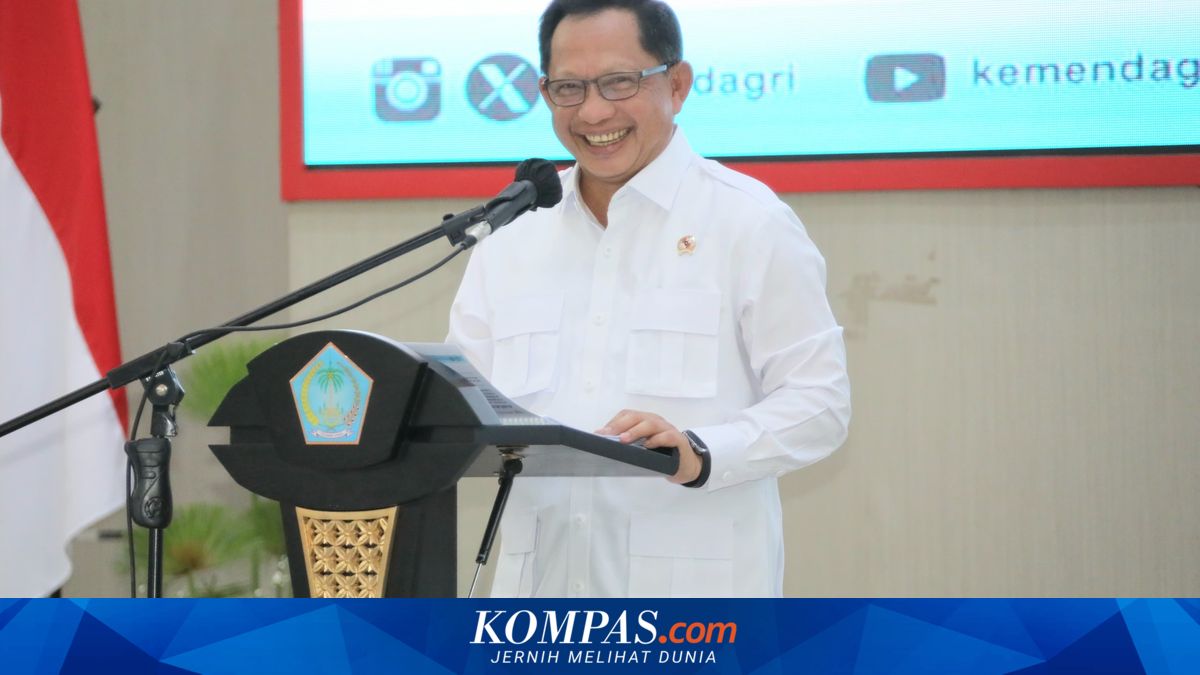
JAKARTA - The Minister of Home Affairs (Mendagri) Tito Karnavian has emphasised that the work-from-home (WFH) policy for civil servants (ASN) is a national policy that must be implemented by local governments (pemda).
Nevertheless, local governments have the authority to regulate the proportion of employees working from home or from the office according to their respective needs.
“The policy must be implemented in principle. However, the proportion is left to the regions, with discretion on how many do WFH and how many do WFO,” said Tito when met at the DPR RI Building on Monday (13/4/2026).
The former National Police Chief also reminded of the importance for local governments to show their loyalty to the central government by implementing the policy.
“But as a national policy, it must be followed and implemented to show that the regions are also loyal to the central government,” explained Tito.
“This is also in the context of transforming work culture to be more effective and efficient,” he added.
It was previously reported that the Dompu Regency Government in West Nusa Tenggara (NTB) has not yet implemented the WFH policy for all ASN as it is still conducting a study.
Dompu Regent Bambang Firdaus stated that they are still considering the impacts of the policy, including on budget efficiency and public service performance.
He also assessed that the WFH policy does indeed have the potential to reduce fuel oil (BBM) consumption due to decreased employee activities at the office.
However, if the impact is not significant, the policy might not be implemented.
“If it doesn’t have much impact, why bother,” he said.
In addition, Bambang is concerned that the WFH policy could affect public service performance in the region.
“We will study it; not all central directives must always be implemented,” he said.
The policy is part of the government’s energy efficiency measures amid global dynamics, including the conflict in the Middle East.
Coordinating Minister for the Economy Airlangga Hartarto previously stated that this flexible work scheme was also implemented during the Covid-19 pandemic and is assured not to disrupt public services.
“Public services will continue to run, and productive activities including banking, capital markets, and others will continue,” said Airlangga.