
Home Minister: Dukcapil Data Integration Strengthens Targeted Social Assistance
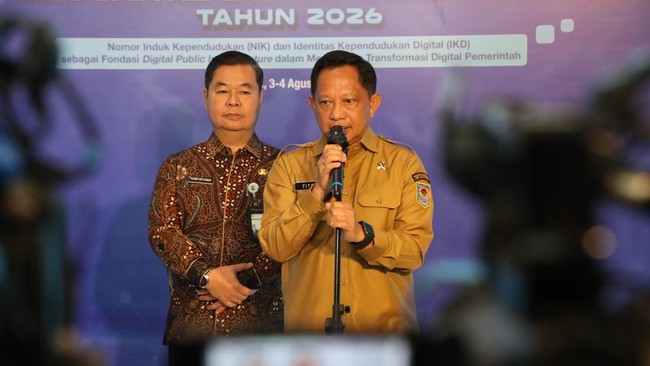
Home Minister Muhammad Tito Karnavian has praised the success of a social protection pilot project in Banyuwangi Regency, underscoring the crucial role of the Directorate General of Population and Civil Registration (Dukcapil) as the foundation for e-government. Based on the pilot project results as of 30 June 2026, out of 323,339 families registered for Non-Cash Food Assistance (BPNT), 45.2 per cent were identified as potentially eligible, whilst the remainder were deemed potentially ineligible. For the Family Hope Programme (PKH), 31.2 per cent of the 290,651 registered families were considered potentially eligible and 68.4 per cent potentially ineligible.
The first phase of e-government aims to target social assistance accurately by integrating Dukcapil data, which includes face recognition, fingerprints, and retina scans. This data is cross-referenced with information from the Ministry of Agrarian Affairs and Spatial Planning/National Land Agency to check land ownership, and with the National Socio-Economic Survey data compiled by the Central Statistics Agency through door-to-door surveys. Dukcapil data is also integrated with police records, specifically the One-stop Administration Services Office (Samsat), to verify vehicle ownership.
The integration of data across multiple ministries and agencies is expected to produce more accurate information, ensuring that aid is received only by those who meet the criteria. The Minister noted that aid falling into the wrong hands is wasteful and can provoke social jealousy among those who are struggling but do not receive it. Following the success in Banyuwangi, the government plans to replicate the e-government system in other regions, having already reviewed its implementation for social protection programmes in Gianyar, Bali, on 4 July 2026. The system has proven capable of producing accurate, real-time, and transparent data. The Minister has set a target to implement the e-government system for social protection in 143 districts and cities this August, focusing on areas with adequate internet infrastructure, responsive civil registration offices, and support from local leaders.