
Home Electric Vehicle Charging Gains Popularity in West Java
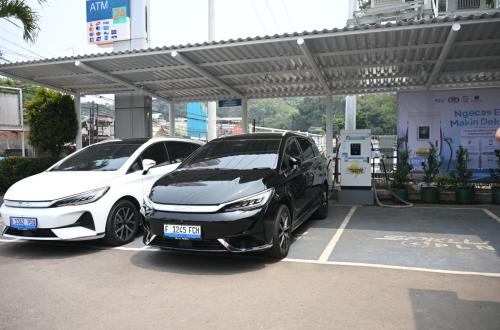
BANDUNG — Use of home electric-vehicle charging facilities continues to rise in West Java. State electricity company PT PLN (Persero)’s West Java Main Distribution Unit recorded 7,125 customers for the service by August 2026, including 2,034 new customers between January and early August.
Growth was also recorded in the first half of 2026. From January to June, 1,582 new customers signed up for home charging, a 5.68 per cent increase on the 1,497 recorded in the same period a year earlier.
Bandung had the most home-charging customers in West Java, with 1,497. Bogor was next with 1,146, followed by Gunung Putri with 1,058.
The increase in home charging points to a shift in how electric-vehicle owners meet their energy needs. Vehicles can now be charged while not in use, including overnight, without owners having to visit a public electric-vehicle charging station (SPKLU).
Muhammad Joharifin, general manager of PLN’s West Java Main Distribution Unit, said access to charging facilities was an important factor in developing the electric-vehicle ecosystem. Home charging and public charging stations, he said, complemented one another in meeting users’ needs.
“Electric-vehicle users now have more options for charging. At home, customers can use Home Charging more conveniently and flexibly, while SPKLU facilities are available when they are out and about or travelling,” Joharifin said.
PLN is also offering incentives for home-charging installations until 31 December 2026. These include a 50 per cent discount on new installations and capacity upgrades, as well as a 30 per cent reduction in the electricity tariff for vehicle charging between 10pm and 5am Western Indonesian Time.
With the discount, the cost of a new single-phase, 7,700-volt-ampere (VA) connection falls from Rp7,461,300 to Rp3,730,650. A new three-phase, 13,200 VA installation falls from Rp12,790,800 to Rp6,395,400.
For customers upgrading their electricity capacity from 900 VA to 7,700 VA, the cost drops from Rp6,589,200 to Rp3,294,600. The incentive gives electric-vehicle owners another option for installing charging facilities at home.
Joharifin said PLN was continuing to make charging more accessible through both household facilities and public infrastructure. The availability of both services is expected to give electric-vehicle users greater flexibility over when and where they charge.
Sony Sulaksono Wibowo, a transport observer from the civil engineering faculty at the Bandung Institute of Technology (ITB), said the growth of home charging reflected changes in household energy consumption as electric-vehicle use increased.
“Home charging is part of the infrastructure that enables electric vehicles to become part of everyday life. Charging is no longer a separate activity; it can take place while the vehicle is at home,” Sony said.
He said home charging allowed owners to fit charging times around their mobility needs. Vehicles used throughout the day can be charged again at night while at home.
A similar trend is evident nationally. PLN recorded 21,865 new home-charging customers in the first half of 2026, taking the total to more than 92,000 by June.
Customer growth has also been accompanied by higher electricity consumption. In the first half of 2026, electricity consumption through home charging reached 110.55 gigawatt hours (GWh), up 93.59 per cent on the same period a year earlier.
Sony said the figures showed that transport electrification was changing not only the types of vehicles people used, but also patterns of energy use, particularly as vehicle charging became more integrated into household activities.