
Home Affairs Ministry’s BSKDN prepares strategic studies based on real-world problems
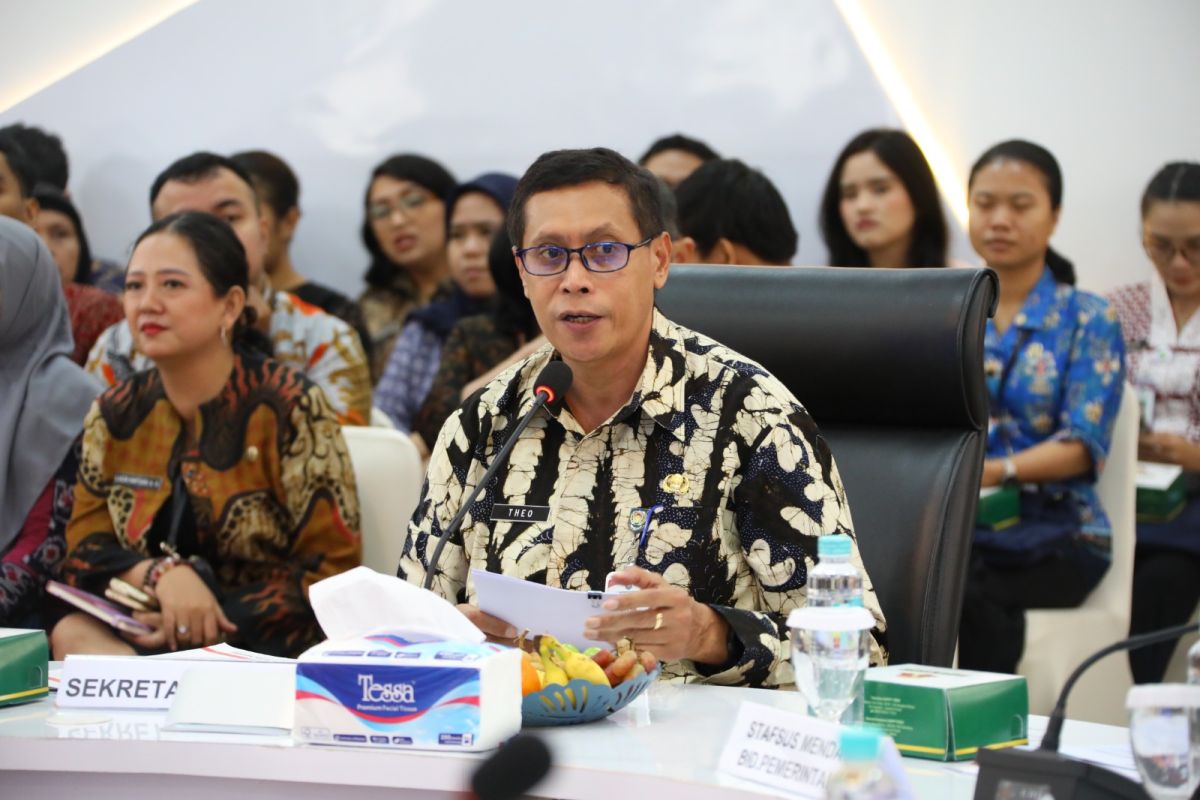
Jakarta (ANTARA) – The Ministry of Home Affairs’ Agency for Domestic Policy Strategy (BSKDN) is strengthening its policy studies to address real-world problems in government administration.
BSKDN Secretary Matheos Tan said the process of identifying strategic issues should not become a mere administrative routine or an exercise in compiling a list of problems. It should identify root causes, understand their effects and determine policy options that can be implemented.
“Identifying issues must be a collective process for understanding the fundamental problems affecting the quality of domestic governance,” Matheos said in a statement in Jakarta on Friday.
The effort was discussed at an event titled “Synergy of Domestic Governance Work Programmes in Identifying the Ministry of Home Affairs’ and Local Governments’ Strategic Issues for 2027”, held at the BSKDN Command Centre on Thursday (29 October).
Through the 2027 strategic-issue identification process, BSKDN aims to pinpoint priority problems requiring policy solutions and strengthen coordination between Ministry of Home Affairs work units and local governments.
Matheos explained that governance issues are often interconnected. The quality of public services, for example, is shaped not only by programme implementation but also by officials’ capacity, funding, coordination and institutional effectiveness.
Studies therefore need to take account of links between different areas of responsibility and involve relevant work units and local governments.
He said strategic studies should be supported by verifiable data, evaluation results, field findings and experience in implementing policies. This would enable BSKDN to draw up recommendations suited to actual needs and conditions on the ground.
Apep Fajar Kurniawan, the Home Affairs Minister’s special adviser on politics and network-building, said BSKDN should strengthen its role as a strategic partner to the ministry’s work units.
In his view, studies should start from unresolved problems and offer solutions that can be acted upon.
“BSKDN must position itself as an instrument for providing solutions to problems that have developed over time and for which answers have yet to be found,” Apep said.
He cited the resolution of administrative boundary disputes as an issue requiring research to identify more effective methods and approaches. Strategic issues should also be mapped against current needs so that research programmes do not operate in isolation and are better aligned with organisational priorities.
Meanwhile, Home Affairs Minister’s special adviser on governance Muchlis Hamdi said BSKDN’s studies should be geared towards the ministry’s policy needs.
He said it was important to evaluate existing regulations and policies to identify obstacles to implementation and new requirements arising as the governance environment changes.
“The world is moving quickly, and global developments have a profound influence. This means studies must be ready when the minister needs them,” Muchlis said.
He also stressed that studies should go beyond conceptual discussion and provide concrete input for decision-making.
To that end, BSKDN should identify policies that are not working optimally and ensure its analysis meets the ministry’s needs and supports the duties of relevant work units.
From the perspective of national development planning, Amos Prima Gracianto, a junior expert planner at the Ministry of National Development Planning (Bappenas), highlighted the importance of aligning the Home Affairs Ministry’s programmes with national development priorities.
He said the ministry plays a strategic role in guiding local governments, including through policy, facilitation and the alignment of central and regional regulations.
“In our view, the Ministry of Home Affairs, as the body responsible for guiding local governments, should be involved across all clusters of national priority programmes,” Amos said.
Amos said achieving the national economic growth target of 8 per cent by 2029 would require relevant policy support from both central and local government.
In this context, BSKDN is expected to produce studies and recommendations that can strengthen the Home Affairs Ministry’s contribution to meeting development targets.
Improving the quality of the civil service and developing more innovative policies are also important parts of this effort.