
Home Affairs Ministry warns Bandar Lampung City Government not to fall into a mental block in innovating
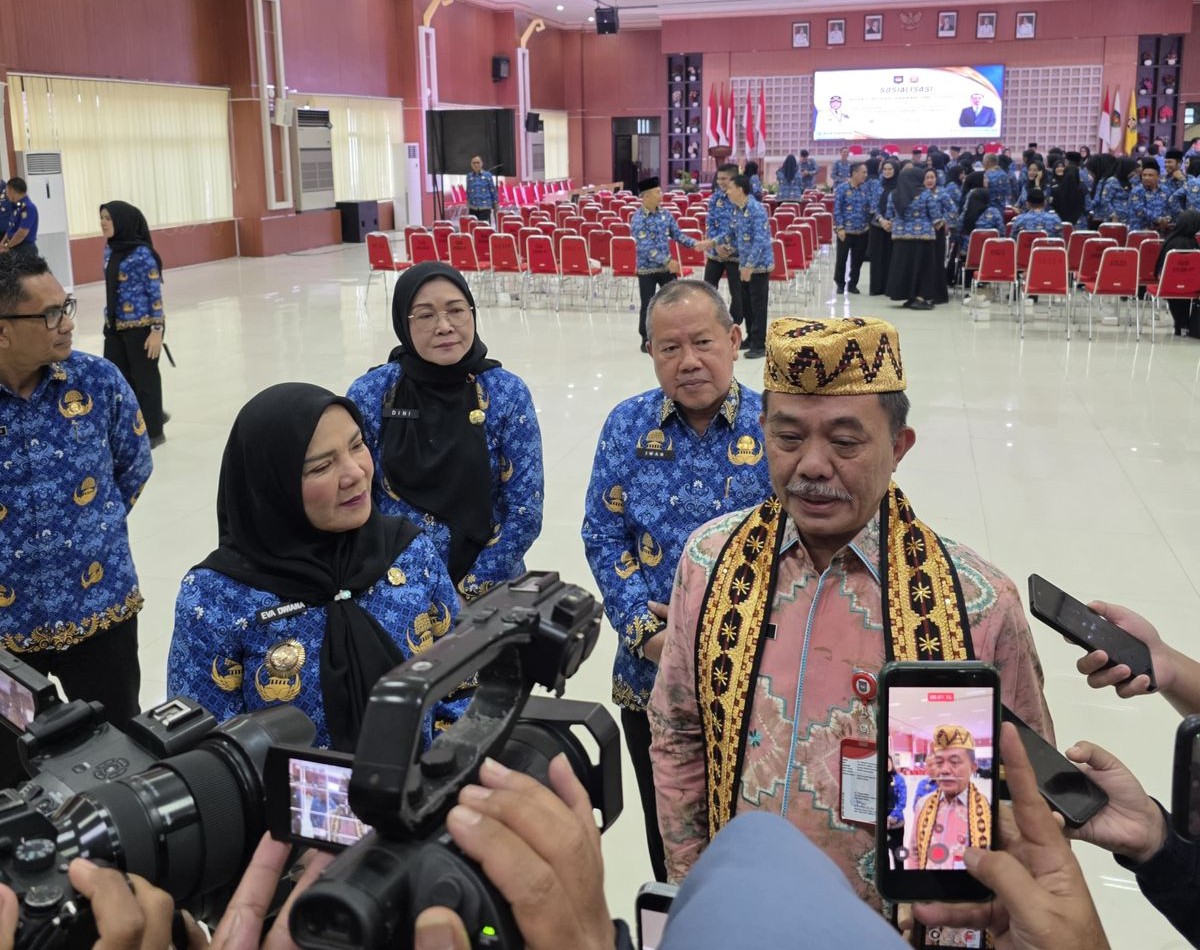
Yusharto Huntoyungo, Head of the Badan Strategi Kebijakan Dalam Negeri (BSKDN) at the Ministry of Home Affairs (Kemendagri), reminded Bandar Lampung City Government not to be trapped by a mental block that has long hindered local innovation. He argued that innovation does not have to be complex or digitally based, but must be able to deliver real solutions to a range of public service problems in the community.
He spoke as he gave directions on strengthening the regional innovation ecosystem in Bandar Lampung. He stated that local innovation is, at its core, renewal in the administration of regional governance aimed at improving the performance of local governments and the quality of public services.
‘For a long time we have often faltered, doubt to innovate because it is considered too simple. Meanwhile if we do not do that (innovation), our people will not be served inclusively,’ Yusharto said at the Semergou Hall of the Bandar Lampung City Government on Tuesday, 19 May 2026.
He explained that the measure of novelty in innovation should not be viewed from the perspective of the innovator, but from the perspective of the beneficiaries. A program deemed ordinary in one region, in his view, can still be an innovation when implemented in another region that previously did not receive similar services.
For example, he mentioned services for People with Mental Disorders (ODGJ) that had been implemented in one district but were not yet available in another. When such services are provided to meet the needs of communities in underserved areas, that already constitutes a regional innovation that provides real benefits and expands public services inclusively. ‘So do not look from the perspective of the innovator, but from the perspective of the recipients of the innovation,’ he said.
Moreover, Yusharto stressed that regional innovation must meet several criteria, including providing benefits to the public, not imposing burdens or service restrictions, in accordance with regional authority, and being replicable by other regions. He also reminded that innovation is not identical to digitalisation.
According to him, based on the 2025 Regional Innovation Index (IID) data, most innovations reported by local governments are non-digital. This condition shows that creativity in governance and public service can be realised through a range of simple but effective approaches.
‘This is the mental block among civil servants, so they are reluctant to innovate because they feel they must be entirely digital. In fact, most innovations are non-digital,’ he asserted.
At the event, Yusharto also assured that civil servants do not need to fear innovating. He explained that the government has provided legal protection for the execution of regional innovation as regulated in Article 389 of Law No. 23 of 2014 on Local Government. The regulation states that civil servants cannot be criminally charged if a pilot of regional innovation does not meet the targets set. ‘There are no barriers to innovating. Do not overthink the mental blocks that have hindered us from innovating,’ he said.
Yusharto also urged Bandar Lampung City to continue strengthening the regional innovation ecosystem through collaboration with various parties, including universities, communities, the business world, and the public. He said that involvement of various innovation actors would broaden the emergence of creative solutions that are adaptive to local needs.
Additionally, he praised the existence of an innovation clinic in Bandar Lampung, seen as a key facility in accelerating replication of innovations from other regions. Through this mechanism, regional government agencies can adopt and modify best practices to suit the needs and characteristics of their respective areas.
‘Most innovations produced by local governments come from replication. The key is observe, imitate, and modify, while still introducing novelty appropriate to local needs,’ he concluded.
Head of BSKDN Kemendagri Yusharto Huntoyungo emphasised the importance of synergy between central and regional governments and strengthening the strategic role of higher education institutions. He highlighted the importance of digitalising elections while remaining grounded in the basic principles of democracy.
He urged local governments to accelerate their leaps of innovation to improve competitiveness and the quality of public service. The Ministry of Home Affairs also emphasised the importance of innovation in managing BUMD as a key to improving public service quality and promoting regional economic growth.
The implementation of the BerAKHLAK values (service-oriented, accountable, competent, harmonious, loyal, adaptive, and collaborative) must begin with a disciplined mentality. The Proteg Applied Economics for Non-ASN Teachers program and the East Java Innovative Education Summit (EJIES) received positive appreciation from the Ministry of Home Affairs. The Ministry strengthened cooperation with the National Fire Agency to develop the 112 Single Emergency Call Number (NTPD) service in Indonesia.
Amran stated that smart city development does not have to imitate models from other regions or countries because each area has its own social challenges and geographic characteristics. The Directorate General of Territorial Administration Development at the Ministry of Home Affairs will strengthen national coordination ahead of The 9th ASEAN Smart Cities Network Annual Meeting. The Ministry notes that Baznas plays a strategic role in supporting
Source: jawawa.id (https://jawawa.id/newsitem/home-affairs-ministry-warns-bandar-lampung-city-government-not-to-fall-into-a-mental-block-in-innovating-1779545532)
Originally published by Media Indonesia (https://mediaindonesia.com/nusantara/892198/kemendagri-ingatkan-pemkot-bandar-lampung-jangan-terjebak-mental-block-dalam-berinovasi), translated from Indonesian