
Home Affairs Ministry Urges Regional Governments to Avoid Layoffs Amid Salary Payment Difficulties
Jakarta, CNBC Indonesia — The Ministry of Home Affairs has asked regional governments currently struggling to pay the salaries of civil servants (ASN) not to carry out dismissals, or terminations of employment.
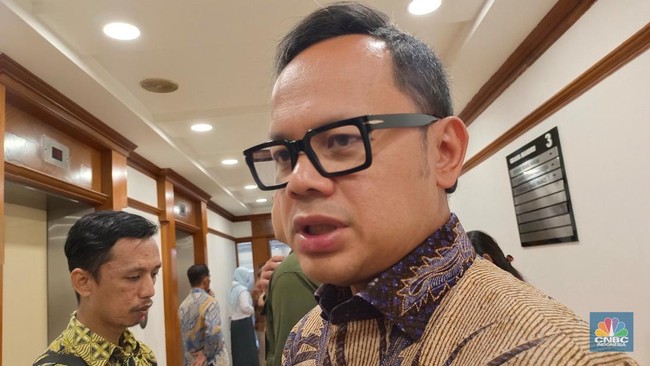
“Of course, we ask that regional heads do not too readily take drastic steps such as dismissal and sacking,” said Deputy Home Affairs Minister Bima Arya Sugiarto in the grounds of the State Palace, Jakarta, on Thursday (28/7/2026).
According to him, regional governments experiencing difficulty covering personnel spending as a result of cuts to regional transfer funds (TKD) from the central government can undertake fiscal efficiency measures.
To date, Bima said the Home Affairs Ministry is still mapping the list of regional governments experiencing difficulty paying civil servants’ salaries, covering both permanent civil servants (PNS) and government employees with work agreements (PPPK).
“Yes, we are continuing to map which regions are having difficulty paying salaries,” Bima stressed.
To resolve the fiscal pressure in the regions, Bima confirmed that the ministry has also established communication with the Ministry of Finance and House of Representatives Commission II, although no clear decision has yet been reached.
“This is still being deliberated and communicated with Commission II and the Ministry of Finance regarding many matters,” Bima said.
As is known, Home Affairs Minister Tito Karnavian yesterday also held a meeting with Finance Minister Purbaya Yudhi Sadewa to discuss policies on regional governments’ personnel spending.
“That is correct, we also conveyed the issue of ASN personnel spending in the regions to the Finance Minister (Purbaya),” said Tito when met by journalists at the Finance Ministry on Monday (27/7/2026).
In those discussions, Tito prepared a number of options so that civil servants in the regions can continue working and receive their entitlements. The strategy being prepared is for regional governments to first implement budget efficiency or increase their locally generated revenue (PAD).
“I have stated that there must be no option to send employees home or not pay them, so I am asking the regions to carry out efficiency measures first,” Tito continued.
He cited the example of Tidore City, which previously had problems paying civil servants’ salaries but is now starting to stabilise after a team from the Home Affairs Ministry’s Directorate General of Regional Finance went directly to the area.
Another example mentioned by Tito was Pekanbaru City, which managed to raise its locally generated revenue from around Rp800 billion in 2024 to Rp1.2 trillion in 2025, thanks to bureaucratic reform in the regional taxation sector.
Tito continued that if a regional government has carried out efficiency measures and increased its locally generated revenue but the budget is still insufficient, the next option is to make use of revenue-sharing funds (DBH) disbursed by the Finance Ministry through the Directorate General of Fiscal Balance.
“For regions whose locally generated revenue is genuinely very difficult but which have revenue-sharing funds at the Finance Ministry, we ask the Finance Minister for the DBH to be paid out, to help those regions cover their personnel spending, particularly those whose locally generated revenue is really strained and who have already carried out efficiency measures,” Tito explained.
As a final option, if efficiency, increased locally generated revenue, and the use of revenue-sharing funds are still insufficient to cover personnel spending, the Home Affairs Ministry will implement a top-up scheme.
“If the DBH is also insufficient or unavailable, well, this is what will be helped with a top-up. That is what we discussed earlier with the Finance Minister,” Tito explained.