
Home Affairs Ministry Steps Up ILASPP to Finalise Boundaries in 5,000 Villages
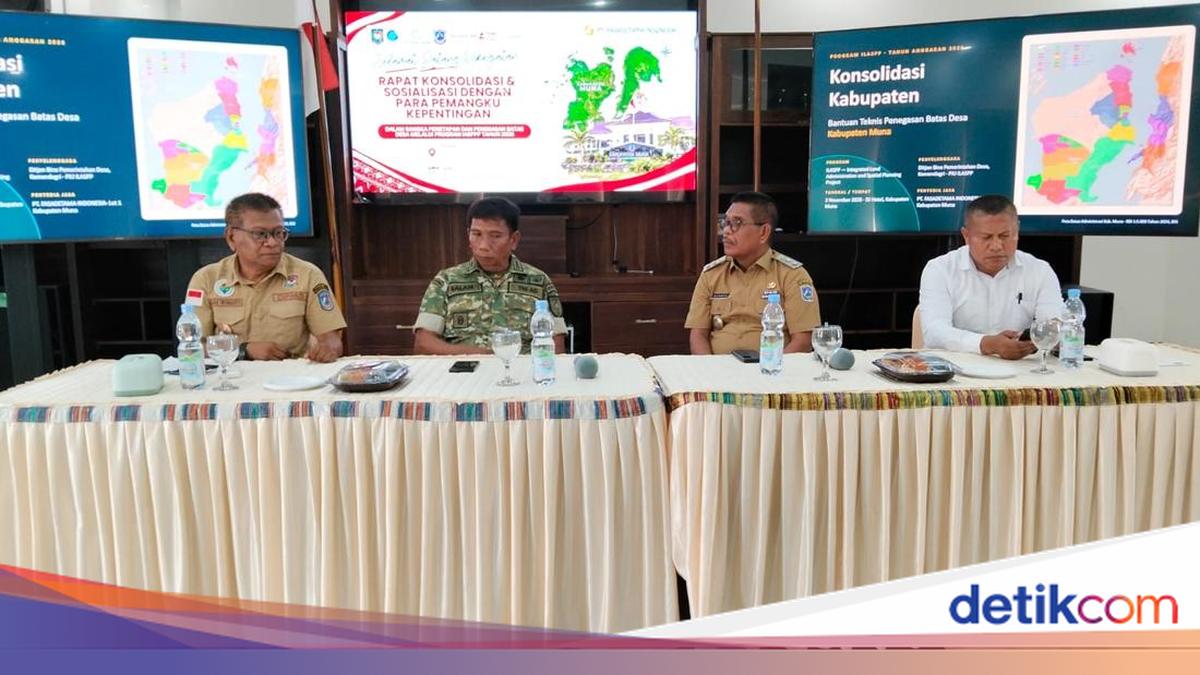
The Ministry of Home Affairs (Kemendagri) is pursuing the finalisation of definitive boundaries in 5,000 villages by 2029 through the Integrated Land Administration and Spatial Planning (ILASPP) programme. The target is part of the government’s effort to expedite certainty over village administrative boundaries, which remain unresolved in various regions.
The acceleration effort is being carried out by the Directorate General of Village Administration, together with the Ministry of Agrarian Affairs and Spatial Planning/National Land Agency (ATR/BPN), the Geospatial Information Agency (BIG) and the World Bank.
Bernhard Eduard Rondonuwu, director general of village administration at the Home Affairs Ministry, said several regencies had completed village boundary demarcation through ILASPP. He urged other regency governments across Indonesia to complete the process promptly.
“We are very grateful for the support of the North Sulawesi provincial government. Our ILASPP programme has reached Bolaang Mongondow. So far, 200 village boundaries have been completed. We hope this can serve as a reference and encourage other regencies to follow the example we have seen today. Keep up the enthusiasm,” Bernhard said in a statement on Thursday (12 November 2026).
Bernhard said ILASPP would run for five years, from 2025 to 2029. Through the programme, the government is not only promoting the completion of mapping, but also helping local governments improve their capacity and coordination in determining village boundaries in accordance with regulations.
So far, progress in demarcating village boundaries remains relatively low, at 16.77%, or 12,622 of the country’s 75,266 villages.
Bernhard said the completion of village boundaries should not be treated as a routine administrative matter. Boundaries provide the basis for development planning, orderly population administration and clarity over the ownership of government and community assets.
Local governments’ key role
Bernhard emphasised that setting village boundaries is the responsibility of regency and municipal governments, with the results formalised through a regent’s or mayor’s regulation. However, completing the process requires commitment and collaboration across all levels of government, from the central government to the provinces.
Provincial governments can help by facilitating the process or providing special financial assistance. The central government, meanwhile, supports the work through the Integrated Land Administration and Spatial Planning Project (ILASPP).
One of the programme’s outputs is a draft regional-head regulation on village boundaries. The Home Affairs Ministry has also urged local governments to include village boundary demarcation in their Regional Medium-Term Development Plans (RPJMD).
Source: jawawa.id (https://jawawa.id/newsitem/home-affairs-ministry-steps-up-ilaspp-to-finalise-boundaries-in-5-000-villages-1794480813)
Originally published by detikcom (https://news.detik.com/berita/d-8750251/kemendagri-genjot-ilaspp-pacu-penyelesaian-batas-definitif-di-5-000-desa), translated from Indonesian