
Home Affairs Ministry Simplifies Rules for Low-Income Households in Support of Three Million Homes Programme
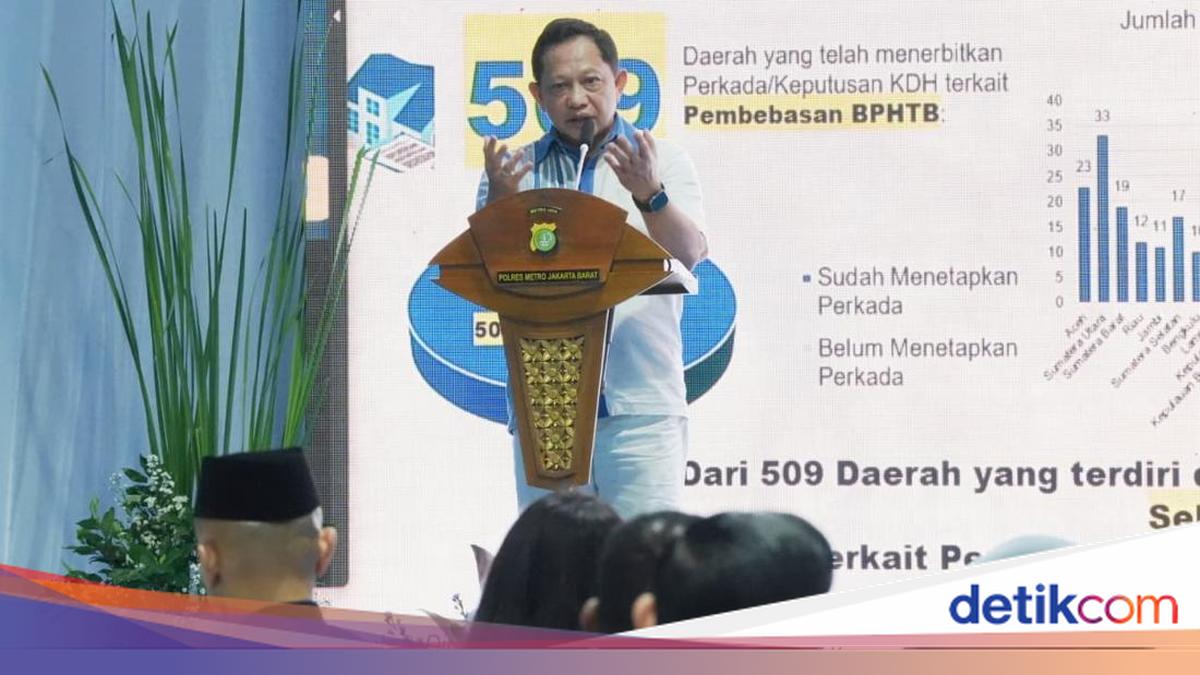
Home Affairs Minister Muhammad Tito Karnavian has reaffirmed the ministry’s commitment to supporting the Three Million Homes Programme, one of President Prabowo Subianto’s priority initiatives.
The support will take the form of streamlined regulations and assistance for low-income households (MBR) seeking access to decent housing.
Tito made the remarks at a home renovation and community health event in Kampung Ambon, Cengkareng, West Jakarta, today. He said housing remained a fundamental challenge in Indonesia.
He cited an estimated 30 million families who either do not own a home or live in inadequate housing. Separating housing affairs from the Ministry of Public Works and Housing (PUPR) and placing them under the Ministry of Housing and Settlement Areas (PKP), he said, was intended to give the issue more focused attention.
“Housing is one of people’s basic needs. The President’s programmes are all pro-people, especially those for ordinary people,” Tito said in a written statement on Saturday (24 October 2026).
Tito said the Home Affairs Ministry was ready to assist Housing and Settlement Areas Minister Maruarar Sirait, particularly through policies within its authority.
“We will continue to help him and give him our full support, including through regulations and by redefining low-income households,” he said.
One area of support concerns the eligibility criteria for low-income households. Tito said the definition should be based on income, rather than solely on the bottom 40 per cent of the population. Establishing the criteria, he said, was important to ensure housing policies reached those who needed them.
The ministry also supports waiving the Land and Building Acquisition Duty (BPHTB) for low-income households. The measure is intended to reduce costs for people seeking to renovate or build a home.
“Anyone renovating or building a house has to pay five per cent of the taxable sale value. We are reducing that to zero for low-income households,” he said.
Low-income households will also be exempt from fees for Building Approval (PBG), formerly known as a Building Permit (IMB). Tito said he had issued a circular to all regional heads on the policy.
He said the regulatory easements were expected to foster a housing development ecosystem that encouraged private-sector participation. Meeting housing needs, he added, should not rely solely on funding from the state budget (APBN), but should also involve developers and other parties.
Tito also highlighted the importance of the Self-Help Housing Stimulant Assistance (BSPS) programme, or home renovation scheme, to help people improve inadequate homes. He said the government was easing requirements for residents without land certificates, particularly those living in Jakarta’s slum settlements. Applicants for renovation assistance can use a certificate of financial hardship issued by a kampung or village head.
Tito said the home renovation programme was being developed as one way to address people’s basic needs. He also stressed the importance of delivering programmes directly in the field, enabling the government to assess housing conditions and understand residents’ needs.
He expressed hope that President Prabowo Subianto’s priority housing programme would run smoothly and benefit people in Jakarta and across Indonesia.
The event was also attended by Housing and Settlement Areas Minister Maruarar Sirait, Statistics Indonesia (BPS) head Amalia Adininggar Widyasanti, Jakarta Metro Police Chief Commissioner General Dadang Hartanto, Agrarian Spatial Planning Director-General at the Ministry of Agrarian Affairs and Spatial Planning/National Land Agency Embun Sari, and other officials.
Source: jawawa.id (https://jawawa.id/newsitem/home-affairs-ministry-simplifies-rules-for-low-income-households-in-support-of-three-million-homes-programme-1792857052)
Originally published by detikcom (https://news.detik.com/berita/d-8722558/dukung-program-3-juta-rumah-kemendagri-sederhanakan-regulasi-mbr), translated from Indonesian