
Home Affairs Ministry Pushes for UU Revision to Regulate Fines for Lost e-KTPs
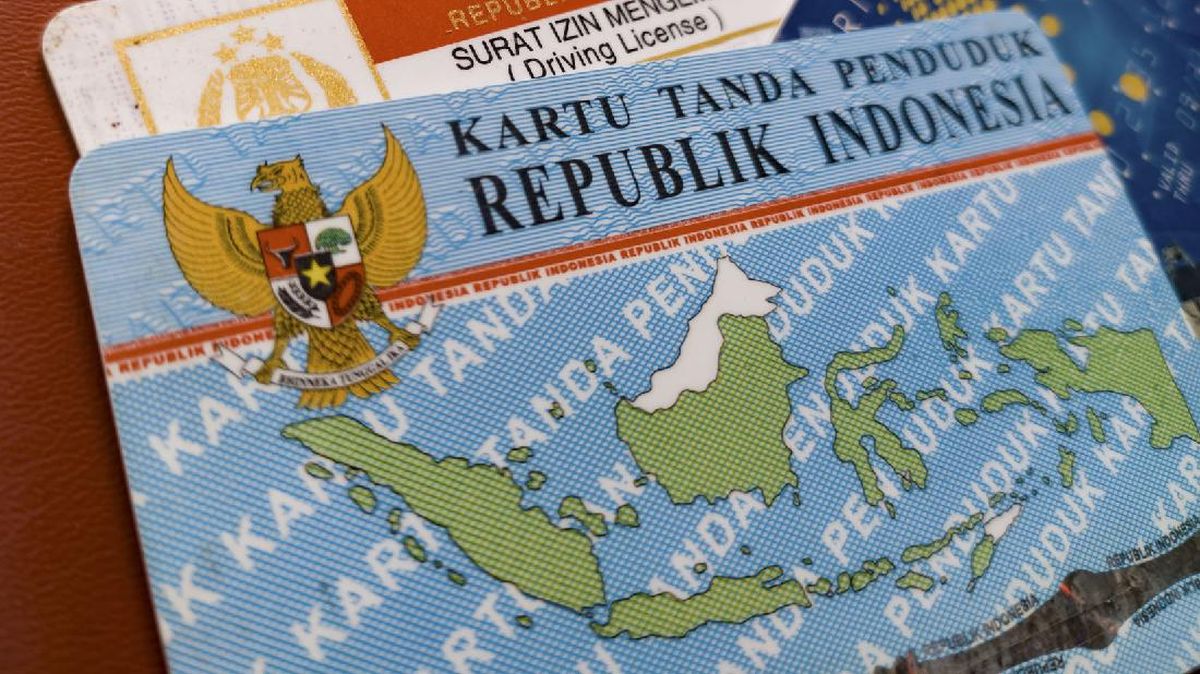
The Ministry of Home Affairs (Kemendagri) is proposing the imposition of fines for lost electronic ID cards (e-KTPs) as part of the revision to Law No. 24 of 2013 on Population Administration (Adminduk).
This was stated by Deputy Minister of Home Affairs Bima Arya during a working meeting with Commission II of the House of Representatives (DPR RI) in Senayan, Jakarta, on Monday (20/4).
According to their study, there are still citizens who are not very responsible with their population documents, especially e-KTPs.
“Many citizens are not very responsible in using or maintaining their KTP and other population identity documents, so they are easily lost and so on. Making a new one is free,” he said.
He stated that to increase budget efficiency and promote orderly administration, Kemendagri views the need to regulate the imposition of fees for reprinting population documents.
Certain conditions, such as natural disasters, changes in data elements, or damage due to factors beyond the citizen’s control, would be exempted from the fines.
“It needs to be considered so that citizens can be more responsible by requiring them to pay, bearing all costs, fines, something like that. Every day there are tens of thousands (of lost population documents) because it’s free, so this is also a cost centre here,” said Bima Arya.
13 points of proposed revisions to the Adminduk Law
He explained that the fine proposal is one of a total of 13 substantive points for the revision of the Adminduk Law presented by Kemendagri in the meeting with Commission II of DPR RI.
Other proposals include strengthening the population registration number (NIK) as a single identity number. The NIK is proposed to be mandatory as the single identity number for all public services.
Then, the addition of child identity cards (KIA) as population documents. KIA is proof of identity for children under 17 years old and not yet married.
In addition, the term “cacat” (disability) in current population documents is proposed to be replaced with “disabilitas”, in line with Law No. 8 of 2016 on Persons with Disabilities.
Furthermore, the Digital Population Identity (IKD) application will be strengthened, as well as the Population Administration Information System (SIAK) and the position of adminduk in government administration.
“Adminduk has not yet been explicitly stated as a basic service. If it is affirmed in the law that adminduk is a mandatory government affair related to basic services, then all regional governments will be more committed to budgeting and planning,” said Bima.
On the other hand, Bima expressed that funding for adminduk administration should be regulated to be borne by the state revenue and expenditure budget (APBN) and regional revenue and expenditure budget (APBD).
“In this funding dimension, everything is borne by the APBN. So, there is empty space in the APBD. It would be great if the new law can provide a legal basis for regions to allocate through APBD,” he said.
Other proposals concern the utilisation and protection of population data in public services. Kemendagri assesses the need for strengthening as a guideline for implementing interoperability and utilisation of population data for all ministries/institutions.
In addition, strengthening civil data collection and recording, coordination between institutions and between countries, as well as the division of authority between central, provincial, and regency/city levels are also proposed to be accommodated in the revision of the Adminduk Law.
“So far, we often debate wasting energy on who leads, whose authority. We think in the upcoming discussion process it will be good if we touch on issues of authority and inter-agency coordination,” he said.
The final proposal is the removal of several administrative and criminal sanction provisions in the context of citizenship. “It’s better to activate an active recording system from the population side as well as from the government side,” said Bima.