
Home Affairs Ministry pushes digital transaction ecosystem for regional revenue management
The Ministry of Home Affairs is encouraging regional governments not to interpret transaction digitalisation merely as providing cashless payment channels. Digitalisation is expected to develop into an integrated regional revenue management ecosystem capable of boosting locally generated revenue (PAD).
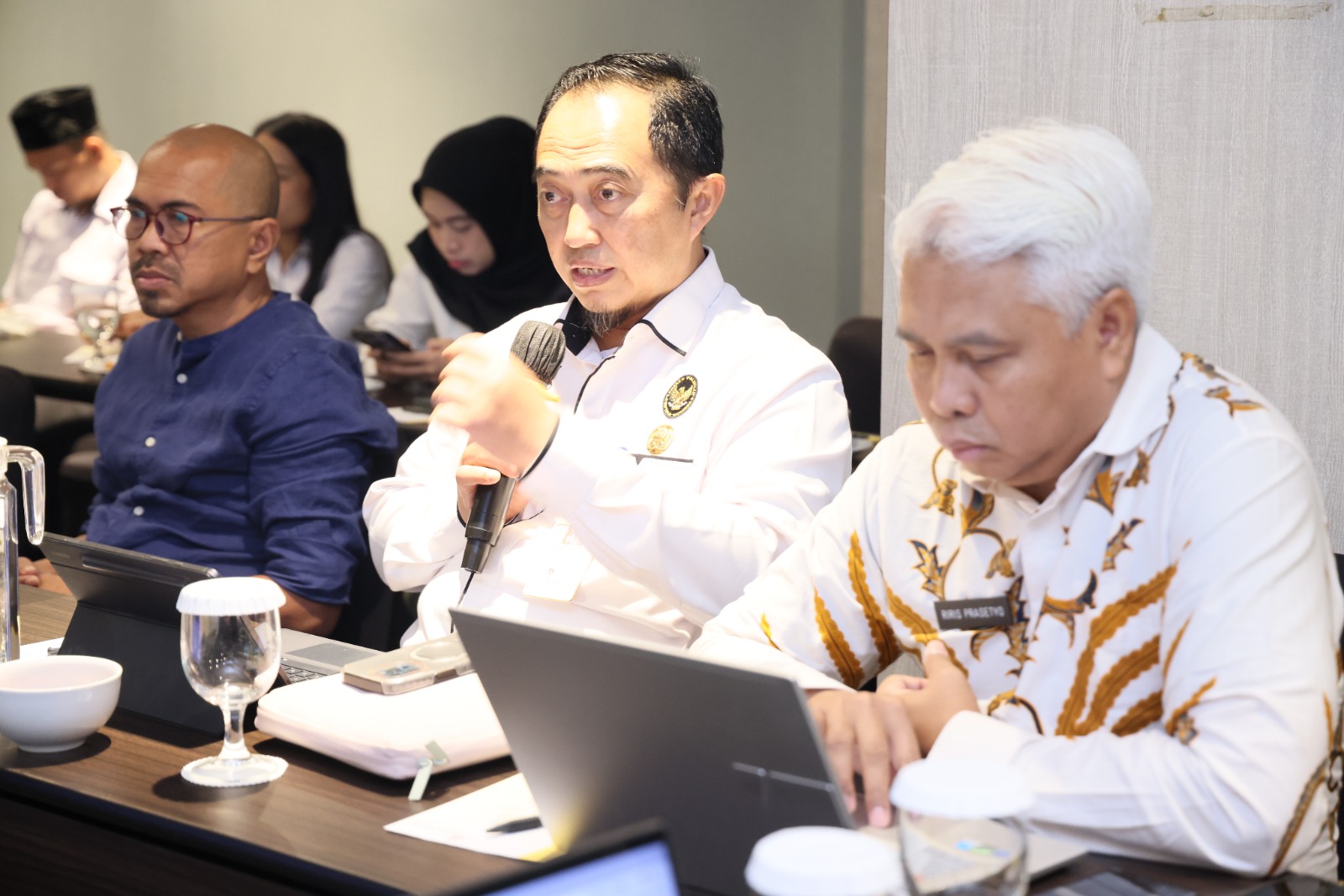
This was conveyed by Director of Regional Revenue at the Ministry of Home Affairs Teguh Narutomo during a coordination meeting and discussion on amendments to Ministry of Home Affairs Regulation No. 56 of 2021 concerning the Regional Digitalisation Acceleration and Expansion Team (TP2DD) at provincial and regency/city level and the procedures for implementing the electronification of regional government transactions (ETPD), held in Jakarta on Tuesday (18/8/2026).
Teguh said that the digitalisation of regional government transactions is an important part of transforming regional financial governance. According to him, implementing ETPD is not sufficient merely by providing QRIS, virtual accounts, mobile banking or other digital payment channels.
“The electronification of regional government transactions is not just about providing QRIS, virtual accounts or mobile banking. What is more important is building an integrated transaction ecosystem and making transaction data an instrument for improving the quality of regional financial management,” said Teguh.
According to him, ideal digitalisation must be integrated from the data collection, assessment, billing, reconciliation and reporting processes for regional taxes and levies.
With such integration, payment transactions are not only recorded as revenue activity, but can also become a data source to strengthen oversight and regional revenue policy-making.
Teguh believes regional governments need to change their paradigm from merely digital payment towards digital revenue management.
This means regional governments should not only provide convenience for the public to pay their tax obligations digitally, but also utilise transaction data to identify revenue potential, improve taxpayer compliance, and carry out intensification and extensification of regional taxes.
“We need to change our perspective from digital payment to digital revenue management. Transaction data must not stop as a payment record, but must be utilised to monitor, map potential and make data-based regional revenue policies,” said Teguh.
He added that the success of digitalisation is not solely measured by the increasing number of transactions carried out through digital channels.
Furthermore, digitalisation must be able to have an impact on regional revenue performance.
“The measure of digitalisation success is not only how many transactions are carried out through digital channels, but whether digitalisation can improve taxpayer compliance, broaden the tax base, reduce leakages and ultimately increase PAD,” he said.
In its implementation, Teguh believes the Regional Digitalisation Acceleration and Expansion Team (TP2DD) has a strategic position to ensure digital transformation proceeds in a directed manner.
TP2DD, he said, should not merely be an institutional formality forum. The team needs to become a driver of coordination between regional governments, banks, payment system providers and other stakeholders.
“TP2DD should not just be a formality forum. TP2DD must become the engine of digital transformation coordination in the regions,” he stressed.
According to Teguh, TP2DD needs to encourage regional governments to have a clear digitalisation roadmap, determine priority sectors and transaction types, and identify various obstacles in its implementation.
On the other hand, the Regional Revenue Agency (Bapenda) still has an important role as the owner of the regional tax collection business process. Meanwhile, TP2DD plays a role in strengthening coordination and building a digitalisation ecosystem with various parties.
Teguh emphasised that the main challenge of digitalisation is not only about the availability of technology. According to him, the success of digital transformation depends heavily on the ability of regional governments to integrate regulations, institutions, business processes, information systems, data, infrastructure, human resources and public behaviour.
He reminded that regional governments should not already have various digital payment channels while the payment data is not yet connected to the regional tax management system.
“We must not have invested heavily in digital systems, but changes in business processes and revenue performance are not felt,” said Teguh.
Therefore, the amendment to Ministry of Home Affairs Regulation No. 56 of 2021 is expected to strengthen the policy direction of regional government transaction electronification so that it is more relevant to current digital transformation needs.
“The electronification of regional government transactions must not only become a digitalisation of payment methods, but must become an instrument to strengthen governance and optimise regional revenue,” concluded Teguh.
Source: jawawa.id (https://jawawa.id/newsitem/home-affairs-ministry-pushes-digital-transaction-ecosystem-for-regional-revenue-management-1787309464)
Originally published by Media Indonesia (https://mediaindonesia.com/nusantara/924456/kemendagri-dorong-digitalisasi-transaksi-menuju-ekosistem-pengelolaan-pendapatan-daerah), translated from Indonesian