
Home Affairs Ministry Prepares New 2027 Regional Budget Scheme, Regions Required to Tag Food Security Spending
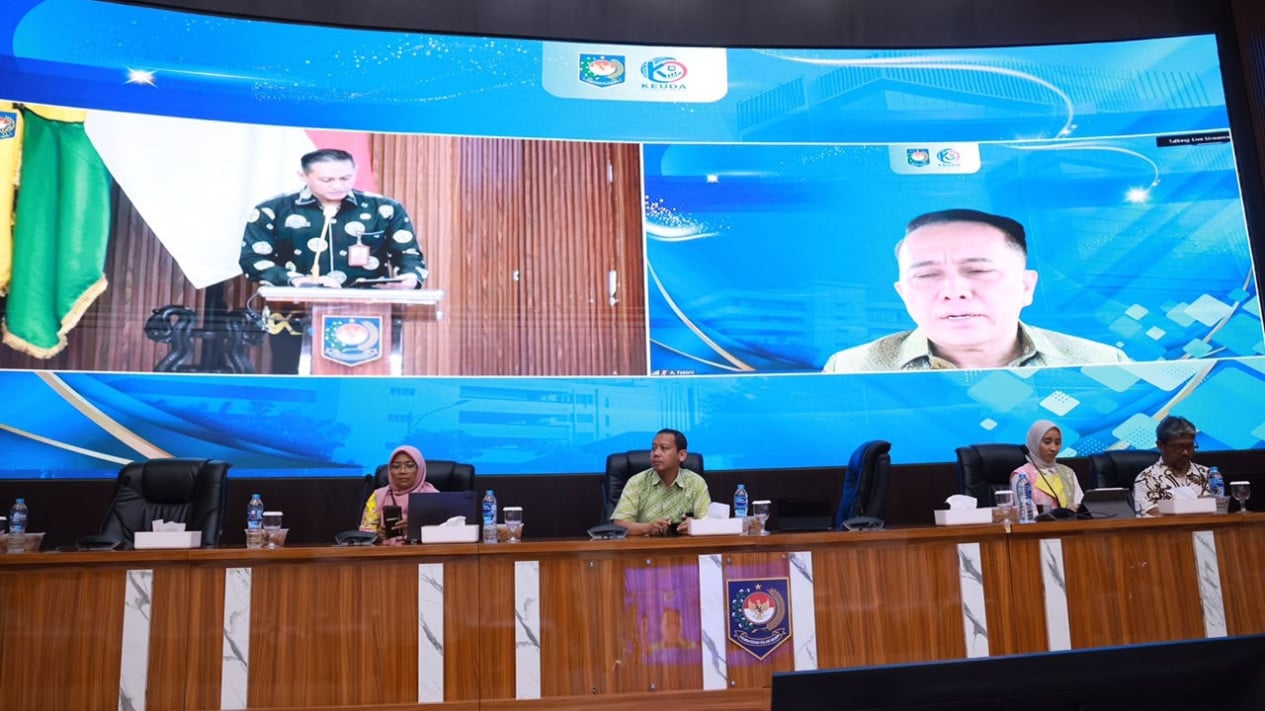
The Ministry of Home Affairs (Kemendagri) has begun preparing a new mechanism for the preparation of the 2027 Fiscal Year Regional Revenue and Expenditure Budget (APBD). Through this budget tagging policy, local governments are requested to ensure that expenditure allocations genuinely support food security programmes as one of the national development priorities.
This policy was socialised by the Directorate General of Regional Financial Management (Ditjen Bina Keuda) of the Ministry of Home Affairs during a socialisation event based on the Decree of the Minister of Home Affairs (Kepmendagri) Number 900.1-861 of 2026 for the Preparation of the 2027 Fiscal Year APBD.
The event, which took place via a hybrid format from the Sasana Bhakti Praja (SBP) Building of the Ministry of Home Affairs in Jakarta on Friday, 26 June 2026, was attended by local governments from across Indonesia, both in person and online.
This socialisation is part of the Ministry of Home Affairs’ efforts to strengthen the synchronisation between regional planning and budgeting with national development priorities, particularly in supporting food security towards ‘Indonesia Emas 2045’.
Budget Tagging as a Strategic Instrument
The Director General of Regional Financial Management at the Ministry of Home Affairs, Agus Fatoni, emphasised that budget tagging serves as an important instrument to ensure that every local government provides tangible support to national priority programmes.
According to him, the mechanism also aims to ensure the fulfilment of mandatory spending in the education and public service infrastructure sectors.
“Tagging is a strategic step to ensure that every rupiah of regional expenditure truly supports the achievement of national development targets and the needs of the community,” said Fatoni.
He explained that food security is not only related to the availability of food. Other aspects, such as price affordability, distribution, consumption quality, and the sustainability of regional food systems, are also parts that must be strengthened through budgetary policies.
Therefore, the role of local governments is considered vital through the preparation of programmes and activities that are integrated into both planning and budgeting documents.
Supporting the 2025–2029 RPJMN Targets
Fatoni stated that the 2027 Fiscal Year Food Security Tagging was designed to support the National Priority Programmes outlined in the 2025–2029 National Medium-Term Development Plan (RPJMN).
Through this mechanism, local governments can identify and ensure that budget allocations are specifically directed towards strengthening the food sector.
Several focus targets include:
Source: jawawa.id (https://jawawa.id/newsitem/home-affairs-ministry-prepares-new-2027-regional-budget-scheme-regions-required-to-tag-food-security-spending-1782463965)
Originally published by VIVA.co.id (https://www.viva.co.id/bisnis/1908992-kemendagri-siapkan-skema-baru-apbd-2027-daerah-wajib-tandai-anggaran-ketahanan-pangan), translated from Indonesian