
Home Affairs Ministry praises Jakarta's push for urban farming development
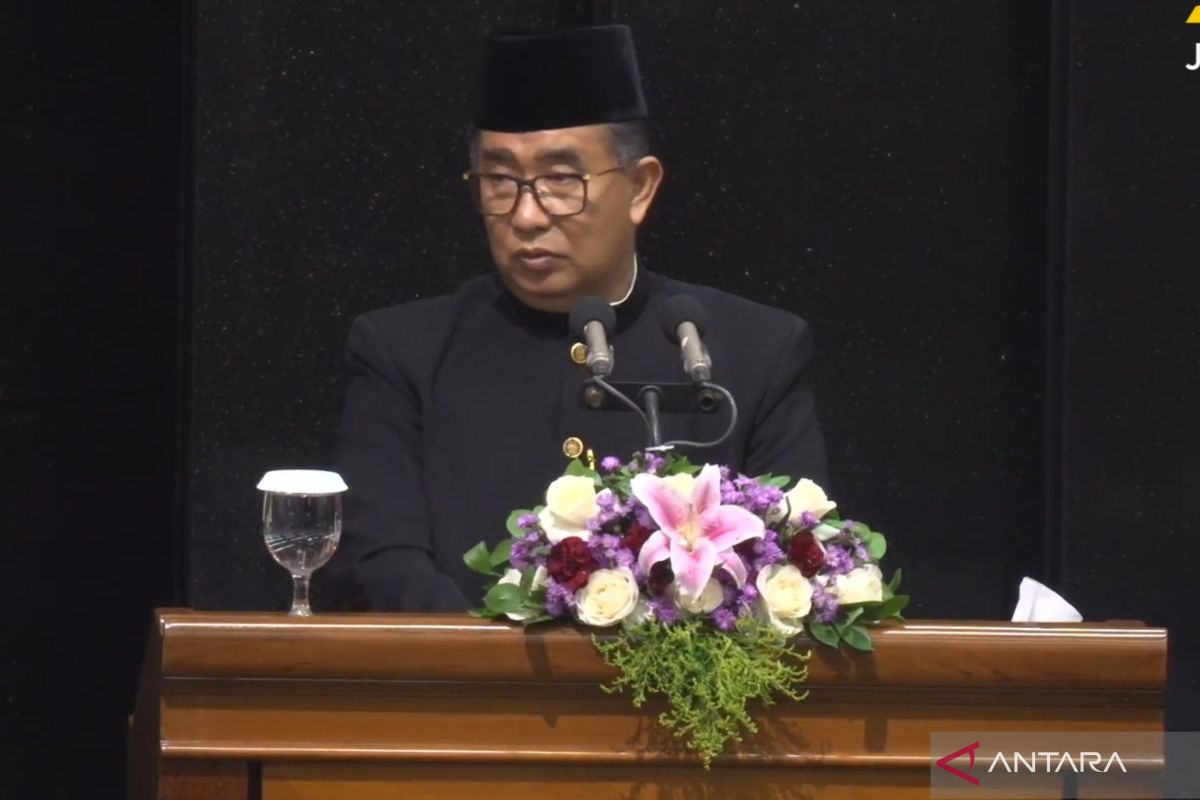
The Ministry of Home Affairs (Kemendagri) has expressed appreciation for the Jakarta Provincial Government’s continuous efforts to promote innovation in strengthening food security, particularly through the development of urban farming. Akmal Malik, Director General of Politics and General Administration at Kemendagri, stated that urban farming is not merely an activity of planting crops in a city environment, but a social movement that builds public awareness about the importance of food self-sufficiency, environmental sustainability, and improving the quality of life for urban communities. “The utilisation of narrow spaces, house yards, public parks, and even rooftops through hydroponic and verticulture technologies has demonstrated that spatial limitations are not a barrier to producing healthy and quality food,” he said during a plenary session commemorating Jakarta’s anniversary at the DPRD DKI building on Monday. Akmal noted that this initiative also provides economic benefits for the community, strengthens family resilience, and simultaneously creates green spaces that support the quality of the urban environment. In line with national development goals and the priorities of President Prabowo Subianto, he emphasised that strengthening food security must become a collective movement involving the central government, regional governments, businesses, universities, communities, and all elements of society. He added that regional governments have a strategic role as the driving force through policy-making, mentoring, education, and the facilitation of modern agricultural technology suited to urban characteristics. According to 2025 data from the DKI Jakarta Food Security, Marine Affairs, and Fisheries Agency (KPKP), the number of urban farming practitioners in Jakarta has reached 5,910 individuals across 521 farmer groups. The Jakarta Provincial Government provides various supporting facilities, including production inputs, technical and institutional assistance from extension workers, education and training, as well as collaboration with the private sector, state-owned enterprises (BUMN), regionally-owned enterprises (BUMD), the Indonesian National Armed Forces (TNI), the National Police (Polri), correctional institutions, religious organisations, and the general public. From a policy perspective, the Jakarta Provincial Government has also developed a spatial-based urban farming development roadmap through the Urban Agriculture Grand Design 2018–2030. This programme aims to meet family food needs, reduce household expenditure, increase income, absorb labour, control inflation, and preserve the environment and native Jakarta plants.