
Home Affairs Ministry Launches Regional Fiscal Incentives for Local Government Performance
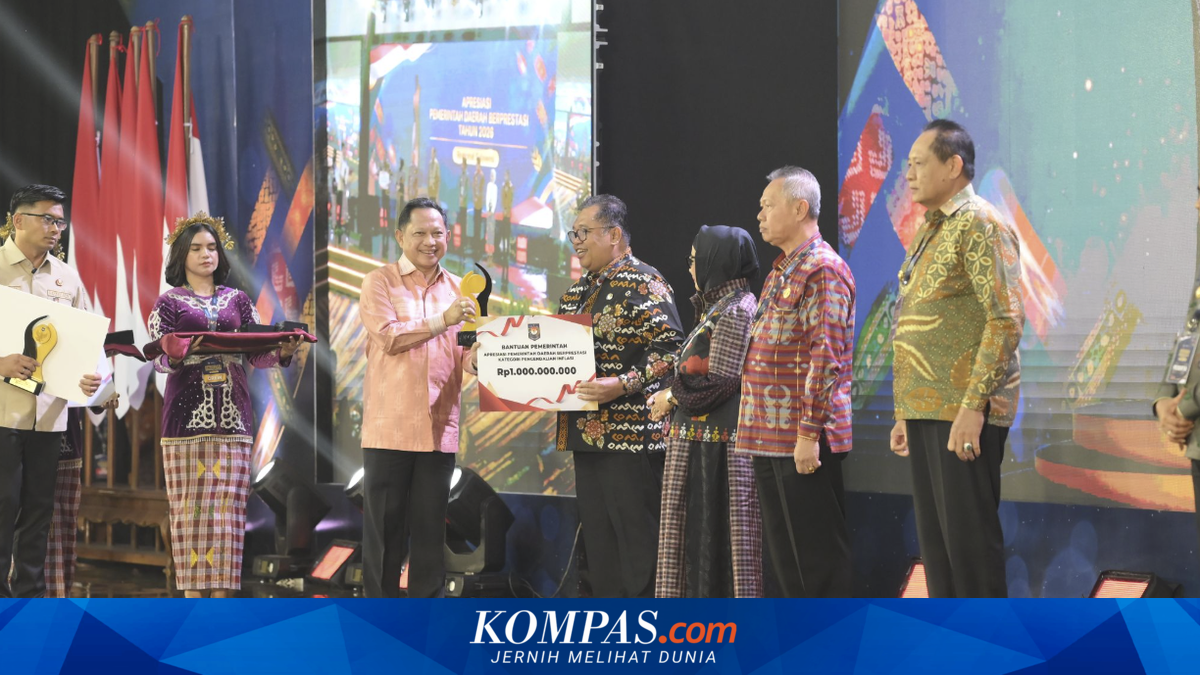
The Ministry of Home Affairs (Kemendagri) and Kompas.com successfully organised the 2026 Regional Excellence in Local Government Award for Sulawesi in Kendari, Southeast Sulawesi on Friday, 29 May 2026.
Unlike conventional national evaluation systems, this award was designed regionally to ensure fair competition for areas with limited fiscal capacity.
Home Affairs Minister Muhammad Tito Karnavian stated that this revised competition structure is a crucial step to prevent smaller regions from being immediately outmatched by larger ones.
This innovative approach is supported by Kemendagri’s budget allocation, directly converted into tangible fiscal incentives for local governments.
‘As previously communicated with regional leaders, the programme draws from a one-trillion-rupiah Kemendagri budget allocation, specifically for fiscal incentives,’ Tito Karnavian said in his speech in Kendari.
Tito explained that previous similar awards were managed by the Ministry of Finance and evaluated on a national scale.
However, after internal review, Kemendagri identified clear disparities when non-Java regions were pitted against metropolitan cities and regencies.
‘After our internal review, if judged nationally, winners would typically be large cities or regencies, leaving smaller ones at a disadvantage,’ the minister explained, stressing the rationale for regional separation.
‘For instance, strong regions in Sulawesi would not benefit from data when quantitative indicators are compared with areas having regional revenue and expenditure budget (APBD) many times larger,’ he illustrated.
Budget capacity is the key factor behind dividing the competition into 18 regional events across Indonesia.
‘For example, Kolaka competing with Badung Regency in Bali with a 10-trillion-rupiah budget, or Bojonegoro with 10 trillion — it would be impossible to win,’ Tito added, providing a logical illustration.
‘That’s why we’ve moved to a regional system, with competitions within Sulawesi between governors, regents, and mayors,’ he concluded.
The Sulawesi regional competition features four main categories: unemployment reduction, creative financing, inflation control, and poverty reduction and stunting mitigation.
Kemendagri confirmed all evaluations are objective and free from interference, using quantitative data from the Central Statistics Agency (BPS) and real local revenue (PAD) data.
This healthy competitive platform also demonstrates that many regional leaders are working honestly, achieving results, and dedicating themselves to advancing their areas.