
Home Affairs Minister Urges Regional Heads to Prioritise Leprosy Handling to Strengthen Human Resources
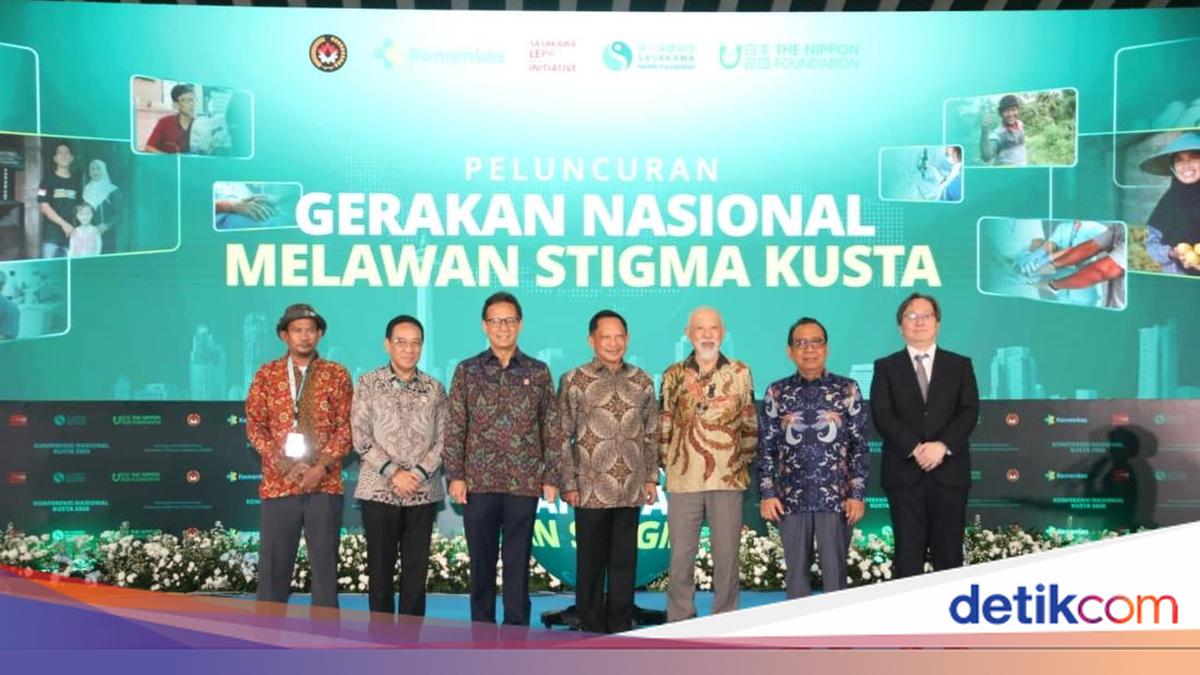
Minister of Home Affairs (Mendagri) Muhammad Tito Karnavian has asked all regional heads to prioritise the management of leprosy as part of efforts to improve the quality of human resources. According to him, the commitment of regional governments (Pemda) is key to accelerating prevention, case detection, treatment and the elimination of stigma against people affected by leprosy.
The Interior Minister made these remarks at the 2026 National Leprosy Conference, themed ‘Accelerating Leprosy Elimination: Indonesia’s Commitment, Global Collaboration’, held at the Grand Sahid Jaya Hotel in Jakarta on Friday (10/7).
In his address, Tito revealed that, based on data presented at the forum, Indonesia remains one of the countries with a number of new leprosy case detections that requires serious attention. He said this situation must serve as a reminder for all regional governments to strengthen their efforts to tackle leprosy in a sustained manner.
“I want to highlight a few things that may serve as a wake-up call for all of us, so that we do not treat this event as an ordinary ceremony,” Tito said in his statement on Friday (10/7/2026).
Tito emphasised that the quality of human resources is the main foundation of regional development. Consequently, efforts to improve public welfare will not be optimal if health issues, including leprosy, are not addressed seriously.
Furthermore, Tito assessed that success in tackling leprosy is largely determined by the commitment of regional heads. That commitment must be reflected across all stages of regional development, from planning and budgeting to programme implementation in the field.
“There must first be political will. There must be a mindset of seriousness. If those at the top are not serious and it is simply passed down to the regional health office and so on, it will become routine, back to programmes, business as usual,” he asserted.
He went on to explain that leprosy is a disease caused by bacteria and can therefore be cured through proper treatment. For this reason, regional governments are expected to become more active in conducting early detection, identifying cases from the outset, ensuring patients receive treatment until completion, and strengthening public education.
As a form of encouragement to regional governments, the Interior Minister revealed that the Ministry of Home Affairs (Kemendagri) is considering including health-sector performance, covering leprosy and tuberculosis (TB), as one of the indicators in its awards programme for regional governments. This step is expected to foster healthy competition while strengthening regional commitment to improving the quality of health services.
“One of the things I have in mind is to recognise the regions that are most proactive towards programmes in the health sector. And one of the criteria—one we may include—is which regions have good programmes for handling TB and leprosy,” he concluded.
On the same occasion, a commitment signing was carried out by a number of governors as a form of support for accelerating leprosy elimination in Indonesia. The event was also attended by Coordinating Minister for Human Development and Culture (PMK) Pratikno, Minister of Health Budi Gunadi Sadikin, regional heads and relevant stakeholders.
Source: jawawa.id (https://jawawa.id/newsitem/home-affairs-minister-urges-regional-heads-to-prioritise-leprosy-handling-to-strengthen-human-resources-1783677250)
Originally published by detikcom (https://news.detik.com/berita/d-8568452/mendagri-minta-kepala-daerah-prioritaskan-penanganan-kusta-untuk-perkuat-sdm), translated from Indonesian