
Home Affairs Minister Urges Local Governments to Speed Up Social Protection Registration to Improve Aid Accuracy
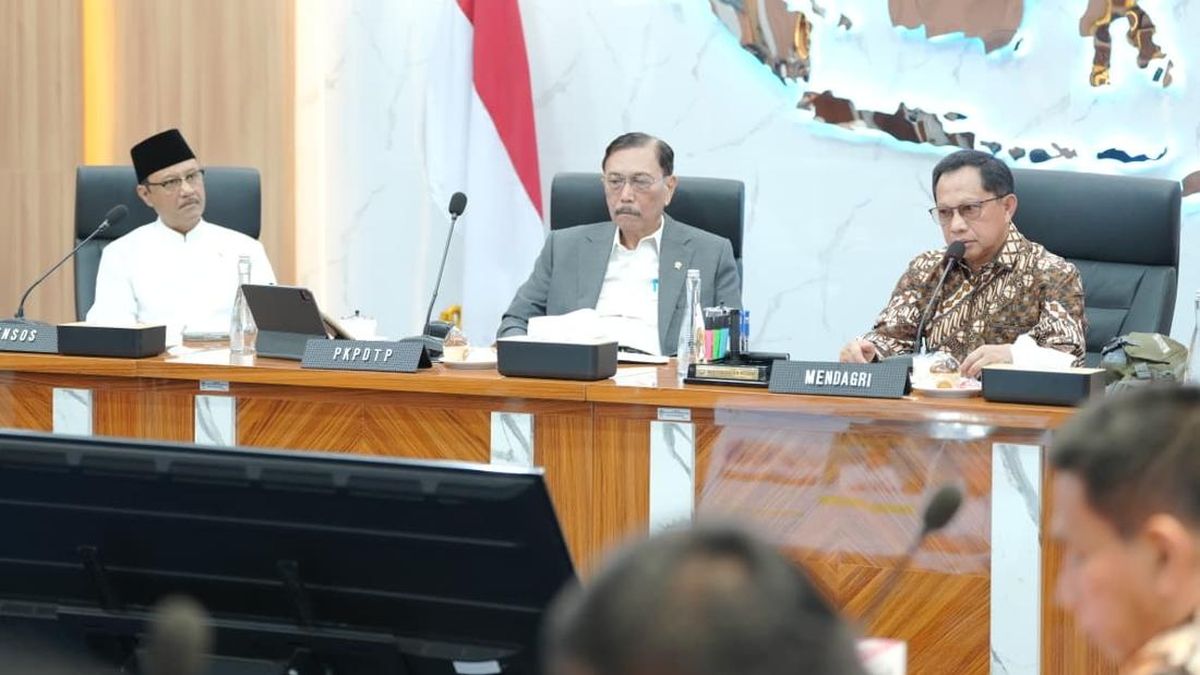
Home Affairs Minister Muhammad Tito Karnavian has called on local governments to speed up registration for Digital Social Protection (Perlinsos). The move is intended to ensure that social assistance is distributed more accurately and reaches the people it is meant to support.
He made the request at a coordination meeting on accelerating Digital Social Protection registration on Friday (6 November). The meeting was held in a hybrid format at the Ministry of Home Affairs’ central office in Jakarta, with governors, regents and mayors from across Indonesia taking part.
Tito said President Prabowo Subianto had stressed the importance of simplifying bureaucracy at a cabinet meeting at the State Palace. This would be achieved through the digitalisation of government and the integration of population data.
The directive underpins the development of a digital government system connecting a range of public services. The system is designed to make services more effective and easier for the public to access.
“The President has ordered the digitalisation of Indonesia’s government system—SPBE, or the Electronic-Based Government System, e-government, or GovTech, Government Technology. In essence, central and regional government services are to be digitalised so that public services improve compared with the manual system,” he said in a written statement on Friday (6 November).
According to Tito, digitalisation is a major step towards making public services easier to access. Residents will not need to travel between locations or visit multiple government agencies in person.
The social sector was chosen as the first area in which to test the system. Both central and regional governments have mechanisms for providing assistance to the public.
“As the first step, the system is being tested and trialled in the social sector, namely Social Protection. We know that the government, at both central and national levels, has mechanisms for providing assistance to the public,” he said.
Digital Social Protection is part of the government’s effort to build a digital government system (e-government/GovTech). In this system, population data from electronic identity cards (KTP-el) will provide the basis for integrating various public services.
The foundation is supported by the Ministry of Home Affairs’ Directorate General of Population and Civil Registration (Dukcapil), which has integrated population data with biometric information.
“Alongside this, a system will be developed to connect all public services, including those provided by the Health Ministry and the Education Ministry, motor vehicle services, and the Agrarian Affairs and Spatial Planning Ministry/National Land Agency (ATR/BPN), including land certificates. This means each citizen will need only a single sign-on and one unique number,” Tito explained.
In the social sector, data integration will allow the government to match residents’ identities with information on land and vehicle ownership. The results will be used to determine eligibility for social assistance.
The system, developed by the National Economic Council (DEN) with several ministries and agencies, is expected to help the government deliver assistance more effectively. Support may be provided in cash or in kind.
“Some people may qualify for cash assistance, others for non-cash assistance, and some for both. Others may be deemed ineligible because, for example, they own a car or a large area of land; that will be easy to identify,” he said.
Tito stressed the importance of Perlinsos agents in speeding up registration. Not everyone has a smartphone or can operate the application independently.
According to the Social Affairs Ministry’s Digital Social Protection dashboard, as of 6 November 2026, 18.8 million households had completed registration. More than 1.05 million agents were registered, with over 502,000 active.
“We have reported that 18.8 million households have registered, and their faces have been recognised to establish whether they are eligible. More than one million agents have also registered,” he said.
He added that speeding up registration would also help local governments identify people in need of assistance and ensure that regional social aid reaches its intended recipients.
The effort also supports regional development targets, including reducing poverty and stunting.
“Digital Social Protection is very useful in helping local governments,” he added.
Tito praised the two provinces with the highest registration rates: Aceh, at 51.25 per cent, and Bali, at 50.73 per cent. Both have exceeded 50 per cent.
He urged other regions to establish teams or task forces to accelerate Perlinsos registration, involving their social affairs and population and civil registration offices. Regional secretaries are to oversee the work, while regional heads will be responsible for it.
“My recommendation is that the head of each regional social affairs office—at provincial, regency or municipal level—should lead the team, alongside the other necessary offices, including Dukcapil. The regional secretary can oversee it, with the regional head responsible,” he said.
The coordination meeting was also attended by DEN Chairman Luhut Binsar Pandjaitan, Social Affairs Minister Saifullah Yusuf and Deputy Head of the National Cyber and Crypto Agency (BSSN) Albertus Rachmad Wibowo. Several regional heads or their representatives also joined online.
Source: jawawa.id (https://jawawa.id/newsitem/home-affairs-minister-urges-local-governments-to-speed-up-social-protection-registration-to-improve-aid-1793955105)
Originally published by CNN Indonesia (https://www.cnnindonesia.com/nasional/20261106150257-25-1424153/mendagri-minta-pemda-percepat-registrasi-perlinsos-demi-akurasi-bansos), translated from Indonesian