
Home Affairs Minister Urges Local Governments to Implement Walkable City Concept for Creating Healthy Cities
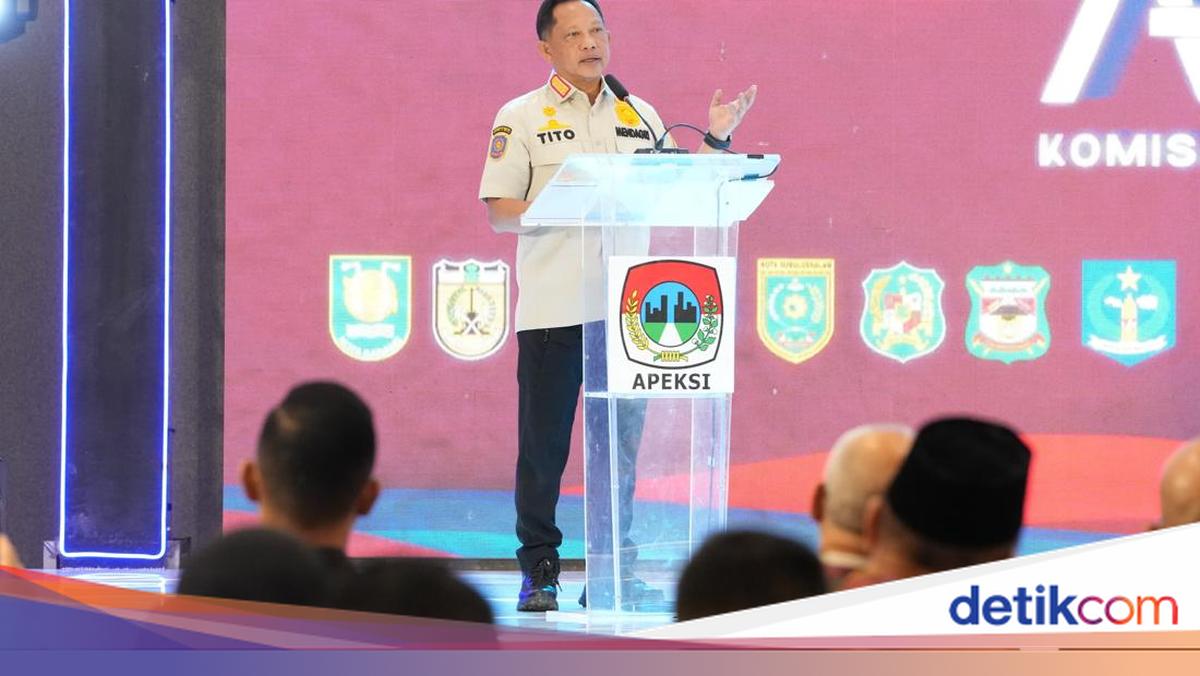
Home Affairs Minister Muhammad Tito Karnavian has highlighted the importance of building cities oriented towards public health through the provision of green spaces and strengthening the walkable city concept. This approach is seen as a strategic and efficient step to curb long-term healthcare costs.
He reminded that regional development should not only focus on short-term economic growth but also consider the impacts on public health and quality of life. This was stated by him at the Indonesian City Governments Association (APEKSI) forum in Banda Aceh on Monday (20/4/2026).
“By building many parks, plenty of green spaces for sports activities, and pedestrian areas, it is far cheaper than the costs of subsidising people who fall ill,” Tito said in a written statement on Tuesday (21/4/2026).
He explained that the walkable city concept encourages the creation of comfortable urban spaces for walking, exercising, and social interaction. According to him, cities designed with this approach will contribute to improving public health as well as residents’ productivity.
Tito also cited best practices implemented in Singapore, which has successfully integrated green spaces and public facilities into its city planning. He assessed that investments in parks and pedestrian paths have proven to yield significant economic benefits, including reducing the burden on healthcare financing.
Furthermore, Tito reminded of the importance of maintaining a balance in urban space utilisation. He urged local governments (Pemda) to continue preserving open green spaces as part of the environmental buffer system.
“Don’t let everything be converted into purely commercial areas. All residential. If it’s all converted into residential areas, what happens? First, there are no green spaces as buffers. Suddenly what? Flooding,” he said.
According to him, consistency in spatial planning policies is key to maintaining urban development sustainability, while also preventing various environmental problems such as flooding and ecosystem quality degradation.
As an illustration, he mentioned the development of Banyuwangi Airport, which adopts an environmentally friendly concept by maximising natural ventilation and minimising air conditioning use. He assessed that commitment to maintaining this concept demonstrates the importance of policy consistency in achieving sustainable development.
He added that the presence of green spaces plays an important role not only aesthetically but also as water absorption areas and environmental balance buffers. Without good spatial management, various risks such as river narrowing and potential flooding can increase.
“I invite regional heads to view the city as a living space that supports overall community welfare, not merely as a centre of economic activity,” he concluded.