
Home Affairs Minister Urges Expansion of Social Protection to Ensure Targeted Aid Distribution
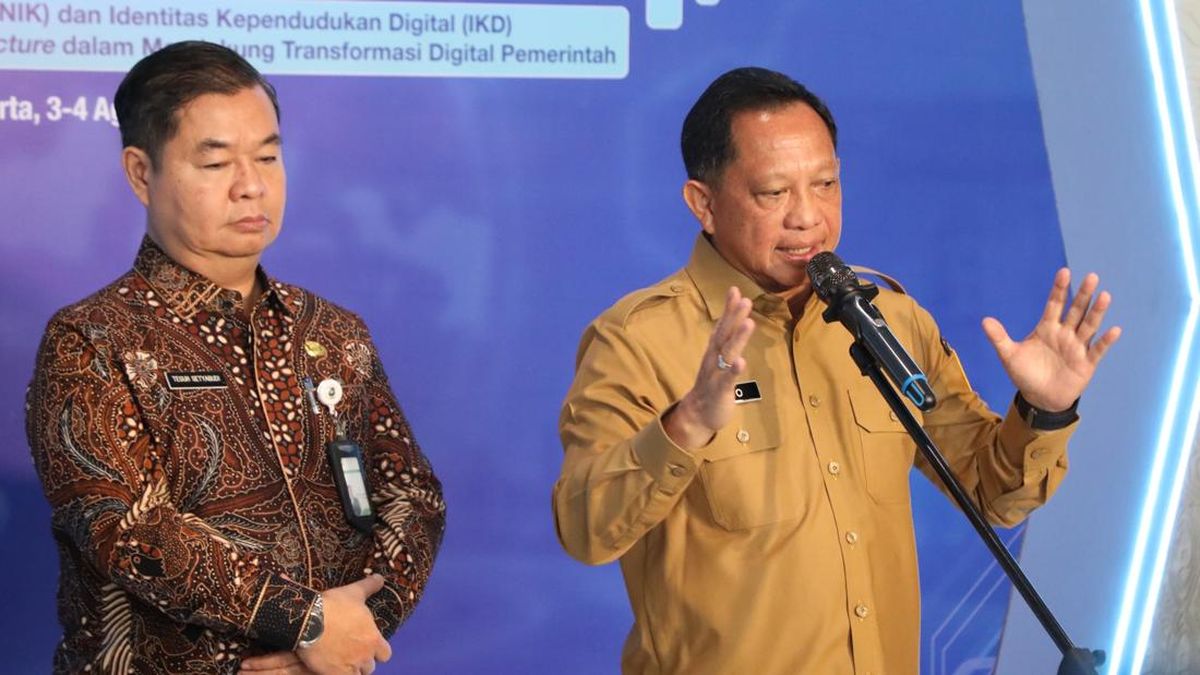
Minister of Home Affairs Muhammad Tito Karnavian has expressed appreciation for the success of the social protection programme (Perlinsos) pilot project in Banyuwangi Regency, East Java.
Tito made the remarks when opening the National Coordination Meeting (Rakornas) on Civil Registration and the Release of Population Data for Semester I of 2026 at the Birawa Assembly Hall, Bidakara Hotel, Jakarta, on Monday (3/8). According to him, this success demonstrates the importance of the role of the Directorate General of Population and Civil Registration (Dukcapil) as the foundation of e-government, or the Electronic-Based Government System (SPBE).
Based on the results of the pilot project as of 30 June 2026, out of 323,339 household heads (KK) registered for the Non-Cash Food Assistance (BPNT) programme, 45.2 per cent were identified as potentially eligible for assistance, while the remainder were potentially ineligible.
Meanwhile, out of 290,967 household heads registered for the Family Hope Programme (PKH), 31.2 per cent were potentially eligible and 68.4 per cent were potentially ineligible.
“The first stage of this e-government is to target the issue of social assistance, so that it reaches the right targets, integrated with Dukcapil data, which has face recognition, fingerprint and retinal scanning,” said Tito.
In implementing e-government, Dukcapil data is integrated with data from the Ministry of Agrarian Affairs and Spatial Planning/National Land Agency (ATR/BPN) to determine whether prospective social assistance recipients own land assets.
That data is then matched with the National Single Social and Economic Data (DTSEN) compiled by the Central Statistics Agency (BPS) through door-to-door surveys. In addition, Dukcapil data is also integrated with police data, particularly the One-Door Administration System (Samsat), to verify vehicle ownership among prospective recipients.
“So several ministries have joined together, but the data used at the outset is the individual data held by Dukcapil,” said Tito.
He added that the integration of data across ministries and institutions will produce more accurate data, so that assistance can reach people who genuinely meet the criteria.
“If it falls into the hands of those not entitled, it is a waste, and it creates social resentment among those who do not receive it, even though they are struggling,” he said.
The Home Affairs Minister considers the success of the Banyuwangi Regency Government should prompt the government to replicate the implementation of e-government across various regions. He said he had personally reviewed the implementation of the system for the Perlinsos programme in Gianyar Regency, Bali, on 4 July 2026.
Based on monitoring results, the system is capable of producing accurate, real-time and transparent data. For this reason, the implementation of e-government for Perlinsos in 143 districts/cities is targeted to be carried out this August.
The selected regions are those meeting a number of criteria, including having adequate internet infrastructure, a responsive Dukcapil office, and support from regional heads.
“If it reaches the right people, social assistance is effective and efficient in helping the community, especially amid the current economic pressures,” Tito concluded.
Source: jawawa.id (https://jawawa.id/newsitem/home-affairs-minister-urges-expansion-of-social-protection-to-ensure-targeted-aid-distribution-1785765259)
Originally published by CNN Indonesia (https://www.cnnindonesia.com/nasional/20260803192809-25-1388163/mendagri-dorong-perluasan-perlinsos-agar-bansos-tepat-sasaran), translated from Indonesian