
Home Affairs Minister Tito: Non-Civil Servant Employees are a Ticking Time Bomb
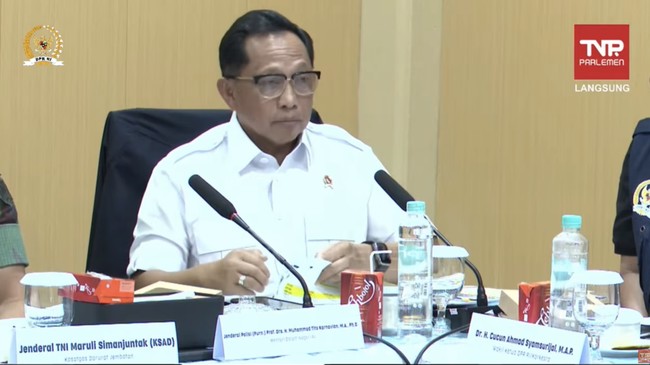
The Minister of Home Affairs, Tito Karnavian, has revealed that non-civil servant employees (honorer) within local governments could become a ‘ticking time bomb’ that burdens the fiscal condition of regional authorities. He made this assertion during a working meeting with Commission II of the Indonesian House of Representatives (DPR RI) on Monday (8/6/2026).
He requested that regional heads, including governors, regents, and mayors, refrain from recruiting any new non-civil servant staff at this time, noting that the central government has already prohibited such recruitment. “Because it will become a burden—a burden on personnel expenditure and a burden for subsequent regional heads. It is a time bomb!” Tito emphasised during the meeting, which was also attended by several governors and vice-governors from across Indonesia.
However, he also cautioned that due to fiscal pressures, existing long-term non-civil servant employees should not be reduced to the point where they end up unemployed. If regional governments wish to save costs due to heavy personnel expenditure, Tito encouraged regional heads to cut employee performance allowances (TPP).
Regarding revenue, Tito stated that regions must strive to increase their Local Original Revenue (PAD) without placing an undue burden on the public. He noted that several regions have already successfully implemented strategies to boost PAD without taxing the populace. “I appreciate regional heads who are creative but do not burden the people,” he said.
He cited the Pekanbaru city government as an example, where the Mayor reported that PAD reached IDR 800 billion in 2024 and increased to IDR 1.2 trillion in 2025. Tito admitted he even deployed a special team to investigate how Pekanbaru achieved this growth. “The secret, it turns out, is simplifying licensing processes,” he noted, adding that many citizens are willing to pay taxes and levies but are often deterred by bureaucratic difficulties.
Other successful examples include Banyuwangi and Bali, which have managed to track down existing taxpayers who have been under-reporting their contributions by implementing systems directly linked to the Regional Revenue Agency (Dispenda). He noted that this approach has proven effective.
Secondly, to increase revenue, Tito urged regional governments to revitalise their Regional-Owned Enterprises (BUMD). He noted that while 60% of BUMDs in Indonesia are profitable, approximately 30% are still operating at a loss, despite the fact that BUMD dividends could serve as a vital instrument for increasing regional income.
Thirdly, regarding the increase of Transfer Funds to Regions (TKD), the Ministry of Home Affairs recorded that over 140 regions requested an increase in TKD during a recent retreat in Jatinangor, West Java. Upon investigation, 39 regions were found to be in a critical state. “Since PAD cannot be increased and BUMD contributions are insufficient, TKD must be topped up. This needs to be discussed with the Minister of Finance to increase TKD so that personnel expenditure can be sustained,” he concluded.