
Home Affairs Minister Says Public Housing Programme Boosts Regional Economy
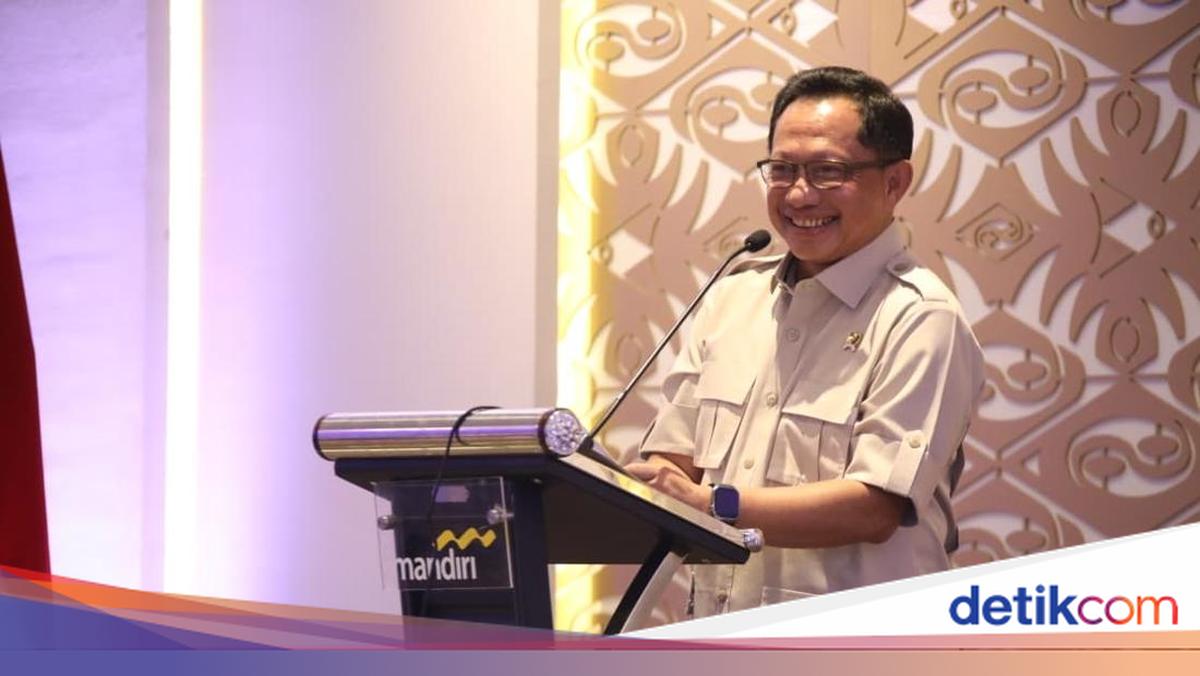
The Indonesian Minister of Home Affairs, Muhammad Tito Karnavian, has emphasised that the optimisation of public housing programmes does not only assist the community in obtaining decent housing but is also capable of driving economic growth in the regions.
This programme is expected to mobilise various business sectors, ranging from banking and housing developers to building material stores, while simultaneously creating employment opportunities for the public.
“If these housing issues can be handled well and resolved, in addition to addressing poverty and the difficulties faced by the community, it will create a circulating economic ecosystem,” Tito stated in a written statement on Monday (22/6/2026).
He made these remarks while attending the ‘Collaboration of Housing Finance Programmes and People’s Economic Empowerment’ event at the Papua Governor’s Office in Jayapura City on Monday (22/6).
Tito explained that housing issues in Indonesia remain a challenge due to the gap between housing demand and the availability of decent dwellings. Consequently, President Prabowo Subianto has tasked the Ministry of Housing and Residential Areas (PKP) to accelerate the resolution of these issues.
According to Tito, these efforts require support from local governments, including those in Eastern Indonesia. Regional support will accelerate development while increasing community welfare. Furthermore, relying solely on Regional Revenue and Expenditure Budgets (APBD) would limit the reach of housing programmes.
Therefore, Tito invited local governments to support housing programmes by accelerating and simplifying licensing processes, including through the optimisation of Public Service Malls (MPP). Regions are also encouraged to waive Building Approval (PBG) levies and Land and Building Transfer Duty (BPHTB) for low-income communities (MBR).
“This is so that developers are motivated to build housing and can access People’s Business Credit (KUR),” Tito explained.
On this occasion, Tito also expressed regret that many areas in Papua have yet to issue PBG for low-income communities. According to Tito, this condition impacts the uneven access of the public to decent housing. Additionally, the number of Public Service Malls in the Papua region remains relatively limited.
For this reason, Tito suggested that regions without an MPP study the best practices implemented in Badung and Gianyar Regencies regarding the management of integrated public services. “There, the police handle driving licences, passports, and immigration, and no one wears a uniform. Everyone dresses casually (yet the results are faster and more maximal),” said Tito.
The event was also attended by the Head of the Indonesian Central Bureau of Statistics (BPS) Amalia Adistinggar Widyasanti, the Governor of Papua Mathius D Fakhiri, the Acting Director General of Rural Housing of the Ministry of PKP Rini Dyah Mawarty, and several other relevant officials.