
Home Affairs Minister Presents 2027 Work Plan to DPR, Supports Priority Agenda
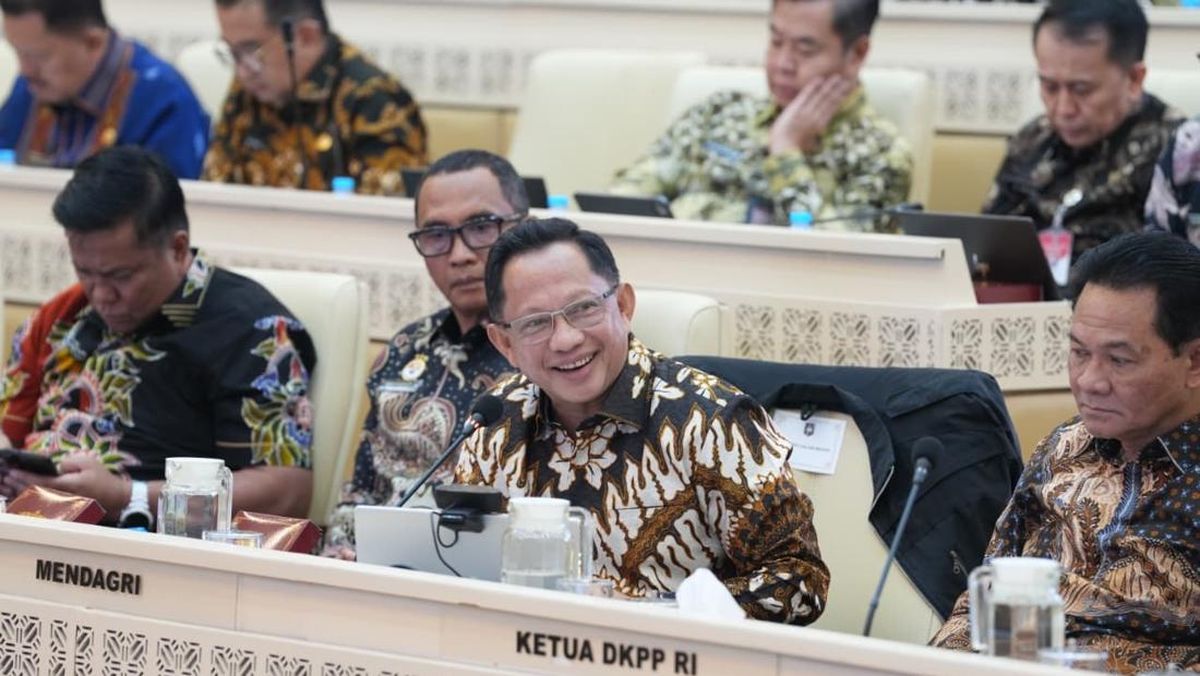
Home Affairs Minister Muhammad Tito Karnavian presented the Ministry of Home Affairs’ strategic work programmes for the 2027 fiscal year during a working meeting and hearing with Commission II of the Indonesian House of Representatives (DPR RI) at the Parliamentary Complex in Senayan, Jakarta, on Thursday (11/6). In his presentation, he confirmed that the ministry is ready to support the implementation of 23 National Priority Work Programmes spread across various development sectors. This support includes accelerating post-disaster rehabilitation and reconstruction in Sumatra as well as the construction and renovation of three million houses. The ministry will also be involved in the Red and White Village/Sub-district Cooperative programme, accelerating development in frontier, outermost, and underdeveloped regions, and eradicating tuberculosis. Beyond the national priority programmes, the ministry will also implement several mandatory programmes that cannot be postponed. These programmes include the selection of Institute of Public Administration cadets, the selection of General Elections Commission and Elections Supervisory Agency members, and the strengthening of population administration. The ministry will also encourage the development of digital identity as part of a digital-based government transformation. Tito stated in a written release, ‘We will then carry out 147 national priority activities assigned to the Ministry of Home Affairs, including strengthening the governance of political parties, implementing Minimum Service Standards for regional governments, providing guidance on regional budgets and regionally-owned enterprises, and strengthening the capacity of domestic government apparatus.’ In addition, the ministry will optimise its guidance and oversight function for regional governments to ensure development programmes run effectively. This step includes providing grant funds for high-performing regions, providing guidance to regional heads and regional councils, and resolving territorial and village boundaries. The Ministry of Home Affairs will also strengthen the capacity of village government apparatus and enhance the capabilities of the Civil Service Police Unit and Community Protection Unit. Tito also stressed the importance of strengthening population administration services as the foundation for implementing a national digital government. He described population data as the primary platform for integrating central and regional government services. ‘The government will truly strengthen or implement government technology, e-government for integrated public services,’ he explained. To carry out all these programmes, the Ministry of Home Affairs has received an indicative budget ceiling for 2027 amounting to IDR 4.65 trillion. However, this amount is considered insufficient to meet all the programme and activity needs planned for the coming year. Therefore, the ministry is proposing an additional budget of IDR 6.27 trillion. This amount includes additional funds for the Elections Organiser Honorary Council. Tito clarified, ‘We are proposing a total budget ceiling for the Ministry of Home Affairs for 2027 of IDR 10.93 trillion. This addition already includes funds for the Elections Organiser Honorary Council.’ The working meeting and hearing were chaired by Deputy Chairman of Commission II of the DPR RI, Aria Bima. The forum was also attended by the Chairman of the Elections Organiser Honorary Council, Heddy Lugito, and the Head of the Nusantara Capital City Authority, Basuki Hadimuljono.