
Home Affairs Minister Issues Circular Regulating WFH-WFO for Local Government Civil Servants
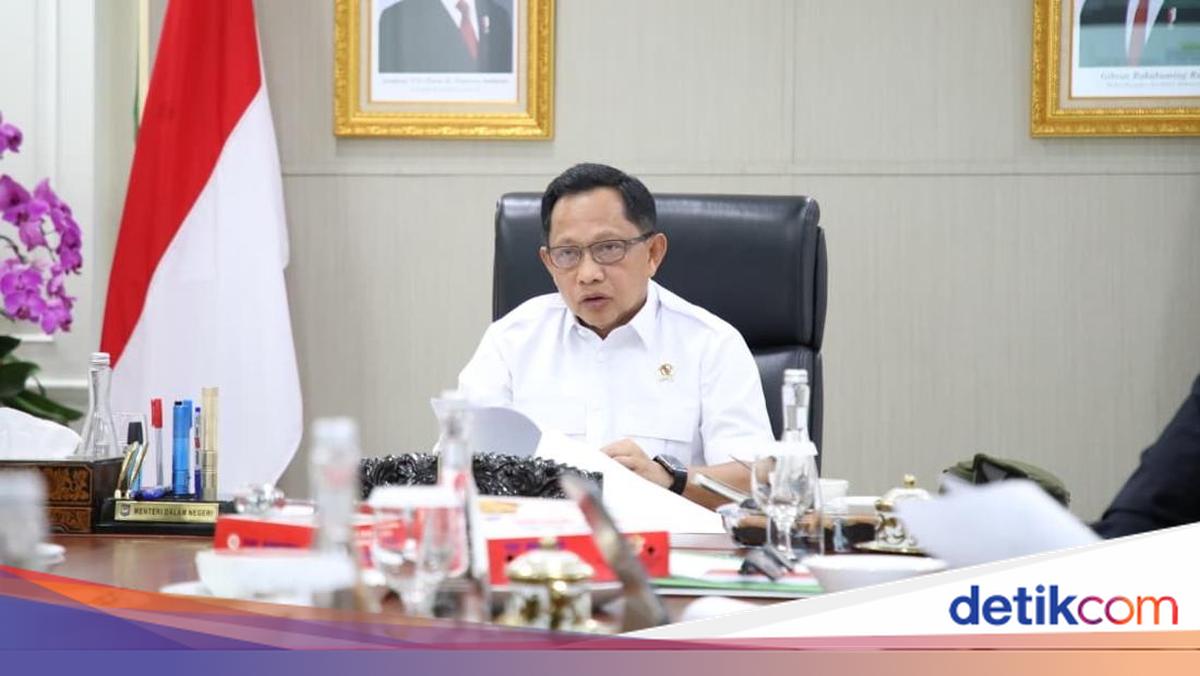
Home Affairs Minister Muhammad Tito Karnavian has issued a circular on the Transformation of Civil Servant Work Culture within local governments. The circular, numbered 800.1.5/3349/SJ, contains several provisions, including adjustments to official duties among local government civil servants (ASN Pemda). ASN in local governments may carry out official duties through a combination of work from office (WFO) and work from home (WFH). This was stated by Tito during a press conference on the WFH policy for ASN, TNI, Polri, and private sector workers, held virtually from Jakarta on Tuesday (31 March 2026). “Adjustment of official duties by location with a WFH work pattern for one working day per week, namely every Friday,” said Tito in a written statement on Wednesday (1 April 2026). As stipulated in the circular, WFH implementation aims to encourage the achievement of an effective and efficient work culture transformation for regional ASN. Additionally, this policy is intended to accelerate digital local government services by speeding up the adoption of the Electronic-Based Government System (SPBE) and the digitalisation of bureaucratic processes. “Matters related to working from office and working from home, the technical implementation, including efforts to encourage digital services,” he said. He added that during the COVID-19 pandemic, SPBE had been well implemented by local governments. Therefore, this WFH policy is expected to optimise ASN performance. “While carrying out official duties via WFH, regional ASN are asked to remain active so they can perform well. On the other hand, as per the provisions in the circular, regions are required to create schemes for controlling and supervising WFH and WFO,” he stated. “Then, public service units are encouraged to continue full WFO. Meanwhile, support units implement WFH selectively, ensuring ASN targets and performance are met,” he continued. Furthermore, several government services are exempted from the WFH policy, including government units handling disaster affairs, public order and security as well as community protection (trantiblinmas), cleanliness and waste management, civil registration and population services (dukcapil), investment licensing, health services, education services, regional revenue services, and other public services that directly interact with the community. “Governors and mayors, we ask them to calculate the budget savings in their respective areas as an impact of this more effective and efficient work culture change,” he revealed. The savings from this budget can be used to support local government priority programmes. Based on the circular, this policy takes effect from 1 April 2026 and will be evaluated periodically every two months. Regarding the reporting system, regents and mayors report the implementation of the circular to the governor as the central government’s representative in the region no later than the 2nd of the following month. Meanwhile, governors report the implementation to the Home Affairs Minister no later than the 4th of the following month. “And this provision, this policy, will be evaluated every two months,” he concluded.