
Home Affairs Minister: If the Regional Leadership Coordination Forum is United, Almost All Regional Problems Are Resolved
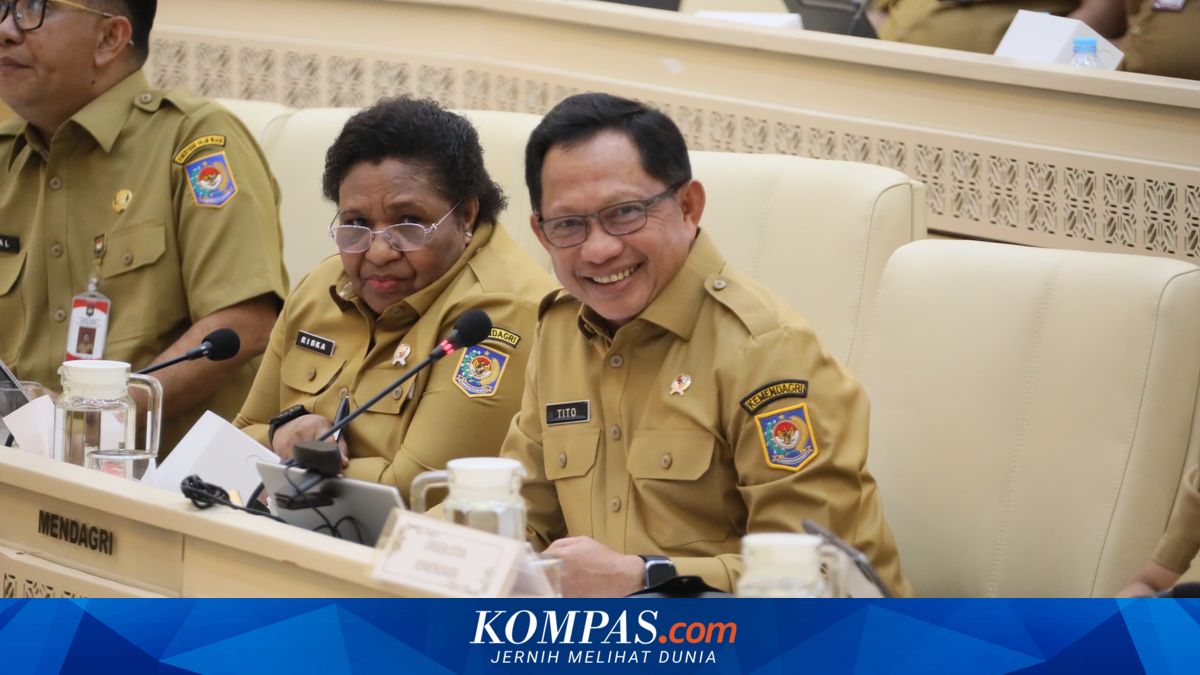
Home Affairs Minister Tito Karnavian has asked regional heads to strengthen the Regional Leadership Coordination Forum (Forkopimda) in addressing problems in the regions. Tito believes that cooperation between regional heads and Forkopimda can resolve the existing issues in the regions. “If the Forkopimda is united, almost all regional problems can be solved. But if the Forkopimda leadership is not united, each on their own, it will be difficult,” stated the Home Affairs Minister during his keynote speech at the Working Meeting of the Association of Indonesian Regional Governments (Apeksi) Regional Commissariat I in Banda Aceh on Monday (20/4/2026), quoted from a press release. He mentioned that regional governments can also synergise with TNI and Polri ranks to tackle more complex problems. Tito said that intensive coordination will strengthen harmony in relations among Forkopimda elements so that all parties can focus on efforts to advance the region. “This is what I truly ask my colleagues to understand the portion and position as regional heads, as Forkopimda leaders, the Regional Leadership Coordination Forum,” said the Home Affairs Minister. “Therefore, gentlemen and ladies regional heads, truly safeguard this. Truly safeguard the Regional Inflation Control Team, truly hold and directly control it,” said Tito. According to him, regional heads can collaborate with the Central Statistics Agency (BPS) so that potential increases in the prices of basic necessities can be detected earlier and potential social unrest can be prevented. In addition, the Home Affairs Minister also invited regional heads to capture national priority work programmes which include sectors of food sovereignty, energy and water independence, education, health, downstreaming and industrialisation, infrastructure, housing, disaster resilience, as well as people’s economy and villages. “These programmes must be captured by you, because if not, it’s a loss. Because large budgets are allocated for each of these programmes,” he said.