
Home Affairs Minister: Exemption of BPHTB and PBG for Low-Income Groups Yet to Be Optimal in Regions
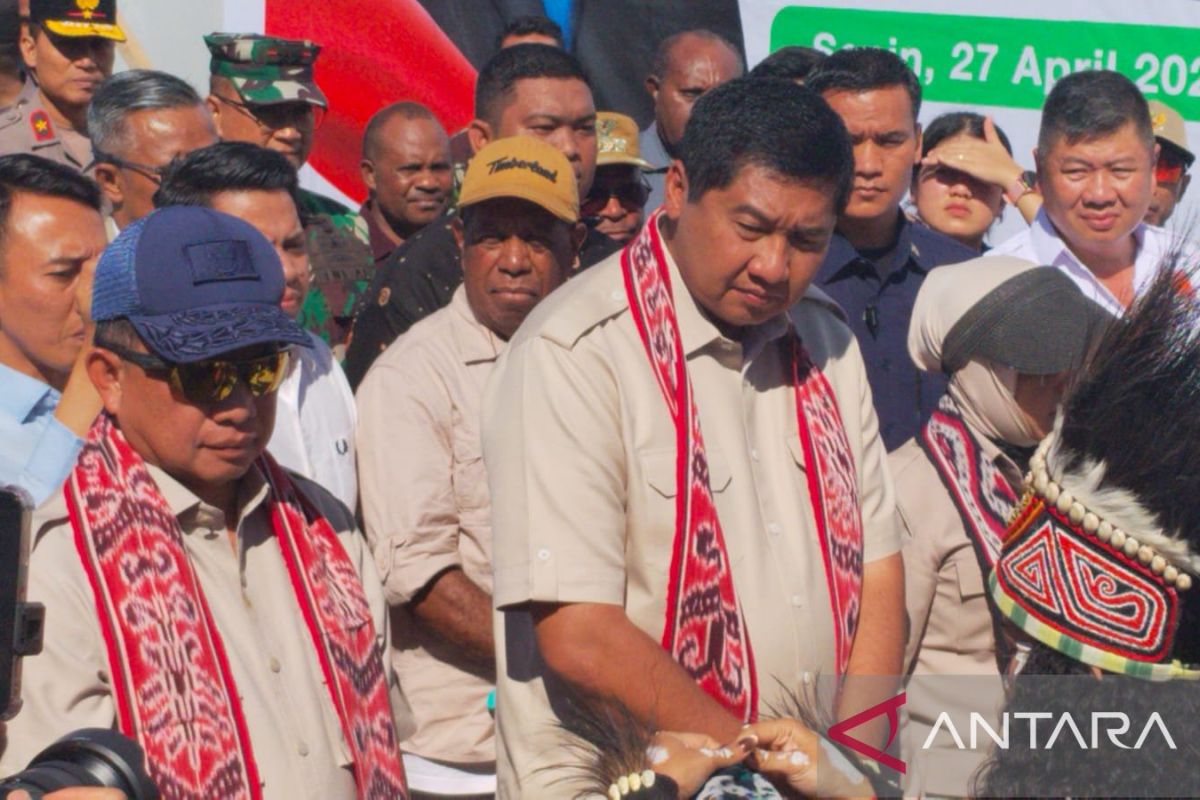
Sorong (ANTARA) - Home Affairs Minister Tito Karnavian assesses that the implementation of exemptions for acquisition duties on land and buildings (BPHTB) and building permit fees (PBG) for low-income earners (MBR) in the regions is still not optimal.
According to Tito, the central government has issued various policies to alleviate the burden on MBR in owning homes, including BPHTB and PBG fees. However, the execution at the regional level is deemed not to be running at full capacity.
“By regulation, many regions have established these exemptions, but in practice, their implementation is still hindered, particularly due to lengthy and convoluted bureaucracy,” said Tito during his visit to the city of Sorong, Southwest Papua, on Tuesday.
He explained that the MBR group has been defined based on different income thresholds in each region.
For Java, the MBR income limit is set at around Rp8.5 million per month for unmarried individuals and Rp10 million for married ones.
Meanwhile, for Kalimantan, Sulawesi, and surrounding areas, it is Rp9 million (unmarried) and Rp11 million (married), and for Papua, Rp10.5 million and Rp12 million.
Tito emphasised that these various incentives aim to suppress housing prices to make them more affordable for the public.
“With the exemption of BPHTB and PBG, costs that previously burdened developers and buyers can be reduced,” he stated.
According to him, if these taxes are exempted, house selling prices can decrease, thereby increasing public purchasing power.
He highlighted the still low realisation of PBG issuance in several regions. For example, in the city of Sorong, PBG issuance for housing remains very limited due to administrative processes that must go through various inter-agency stages.
“Obtaining PBG still requires moving from one agency to another, starting from spatial planning approval to environmental impact analysis. This complicates matters for the public and developers,” he said.
To address this, Tito encouraged regional governments to accelerate the establishment of Public Service Malls (MPP) that integrate various licensing services in one location.
“With an integrated system, the licensing process is expected to become faster, more transparent, and efficient,” he stated.
“If services are centralised in one location, the public no longer needs to move between offices. This will cut time and costs,” he added.
Tito also reminded regional heads not to hesitate in waiving levies for MBR, as in the long term, it will actually increase regional revenues through economic growth and property taxes.
“Initially, it may seem like a loss of income, but once development progresses, revenues from land and building taxes will increase and become sustainable,” he said.
He hopes that regional governments can soon optimise the implementation of these policies so that their benefits are truly felt by low-income communities, while also driving growth in the regional housing sector.