
Home Affairs Minister Encourages Private Sector Collaboration to Tackle Papua's Public Housing
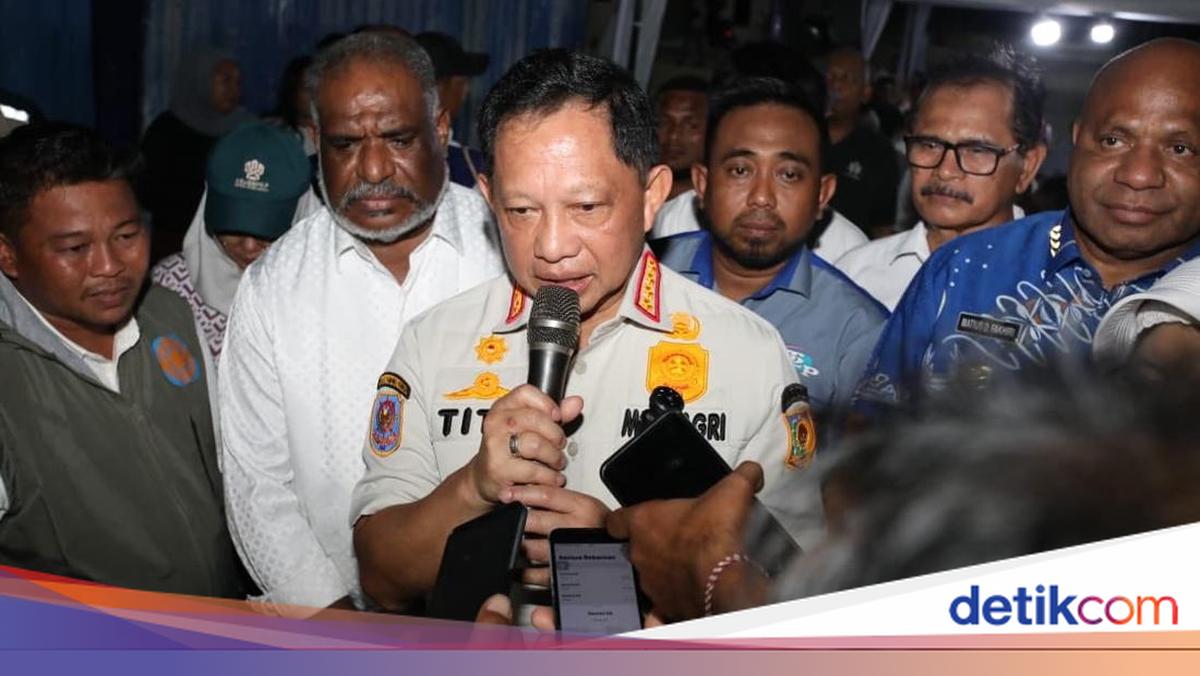
Home Affairs Minister Muhammad Tito Karnavian is encouraging collaboration between the government and the private sector to resolve public housing issues through lenient financing policies. He stated this could be achieved by eliminating various construction tax burdens and providing low-interest People’s Business Credit (KUR) for housing to Low-Income Communities (MBR). “Because if only the government builds and renovates houses, it will never be enough from the state budget, let alone regional budgets, so one strategy is to push the private sector,” he said in a written statement on Sunday (21/6/2026). While inspecting the Grand Royal Regency II Housing complex in Jayapura, Papua, Tito explained that housing needs in the Tanah Papua region remain a major challenge. Based on data he presented, nearly 30 percent of people in the Tanah Papua region still do not have adequate housing. To address this issue, the government is preparing various incentive schemes to encourage housing development while increasing public access to home ownership. One measure being taken is the provision of KUR Perumahan with very low interest rates for MBR, at around 0.5 percent per month. Under this scheme, residents only need to provide a down payment of about one percent, or around Rp2.4 million, to own a house worth Rp240 million. He hopes this policy will broaden access to home ownership while reducing the burden on residents who currently have to pay relatively high rental costs. In addition to easier financing access, the government is also preparing various fiscal incentives to reduce house construction costs. He therefore requested all regional governments in Papua to implement policies exempting MBR from Building Approval (PBG) retribution and Land and Building Rights Acquisition Fees (BPHTB). “I ask my fellow regional heads, the six governors and 42 regents/mayors throughout Greater Papua, to truly implement zero percent for PBG and BPHTB,” he stressed. On the same occasion, he also appreciated the developer’s commitment to preserving the environment through a greening programme that requires planting at least two trees for every housing unit built. According to him, this step not only improves the quality of the residential environment but also helps maintain soil structure and public health in the long term. “By implementing this reforestation and greening programme, the soil structure will be strengthened and the environment will be more beautiful, plus the surroundings will be healthier. I fully support that programme,” he concluded. The inspection was also attended by Head of the Central Statistics Agency (BPS) Amalia Adininggar Widyasanti, Papua Governor Matius D. Fakhiri and his staff, Jayapura Mayor Abisai Rollo, and other relevant parties.