
Home Affairs Minister: Economic growth is the key to escaping the middle income trap
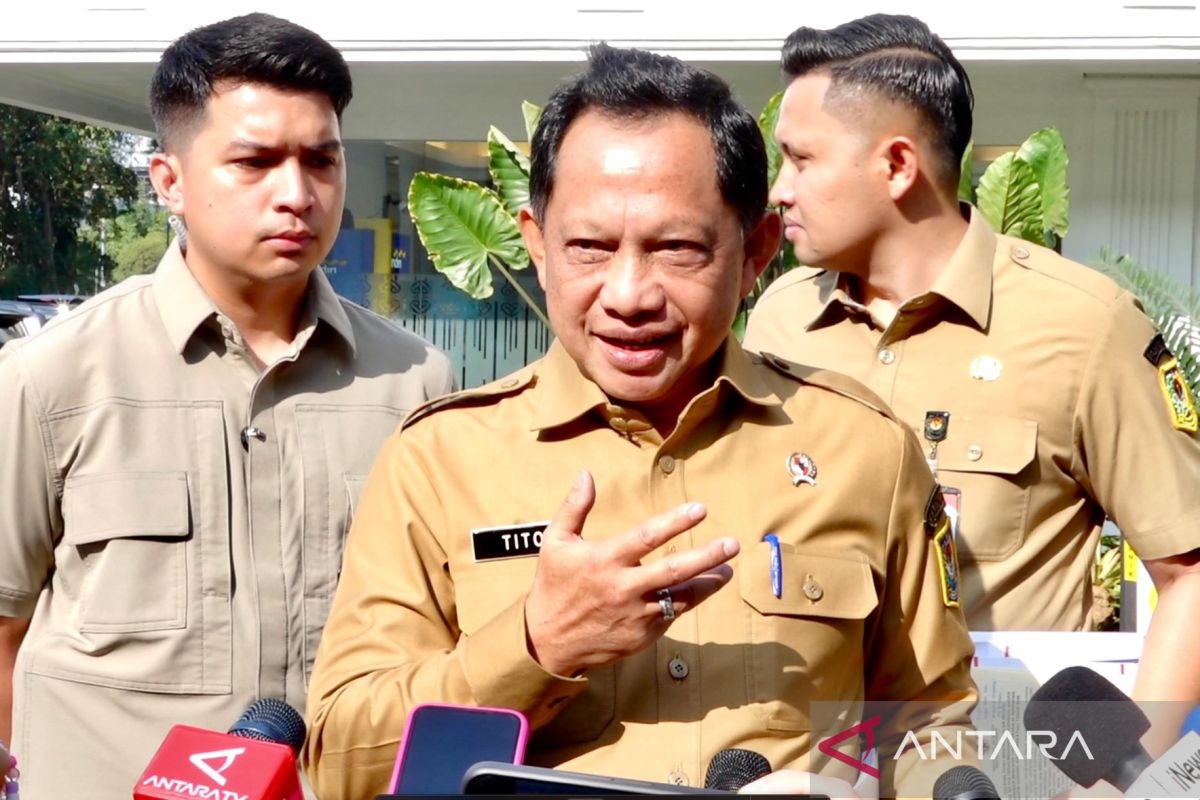
Jakarta (ANTARA) - Minister of Home Affairs Muhammad Tito Karnavian has invited all parties to continue driving national economic growth in order to lift Indonesia out of the middle income trap.
“Specifically regarding the issue of economic growth, we will truly monitor it together. Because we want to escape from being a developing country trapped in middle income status. One of the keys is that economic growth must be high, ideally in double digits,” said Tito in Jakarta on Monday.
The Minister delivered this message while chairing the Inflation Control Coordination Meeting, combined with the Release of Regency/City Economic Growth for the Second Quarter of 2026, at the Sasana Bhakti Praja (SBP) building, the Home Affairs Ministry’s central office in Jakarta.
He said that countries which have succeeded in becoming developed nations generally managed to pass through this phase after achieving high economic growth.
To reach this target, the Minister emphasised the importance of strengthening four main components of economic growth that must be optimised jointly by the central government and regional governments.
The Minister went on to explain the four main components that need to be strengthened. First, household consumption. High household consumption reflects strong public purchasing power. Conversely, when purchasing power weakens, household consumption also declines.
“That contributes almost 50 per cent of the economic growth figure. Does the public have purchasing power, so that they spend and consume? That is the largest contributor, and this involves both the central and regional governments,” he explained.
Second, government spending, both central and regional. The Minister stressed the importance of ensuring that government spending realisation runs according to target.
The Home Affairs Ministry periodically evaluates each region’s spending realisation. Regions with low spending realisation will receive attention and reminders from the government. In that process, the ministry also deploys teams to carry out monitoring.
“Government spending is very important, because it ensures that government money circulates in society, and can encourage and stimulate the private sector,” he said.
Third, domestic and foreign investment. The Minister said that increased investment can drive economic growth through job creation, additional capital, and greater circulation of money in society. For that reason, investment is one of the important components that must continue to be encouraged by the central and regional governments.
“The key is how regions can facilitate investment, invite investors, and so on, so that it thrives,” said the Minister.
Fourth, export values that are higher than imports. The Minister assessed that the central and regional governments need to encourage entrepreneurs, producers, and micro, small and medium enterprises (MSMEs) to become increasingly export-oriented. Regional governments also play a role in identifying and promoting leading sectors with the potential to penetrate international markets.
“If exports are larger than imports, we will automatically have foreign exchange, and we will have a surplus in international trade. That will contribute to our economic growth — the figures will be boosted,” he said.
Source: jawawa.id (https://jawawa.id/newsitem/home-affairs-minister-economic-growth-is-the-key-to-escaping-the-middle-income-trap-1788785656)
Originally published by Antara (Indonesian) (https://www.antaranews.com/berita/5730141/mendagri-pertumbuhan-ekonomi-kunci-keluar-dari-middle-income-trap), translated from Indonesian