
Home Affairs Minister Backs TUNAS Programme to Protect Children in the Digital Space
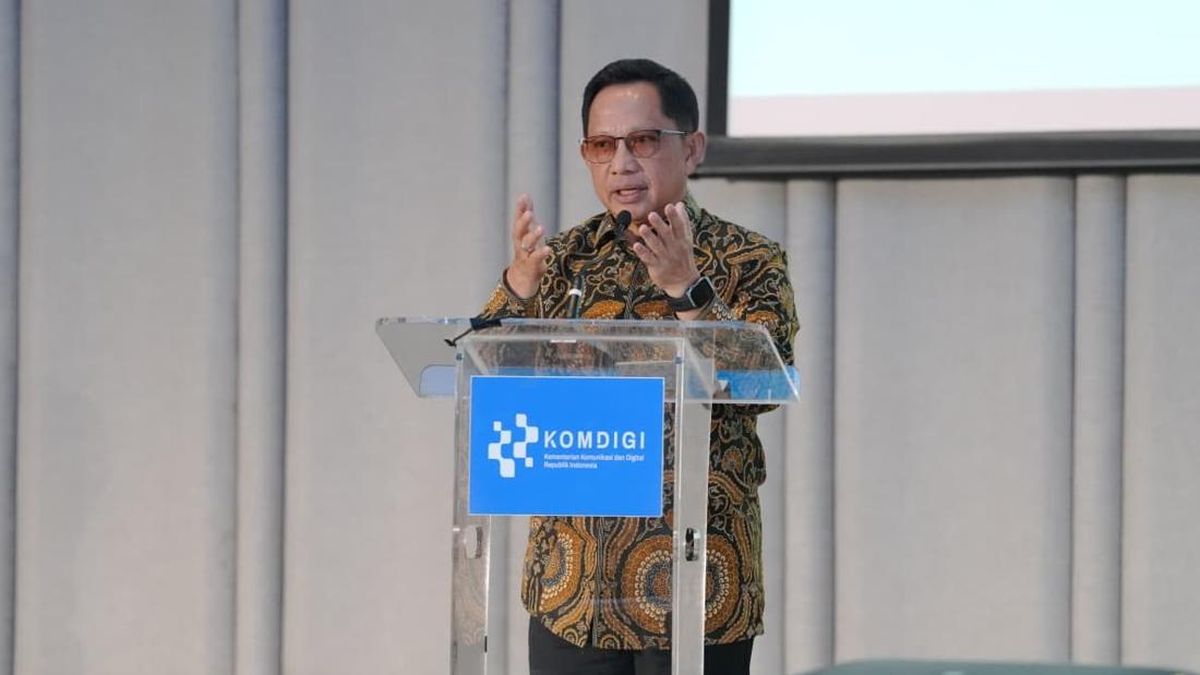
Home Affairs Minister Muhammad Tito Karnavian has backed the Tunggu Anak Siap (TUNAS) programme to protect children from the negative effects of digital technology. He described child protection as part of preparing a high-quality human resource base for Indonesia Emas 2045, the country’s vision for 2045.
He voiced his support during a keynote speech at a workshop on accelerating the implementation of the TUNAS Government Regulation through cross-sector collaboration, held at the Harris Hotel & Convention Serpong in Tangerang regency, Banten, on Tuesday (24 November).
Tito said Indonesia had considerable potential to become a developed country, partly because of its demographic dividend. Data from the Directorate General of Population and Civil Registration (Dukcapil) show that around 85 million people are under the age of 19 and need to be prepared to become an excellent, educated, trained and healthy workforce.
“In my view, a country’s development is influenced more by its human capital and human resources: the capabilities of its people, a productive-age population, and an excellent, educated, trained and healthy workforce,” he said in a written statement on Thursday (26 November).
He therefore emphasised the importance of preparing children from an early age, including protecting them from the negative effects of advances in information technology. Digital technology offers many benefits, but it can also give rise to cyberbullying, violence and other harmful influences in the digital space.
The Ministry of Home Affairs has followed up on the digital child-protection policy by issuing a circular to local governments. It has also drawn up a joint decision with other ministries on the programme.
“Thankfully, 77 local governments have now adopted specific policies on protecting children in the digital space, although only one of them is a provincial government,” Tito added.
He identified two challenges to speeding up the implementation of these policies locally: local leaders’ understanding of the issue and fiscal capacity.
Some local leaders have not made digital child protection a priority because they do not yet fully understand its long-term effects. Differences in local governments’ financial capacity also affect their ability to allocate funding.
Tito asked Ministry of Home Affairs officials to strengthen coordination with local governments, particularly those with stronger fiscal capacity, to ensure that funding is allocated to child-protection programmes. He encouraged areas with limited fiscal resources to develop collaborative programmes across relevant local government departments.
“Funding could, for example, be allocated to establish a team or task force—whatever it is called—to protect children,” he said.
Tito said the Ministry of Home Affairs was ready to support faster implementation of TUNAS through guidance and oversight of local governments.
He said successful child protection required cooperation between central and local government, ministries and agencies, and the public.
“Indonesia’s future lies with our children, not with the people in this room. We are only here to guide them and provide a foundation,” he concluded.
Source: jawawa.id (https://jawawa.id/newsitem/home-affairs-minister-backs-tunas-programme-to-protect-children-in-the-digital-space-1795697469)
Originally published by CNN Indonesia (https://www.cnnindonesia.com/nasional/20261126180321-25-1432011/mendagri-dukung-program-tunas-untuk-lindungi-anak-di-ruang-digital), translated from Indonesian