
HNW Urges Election Law Revision to Separate Legislative, Presidential and Regional Election Schedules
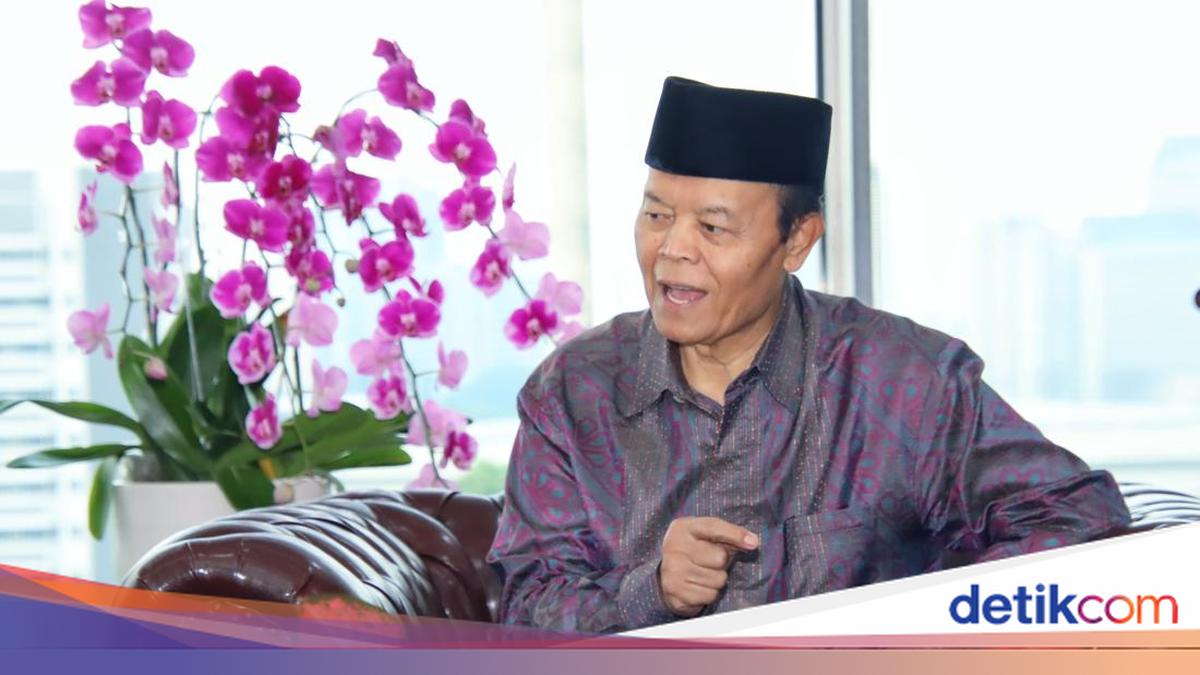
Deputy Speaker of the People’s Consultative Assembly (MPR) Hidayat Nur Wahid (HNW) has reminded the House of Representatives (DPR) and the government, which are set to discuss revisions to the Election Law, that the process should demonstrate consistent implementation of the Constitution as a whole, with reference to the 1945 Constitution of the Republic of Indonesia. The revision follows a Constitutional Court (MK) ruling.
One way to demonstrate this consistency, he said, is to follow the Constitution’s provisions, including by separating election schedules as was done in the 2004, 2009 and 2014 elections. This would avoid the turmoil seen in the most recent elections, which used a simultaneous five-ballot system covering the DPR, the Regional Representative Council (DPD), the president and vice-president, provincial DPRDs, and regency and municipal DPRDs. That system followed Constitutional Court Ruling No. 14/PUU-XI/2013. The Court later appeared to revise the five-ballot model by separating national and regional/local elections in Ruling No. 135/PUU-XXII/2024.
“If we read the text of the 1945 Constitution comprehensively in relation to elections, particularly Article 22E paragraphs (1) and (2), as well as Article 18 paragraphs (3) and (4), the Constitution resulting from amendments by the MPR, which has been applied since the 2004 elections, does not divide elections into national and regional tiers,” HNW said on Saturday (31 October 2026).
HNW explained that the Constitution distinguishes elections to choose members of the DPR, the president and vice-president, members of the DPD and members of DPRDs from democratic elections to choose governors, regents and mayors.
“The 1945 Constitution not only separates these elections; it also does not provide for legislative elections to be held simultaneously with presidential and vice-presidential elections. This is set out in Article 6A paragraph (2),” he said.
HNW said that consistent application of the Constitution would have prevented the five-ballot system. He argued that this system meant regional elections did not receive fair and adequate attention from voters, a concern also raised by the Constitutional Court.
“Elections of this kind were held in 2004, 2009 and 2014,” he said.
HNW acknowledged that the Court’s concern, set out in Ruling No. 135/PUU-XXII/2024, that voters should give local and regional elections adequate attention was understandable. However, he said the problem had arisen because of the Court’s earlier decision requiring legislative and presidential elections to be held simultaneously.
“As a result, in the last two elections, voters’ focus or attention was directed only towards choosing presidential and vice-presidential candidates. Legislative elections, both at national and regional levels, did not receive enough attention from voters,” he said.
HNW said that resolving the problems and disruption caused by simultaneous elections should still be guided by the Constitution. The five-ballot system should be ended, he said, but not by separating national and regional elections as stipulated by the Court in Ruling No. 135/PUU-XXII/2024. Instead, the election schedules should be separated.
“I therefore support the proposal by some DPR factions to separate the schedules for legislative elections—for the DPR, DPRDs and DPD—presidential elections and regional elections, as was done in 2004, 2009 and 2014,” he said.
HNW added that elections are an important political event in a democracy, although they were not regulated in the 1945 Constitution before its amendments. Demands for reform led, among other things, to amendments to the Constitution. As a result, Chapter VIIB on General Elections was added in the third amendment, including Article 22E, which contains five new paragraphs on elections.
Chapter VI on Regional Government also introduced new provisions in seven paragraphs of Article 18.
“This is what the MPR understood and agreed when it amended the 1945 Constitution. The provisions were then implemented separately in the 2004, 2009 and 2014 elections. Elections for members of the DPR, DPD and DPRDs were held in February, before the presidential and vice-presidential elections in July,” he said.
Regional elections, meanwhile, are governed by Article 18 paragraph (4), which states that regional heads are to be elected democratically.
“This part is often referred to as the regional-head election regime, and it is distinguished in both wording and implementation from the election regime set out in Article 22E paragraphs (1) and (2), and Article 18 paragraph (3). The latter states that although regional governments have DPRDs, members of provincial and regency/municipal DPRDs are expressly elected through elections, not ‘democratically’ as specified for regional heads,” he said.
HNW said the Constitutional Court’s Ruling No. 135/PUU-XXII/2024, which separates national elections—for the DPR, DPD, president and vice-president—from regional elections—for DPRDs and regional heads—had sparked public controversy because it was considered inconsistent with the Constitution as a whole.
“There has been considerable debate among commentators and experts, particularly constitutional law scholars, about the ruling, including its implementation, especially as the Court called for ‘constitutional engineering’,” he said.
HNW said the ruling appeared to amount to ultra vires, or an overreach of authority. The Court, which should act only as a negative legislator by deciding whether statutory provisions are constitutional, had instead become a positive legislator, as if adding provisions to the law. The power to make laws belongs to the DPR, he said, under Article 20 paragraph (1) of the 1945 Constitution, with legislation discussed jointly with the president under paragraph (2).
He added that the latest ruling could also be understood as having “changed” the text of the Constitution, which clearly provides for elections to choose members of the DPR, DPD and DPRDs, as well as the president and vice-president, while regional heads are elected “democratically”. Under Article 3 paragraph (1), he said, the authority to amend and establish the Constitution rests with the MPR.
HNW called on the DPR and government, currently discussing revisions to the Election Law, to focus on complying with the provisions of the Constitution, which he said were clear and had been applied in three elections without the disruption associated with the five-ballot system. He also warned against legal manoeuvres or engineering, even if described as constitutional, when they conflict with the Constitution’s fundamental provisions.
If there are concerns that five-ballot elections are difficult for voters and place a heavy burden on election organisers, as happened in the last two elections, the solution is to set carefully planned schedules while remaining within the Constitution, he said.
“This was done in the three elections at the beginning of the Reform era, when the new provisions resulting from constitutional amendments first came into force,” he said.
HNW stressed that problems arising from the Constitutional Court’s ruling on simultaneous elections should not be resolved by creating a new problem: separating national and regional elections in a way he considers inconsistent with the Constitution.
He said the solution was to return to the election model used in 2004, 2009 and 2014, without the five-ballot system. This would allow voters to give their full attention to each type of election, whether for members of the DPR at national and regional levels, the president or regional heads.
“This is expected to improve the quality of elections at every level and produce a stronger democracy. In this way, the Court’s concerns about the five-ballot system and unfairness to the regions, both in regional-head elections and in elections for DPRD members, can be addressed without creating other constitutional problems,” he said.
Source: jawawa.id (https://jawawa.id/newsitem/hnw-urges-election-law-revision-to-separate-legislative-presidential-and-regional-election-schedules-1793461950)
Originally published by detikcom (https://news.detik.com/berita/d-8732985/hnw-dorong-revisi-uu-pemilu-pisahkan-jadwal-pileg-piplres-dan-pilkada), translated from Indonesian