
HNW Highlights the Role of Pancasila in Facing Domestic and Global Crises
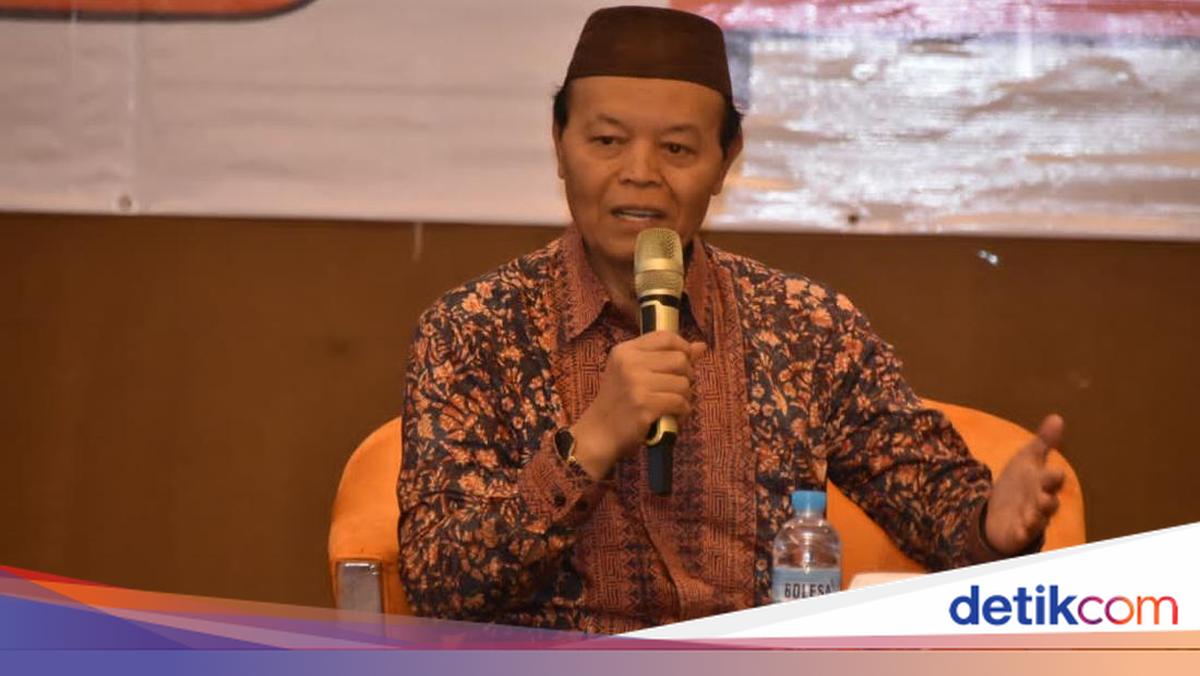
Deputy Speaker of the Indonesian People’s Consultative Assembly (MPR RI), Hidayat Nur Wahid (HNW), has emphasised that Indonesia has experienced various types of crises, from economic and political crises to crises of trust, ideology, centre-periphery relations, rebellions, communism, and even global crises.
However, the crises that have struck the Indonesian nation, from the past until recently, have always been successfully resolved thanks to the practice of the state ideology and foundation, Pancasila.
Therefore, according to HNW, the potential crisis arising from the war between America-Israel and Iran is not an entirely new threat faced by Indonesia.
Moreover, this can be overcome well by the Indonesian nation if they truly implement the Pancasila ideology.
HNW stressed that the existence of Pancasila as the nation’s foundation and ideology keeps Indonesia intact and has repeatedly escaped division.
Yet, Indonesia is an archipelagic country that is also diverse in religion, race, ethnicity, culture, and language, making it vulnerable to disputes and even splits.
“But because the founding fathers, both religious and nationalist figures, agreed to recognise and accept Pancasila as a shared ideology, Indonesia was saved. Even from its drafting, Islamic religious figures such as Abdul Kahar Muzakir, H Agus Salim, and Wachid Hasjim, as well as Christians like AA Maramis, were directly involved in Committee 9 in drafting the Jakarta Charter, which became the Preamble to the 1945 Constitution,” HNW stated in his remarks on Monday (20/4/2026).
“And for the sake of national unity and the safety of the nation, those Islamic figures were willing to remove the seven words in the first principle of the Jakarta Charter, in accordance with objections from the people of Eastern Indonesia, and change it to Belief in the One God, as stated in the first principle of Pancasila,” he continued.
The statement was delivered by HNW as a speaker at the Current Discussion Forum on Being a Nation and State, a collaboration between MPR RI and the PKS Provincial Board (DPW) of Bangka Belitung Province (Babel).
The event took place in Pangkalpinang, Babel, on Saturday (18/4). The theme discussed at the event was ‘Strengthening National Resilience in Facing Crises Through Pancasila Values’.
According to HNW, the agreement on the presence of Pancasila has enabled the Indonesian nation to face various crises, both internal and external. This differs from the Soviet Union.
In its time, the Soviet Union was the second largest country in the world after America. The Soviet Union had strong armed forces and intelligence.
But now that country has vanished, split into 15 countries, with Russia as the largest among the other 14 countries.
The Soviet Union collapsed and fragmented since 1991 due to chronic economic crises and the failure of political reforms (Glasnost and Perestroika) because their ideology, communism, imported from outside, did not take root in their land.
A similar fate befell Yugoslavia, a country that at its peak consisted of five ethnic groups and three major religions. Currently, Yugoslavia has been erased from the world map, replaced by seven independent countries.
Among them are Slovenia, Croatia, Bosnia-Herzegovina, Serbia, Montenegro, North Macedonia, and Kosovo. Yugoslavia broke apart due to ethnic conflicts and rising regional nationalism.
Even though crises will continue to occur, including when America and Israel attack Iran, HNW believes that the Indonesian nation and state will remain enduring.
Therefore, HNW called on Muslims in particular and the Indonesian nation in general, with the example of their leaders, to continue safeguarding Pancasila by applying all its principles in daily life and policies.
“Indonesia is an archipelagic country, with more than 17,000 islands, over 700 ethnic groups, and six official religions. If we do not have an ideology that grows and develops from Indonesia itself, then cases like the Soviet Union and Yugoslavia could happen,” HNW stated.
“But we remain strong and solid because we have an ideology that unites us all. This ideology grows from within, excavated collectively by the nation’s components, both national figures from national organisations, parties, or professions, but also involving Islamic figures from mass organisations or political organisations,” he added.
HNW recounted that those figures from Muhammadiyah included KH Kahar Muzakir, Ki Bagus Hadi Kusumo, and KH Mas Mansur. Meanwhile, from Nahdlatul Ulama (NU) there were KH Wahid Hasyim, KH Masykur, and KH Hasyim Asy’ari.
From the Union of Islamic Communities (PUI) there were KH Abdul Halim, KH Anwar Sanusi, and Mr Syamsudin. Meanwhile, from the Islamic Union Party (PSI) there was Haji Abi Kusno Cokrosuyoso.
Then, from the Islamic Association Party, Haji Agus Salim, and from Masyumi, Muhammad Nasir. They agreed to make Pancasila the foundation and ideology of the state.
The success of Pancasila in securing the unity of Indonesia, said HNW, has lasted for more than 80 years. During that time, Pancasila has made the Indonesian nation resilient against various problems and crises.
“Moreover, the current crises are still in the form of rising fuel, plastic, and soybean prices. Don’t forget, Indonesians are clever. Not raising soybean prices doesn’t mean not raising tempeh prices, but just making the tempeh smaller,” said the PKS politician from Jakarta II electoral district.
“That means we have mechanisms to address problems. Political parties, especially Islamic parties, should be at the forefront in facing and overcoming this crisis. Uniting the nation with its Pancasila, because from the past, Islamic parties have been at the forefront in resolving national problems to emerge from these crises,” he continued.
The contribution of Islamic figures in drafting Pancasila, said HNW, is proven by the inclusion of expressions from the Al-Qur’an and hadith into the principles of Pancasila.
Those terms include ‘adil’ (justice) and ‘rakyat’ (people’s sovereignty). Both do not originate from Malay language, but rather from specific expressions in the Al-Qur’an and hadith that have been absorbed into Indonesian.
HNW emphasised
Source: jawawa.id (https://jawawa.id/newsitem/hnw-highlights-the-role-of-pancasila-in-facing-domestic-and-global-crises-1776660653)
Originally published by detikcom (https://news.detik.com/berita/d-8452163/hnw-ungkap-peran-pancasila-dalam-hadapi-krisis-domestik-global), translated from Indonesian