
HMI Cadres Urged to Translate Ideas into Movements
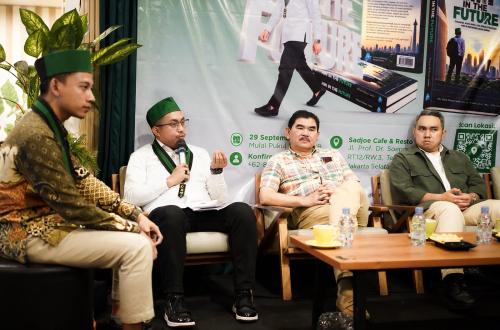
Members of the Islamic Students Association (HMI) are being urged not to stop at the ability to generate ideas, but to be capable of translating them into movements and organisational work. Scientific capacity, integrity, the courage to take responsibility, and the ability to read the changing times are considered essential to maintaining the relevance of cadres in addressing national issues.
These ideas form the substance of the book ‘HML in The Future: Ideas, New Directions, and the Strategic Role of HMI in Indonesia’s Future’ by Rifyan Ridwan Saleh. The book was launched during a Declaration and Book Launch event at Sadjoe Cafe & Resto, South Jakarta, on Tuesday (29/9/2026).
Rifyan assessed that HMI must do more than just maintain its traditions and historical greatness. Regeneration needs to produce a generation capable of reading social and technological changes while formulating responses to various national challenges.
According to him, ideas are the starting point but must not remain merely as discourse. Thoughts born from cadres need to be translated through movements, organisational work, and a continuous regeneration process.
“What is far more important is whether HMI is able to become a space for the birth of individuals who are knowledgeable, possess integrity, are brave enough to take responsibility, and provide benefits to the community and the nation,” Rifyan stated in his remarks on Thursday (1/10/2026).
Discussions regarding the quality of cadres have emerged ahead of the XXXIII HMI Congress in Lampung in November 2026. This momentum of leadership regeneration also opens discussions regarding the organisation’s direction and the capacity of the next generation to face the changing times.
Special Staff to the Minister for the Protection of Indonesian Migrant Workers (P2MI) for Digital Transformation and Strengthening Public Services, Ilham Akbar Mustafa, assessed that intellectual tradition needs more space in discussions regarding the future of HMI. He believes that conversations leading up to the congress should not merely revolve around the organisation’s political mobilisation.
“His effort to present work through a book is a serious attempt to shift the conversation of the HMI Congress from mere political mobilisation discussions towards substantive conversations regarding thoughts and ideas,” said Ilham.
Ilham noted that ideas expressed in writing also allow the HMI public to see the intellectual track record of a cadre. These thoughts can subsequently be tested through the consistency between what is written and what is practised.
“In time, this book will serve as a test for Rifyan in the future; how consistent and committed he is to what he has written and what he does,” he said.
Professor of Constitutional Law at Esa Unggul University, Juanda, stated that the ability to look towards the future still requires an understanding of the organisation’s past journey and current conditions. According to him, both serve as the foundation for determining the next steps.
“This book is very relevant to the times. However, we also need to learn from the past and observe the present. From there, we depart to seize a better future,” said Juanda.
Legal practitioner Ojak Situmeang also highlighted the importance of the courage to think and express opinions within the organisation. Ideas, according to him, need to be prepared to become movements that can be passed on to the next generation.
“For me, ‘HMI in The Future’ is not just about HMI today, but also about how those ideas are prepared to become movements and then inherited by future generations,” he added.