
HKTI Backs Second Habitat for Javan Rhinos, Calls for Farmers to Be Involved from the Start
JAKARTA — Efforts to save Javan rhinos from extinction require more than protecting conservation areas. Spreading disaster risk and involving communities living near the animals’ habitat are also important parts of a strategy to preserve the endangered species.
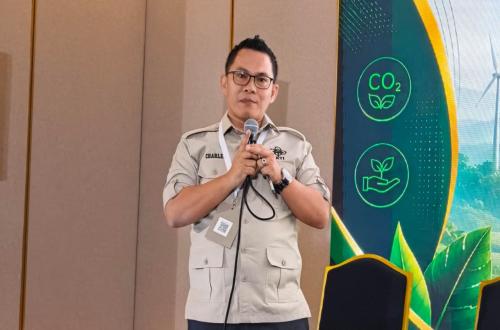
That view was expressed by Charles Lumban Gaol, deputy secretary-general for environmental affairs at the central board of the Indonesian Farmers’ Harmony Association (HKTI), in response to a proposal by Presidential Special Envoy for Climate and Energy Hashim Djojohadikusumo to move some of the Javan rhino population to a second habitat in Alas Purwo National Park, Banyuwangi, East Java.
Charles said the idea had a strong scientific basis. The entire Javan rhino population is currently concentrated in Ujung Kulon National Park, Banten, leaving the species at serious risk if the area is hit by a natural disaster.
“Mr Hashim has raised a concern that experts have been warning about for a long time. Keeping all Javan rhinos on one peninsula means putting an entire species at the mercy of a single disaster. HKTI fully supports this idea,” Charles said in Jakarta on Friday (27 November 2026).
The proposal for a second habitat resurfaced after Hashim raised it during events linked to the United Nations Climate Change Conference (COP31) in Antalya, Türkiye, on 12 November 2026. He warned that a tsunami could potentially wipe out the entire Javan rhino population if the animals survived in only one area.
At the CNN Indonesia Sustainability Summit 2026 on Wednesday (25 November 2026), Hashim said the proposal followed recommendations from the Indonesian Rhino Foundation (YABI) and several experts from Germany, the United Kingdom and the United States.
Discussion of a second habitat has been under way for some time. Since the 2013 Sumatran Rhino Summit in Singapore, a number of locations have been considered, including Alas Purwo and Baluran National Parks. Alas Purwo is considered more suitable because Baluran is relatively open and more vulnerable to poaching.
Charles said there were three main reasons to support the proposal. The first was the need to spread disaster risk. The December 2018 Sunda Strait tsunami, triggered by the eruption of Mount Anak Krakatau, was a reminder that threats to Javan rhino habitat are not merely theoretical. “Disasters cannot be prevented, but their risks can be spread. That is the core of Mr Hashim’s proposal,” he said.
The second consideration was the population’s limited size. The Ministry of Forestry estimated that there were between 87 and 100 Javan rhinos in 2025, while an IUCN report put the figure at around 50. The difference highlights the need for clear population-counting methods and updated data. Poaching also remains a concern: 26 rhinos were recorded as having died as a result of poaching between 2019 and 2023.
Third, the idea of a second habitat is not new. Since the 1980s, several areas have been studied, including Cikepuh Wildlife Reserve and Mount Honje.
“It has been discussed for four decades. What has been lacking is the political will to get started. Mr Hashim has provided that impetus,” Charles said.
However, Charles cautioned that successful conservation depends not only on habitat readiness and the animals to be moved. Acceptance by nearby communities is also decisive.
As an organisation representing farmers’ interests, HKTI is urging the government to involve villages around Alas Purwo from the earliest stages of the assessment. Residents need adequate information about the purpose of the move, its potential risks and the benefits of establishing a second habitat.
The government should also prepare compensation arrangements in case crops are damaged or residents’ farming activities are disrupted.
Charles said local economic development should be part of the conservation programme. Agroforestry, village-based ecotourism, and involving young farmers in patrols and camera-trap monitoring could create economic opportunities while strengthening protection of the area.
He also stressed the need for caution during translocation. The death of a male rhino named Musofa two days after it was moved to the Javan Rhino Study and Conservation Area (JRSCA) in Ujung Kulon in November 2025 should be treated as a lesson.
Health screening, quarantine and the transportation of the animals, he said, must all be better prepared before any move takes place.
“If farmers feel involved and benefit from it, they will become the rhinos’ most loyal guardians,” he said.
Charles said he respected the Ministry of Forestry’s position that it had not yet selected a site for the second habitat and was waiting for scientific assessments. He also understood objections from the Banten regional government and local communities.
However, he emphasised that a second habitat was not intended to replace Ujung Kulon.
“Ujung Kulon will remain the Javan rhino’s main home. The second habitat is a back-up home. Banten will lose nothing; Indonesia will simply strengthen its heritage,” he said.
HKTI said it was ready to work with the government, YABI, academics and regional administrations on socio-economic assessments and support for farmers in areas that could become a second habitat.
For HKTI, saving the Javan rhino is not only about ensuring the survival of one species. It must also ensure that people living alongside conservation areas are part of the solution.
Source: jawawa.id (https://jawawa.id/newsitem/hkti-backs-second-habitat-for-javan-rhinos-calls-for-farmers-to-be-involved-from-the-start-1795841472)
Originally published by Republika (https://esgnow.republika.co.id/berita/tp6s6w522/hkti-dukung-habitat-kedua-badak-jawa-petani-diminta-dilibatkan-sejak-awal), translated from Indonesian