
HKI Urges Reliable Electricity to Boost Industrial Estate Competitiveness
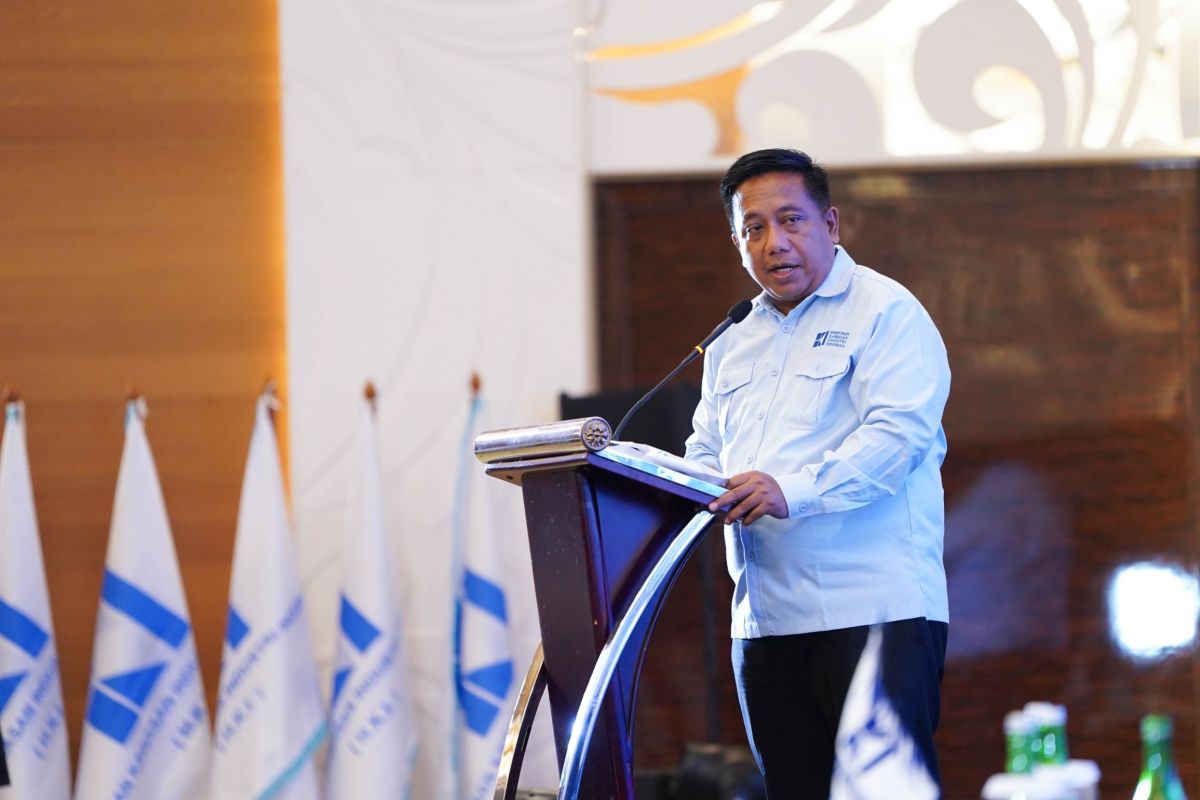
The Indonesian Industrial Estates Association (HKI) is pushing for the strengthening of national electricity supply reliability to enhance the competitiveness of industrial estates and attract more investment.
HKI Chairman Akhmad Ma’ruf Maulana stated on Monday that recent power disruptions in several regions should serve as a momentum for fundamental improvements to the national electricity system. He argued that as Indonesia strives to become an advanced industrial nation, a downstream processing hub, a regional manufacturing base, and a global investment destination, electricity reliability has become the primary foundation of national economic competitiveness.
The organisation, which oversees more than 170 industrial estates across Indonesia, stated that electricity supply plays a vital role for thousands of national and multinational companies operating in sectors ranging from manufacturing and petrochemicals to logistics, food and beverage, electronics, automotive, minerals, data centres, and high-tech industries.
In modern industry, production processes are integrated and continuous. When the power goes out, not only do machines stop operating, but it can also disrupt production systems, damage raw materials, delay shipments, hamper supply chains, and incur additional costs for operating backup systems.
HKI assesses that these challenges will grow as new investments requiring very high levels of electricity reliability enter the country. Investments in mineral downstreaming, electric vehicles, data centres, artificial intelligence, petrochemicals, and high-tech manufacturing all require a stable energy supply.
“We hope the government provides ease for industrial estates wishing to have their own electricity business areas. Industry needs certainty. When investment has entered, factories have been built, and thousands of workers depend on production activities, the energy supply must have an equivalent level of certainty,” he said.
HKI emphasised that this proposal is not intended to diminish the role of state-owned enterprises but rather to strengthen the system through a more collaborative model. Under this scheme, state-owned enterprises would remain the backbone of the national grid, while industrial estates could act as strategic partners through the development of independent power plants, industrial microgrids, captive power, energy storage systems, and renewable energy integrated with the national system.
Furthermore, HKI is encouraging the acceleration of policies that enable cooperation between business area permit holders, the expansion of power wheeling schemes, the strengthening of industrial microgrid development, and flexibility for industrial estates to develop gas-fired power plants, renewable energy, and energy storage technology.
He also expressed appreciation for the steps taken by the government, particularly the Ministry of Energy and Mineral Resources, in opening discussions on strengthening the national electricity system and increasing private sector participation in energy supply.
According to data from the Ministry of Industry, by 2025 Indonesia will have 176 industrial estates covering a total area of 98,291.68 hectares. These estates host around 11,350 tenants with a total realised investment value of Rp6,744.58 trillion and employ up to 2.35 million people.