
HKI says plan not to renew gas export contracts is the right move
Jakarta (ANTARA) – The Indonesian Industrial Estate Association (HKI) has said the government’s plan not to renew gas export contracts with neighbouring countries is the right step to ensure national industries’ energy needs are met.
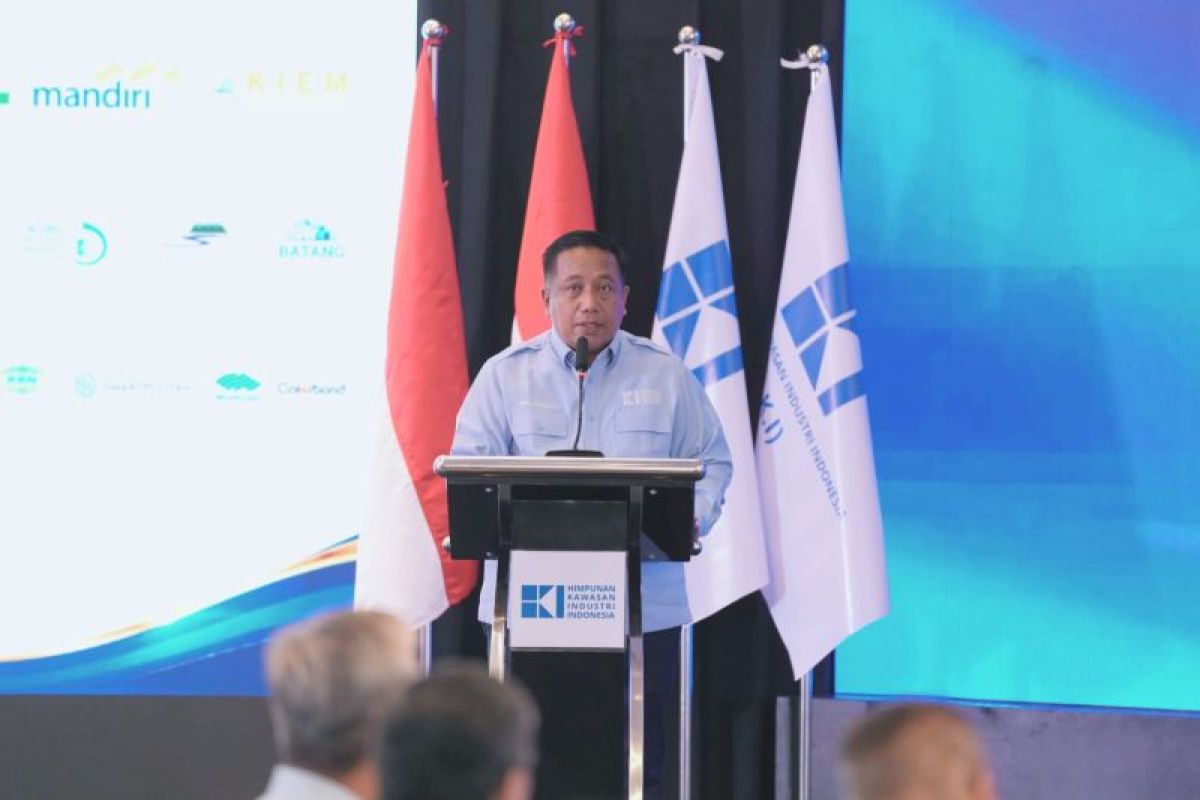
HKI chairman Akhmad Ma’ruf Maulana backed the government’s move to consider ending the renewal of gas export contracts in order to prioritise domestic demand.
Ma’ruf said in a statement confirmed in Jakarta on Friday that the policy was relevant amid ongoing gas supply problems faced by several sectors of Indonesian industry.
He stressed that the policy was not a rejection of exports or of partner countries, which have long been among Indonesia’s strategic economic partners. However, he said, energy resources must be managed in the national interest and to support sustainable industrialisation.
“Existing contracts must of course be honoured. But once a contract expires, the government has room to reset priorities for the use of national gas. HKI’s position is clear: domestic needs must first be secured before export contracts are renewed,” Ma’ruf said.
Data from the Energy and Mineral Resources Ministry for the first half of 2026 show that around 74.55 per cent of Indonesian natural gas was used domestically, while about 25.39 per cent was allocated for export.
Domestic gas use stood at approximately 3,972.26 billion British thermal units per day (BBTUD), while exports totalled about 1,352.9 BBTUD.
Exports comprised about 998.77 BBTUD of liquefied natural gas (LNG) and around 354.13 BBTUD of piped gas.
Industry was the largest domestic gas consumer, using approximately 1,263.20 BBTUD, or 23.72 per cent of total national gas use.
Ma’ruf said the government should consider the economic value added that could be generated by using gas to support domestic industrial activity.
He added that industrial gas supply problems were not only about price, but also the certainty of volumes, pressure and continuity of supply.
In western Java, deliveries under the Certain Natural Gas Price (HGBT) scheme were reportedly still at 88–90 per cent of the allocation set by the government. This has affected several gas-consuming industries and put pressure on production utilisation rates.
For industries requiring continuous production processes, including ceramics, glass, steel, petrochemicals, oleochemicals, and food and beverages, supply disruptions can reduce output and increase operating costs.
He said energy policy should form part of the national industrialisation strategy so that Indonesia’s natural resources deliver greater economic benefits to industry and the public.
“Indonesian gas must not be used to strengthen the competitiveness of industries in other countries while Indonesian industries themselves struggle to secure energy supplies. If the choice is between strengthening another country’s industry and strengthening our own, HKI’s position is clear: Indonesian industry must come first,” he said.
HKI also urged the government to apply the principle of ‘domestic industry first’ when reviewing gas export contracts due to expire, to ensure domestic needs are met.
The government should also draw up a long-term gas balance integrating national production, ongoing export contracts, the needs of existing industries, power plants and fertiliser producers, and projected demand from new investment in industrial estates.
Earlier, Coordinating Minister for Downstreaming and Energy Transition Bahlil Lahadalia said he would review energy export contracts with countries considered uncooperative and disrespectful towards Indonesia.
“I will conduct an evaluation. I will not hesitate to consider stopping exports to countries that do not respect Indonesia,” Bahlil said at the inauguration of gas receipt for JNE#6 and the Maha Field – South Hub production facility, monitored online from Jakarta on Thursday (22 October).
Bahlil, who is also Energy and Mineral Resources Minister, said that if other countries had issues with Indonesia that could be discussed amicably, those problems should be resolved on the basis of mutual respect.
“They should not come asking only when they need something. When there is another issue that could in fact be discussed, they act as if they have no manners. That is what we do not want,” Bahlil said.
Source: jawawa.id (https://jawawa.id/newsitem/hki-says-plan-not-to-renew-gas-export-contracts-is-the-right-move-1792727583)
Originally published by Antara (Indonesian) (https://www.antaranews.com/berita/5806591/hki-sampaikan-rencana-tak-perpanjang-ekspor-gas-sudah-tepat), translated from Indonesian